



A. Introduction
•
Traumatic brain injury (TBI): External force에 의해 유발되는 brain function impairment
•
GCS 에 따른 분류
◦
Severe (GCS score of 3 to 8)
◦
Moderate (GCS score of 9 to 13)
◦
Mild (GCS score of 14 or 15, concussion)
B. Pathophysiology
•
뇌는 전신 산소 소모량의 20%, 심박출량의 15%를 차지
•
뇌조직의 적절한 관류를 유지하는 것은 이차적인 뇌손상을 막는데 중요
•
Cerebral perfusion pressure (CPP)는 뇌혈류의 측정을 대신하여 사용
◦
CPP = MAP (평균동맥압) - ICP (뇌압)
◦
CPP < 60mmHg는 autoregulation의 lower limit
B1. Autoregulation
•
Oxygen delivery와 oxygen metabolism 간의 평형을 유지하는 local cerebral blood flow를
regulation. HTN, hypocarbia, alkalosis 등은 vasoconstriction을 유발하여 cerebral blood flow에
영향을 줄 수 있음
•
뇌혈류의 자가 조절은 50-150mmHg 사이의 뇌관류압 에서 정상 기능을 함
•
외상성 뇌손상에서는 뇌혈류와 관류사이에 영향을 받아 autoregulation 능력이 상실
•
외상성 저혈압은 ischemia 유발할 수 있고, aggressive fluid resuscitation 해야 함
•
ICP - 모니터가 불가능한 경우 MAP가 80mmHg 이상 되도록 해야 함.
•
뇌로의 혈류 순환은 두개강 내 용적이 증가하는 상황에 민감하다 (e.g. bleeding)
B2. Normal ICP (<15mmHg)의 구성요소
: Intracranial compartments
1.
The brain parenchyma (<1300mL in the adult)
2.
CSF (100 to 150mL)
3.
Intravascular blood (100~150mL)
(1) ICP elevation은 life threatening
→ ★ Cushing reflex 유발 : BP↑, Pulse↓, Irregular RR
(Nr ICP: 성인 < 10-15, young children 3~7, infants 1.5~6mmHg)
B3. 급성 뇌손상 : primary injury와 secondary injury로 구분
(1) Primary injury : 외력에 의한 직접적인 뇌 손상
•
1 Contusion
2 Hematoma
3 Diffuse axonal injury
4 Direct cellular damage
5 Loss of blood brain barrier
6 Disruption of the neurochemical homeostasis,
7 Loss of the electrochemical function
(2) Secondary injury
•
Glutamate, proinflammatory cytokines 분비
→ Cell death, necrosis, neuronal loss를 유발
(Neurotoxic damage를 가속화 하는 secondary insults (ex. hypotension, hypoxemia, hyperglycemia) 등과 구분해야 함)
•
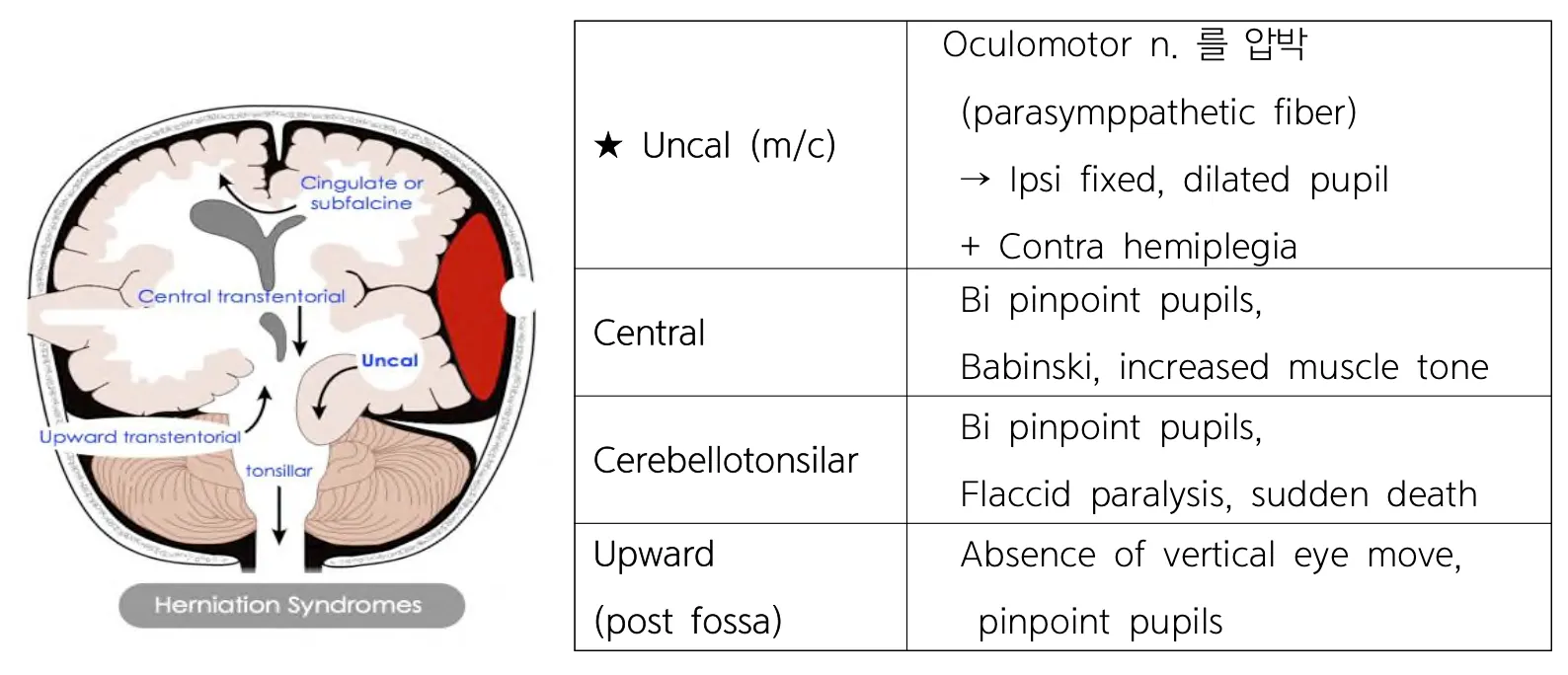
Brain edema : Cytotoxic + extracellular edema → ICP elevation → Compress Cx
•
Brain herniation
B3. GCS
(1) 객관적인 지표이지만 다른 요소 (술, 약물 등)에 영향이 많고 비슷한 GCS score를 가져도
pathophysiology에 따라 다른 outcome을 보이는 등의 제한점이 있음.
(2) GCS에 따른 분류
: Severe (GCS 3~8점) / Moderate (GCS 9 ~ 13점) / Mild (GCS 14 ~ 15)
C. Clinical features
•
Moderate to severe 와 mild injury는 Tx 및 disposition이 다름
•
Hx taking : 손상기전, 기저질환, 음주 등의 사항
* PEx. : cervical spine protection 하면서 진행
C1. GCS 확인
: 시간이 지나면서 경과파악에는 유용하나 특정시간의 악화정도의 파악은 어렵다
C2. 동공반사 확인
(1) Single fixed and dilated pupil → Intracranial hematoma
(2) Bilateral fixed and dilated pupils → Increased ICP (Bilat. Uncal herniation)
(3) Bilateral pinpoint pupils → Central pontine lesion, opiate exposure
C3. Motor function
(1) Decerebrate posturing : more caudal injury
(2) Decorticate posturing : more above the level of midbrain
D. Imaging
•
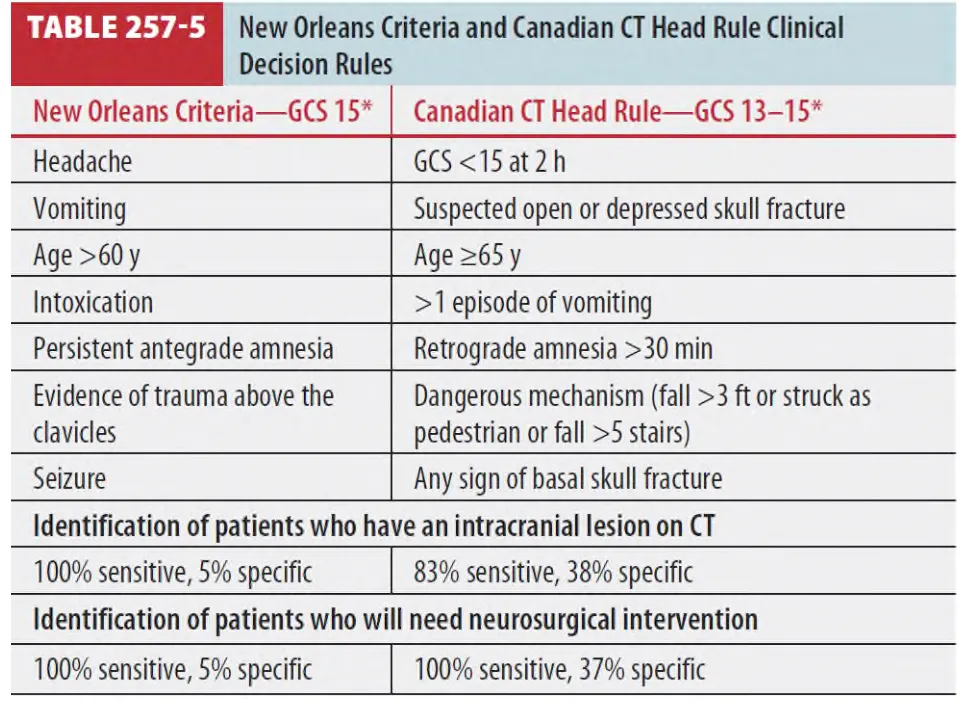
Image를 시행해야 하는지를 결정할 때 참고하는 Rule 이지만 specificity가 떨어져 참고하는 용도로
사용함. 항혈소판제 등을 복용하는 환자에겐 적용하지 말 것.
•
대부분 Minor injury는 LOC 유발하지 않음, 있다고 문제가 꼭 있는 것은 아님.
•
환자 비협조적일 경우 intubation과 sedation 후 image 진행
: Midazolam (1~2 mg) or propofol (20 mg every 10sec)
•
Comatose TBI 환자 중 8%에서 cervical fracture 동반되므로 Cervical CT 고려.
•
MRI는 CT에서 보이지 않던 Subtle lesion을 감별할 수 있으나 여러 가지 제약 있음.
•
Moderate TBI and GCS ≥14여도 15%까지 CT 상에서 병변이 있으며 1% 정도는 intervention이 필요함
E. Treatment
E1. Prehospital
•
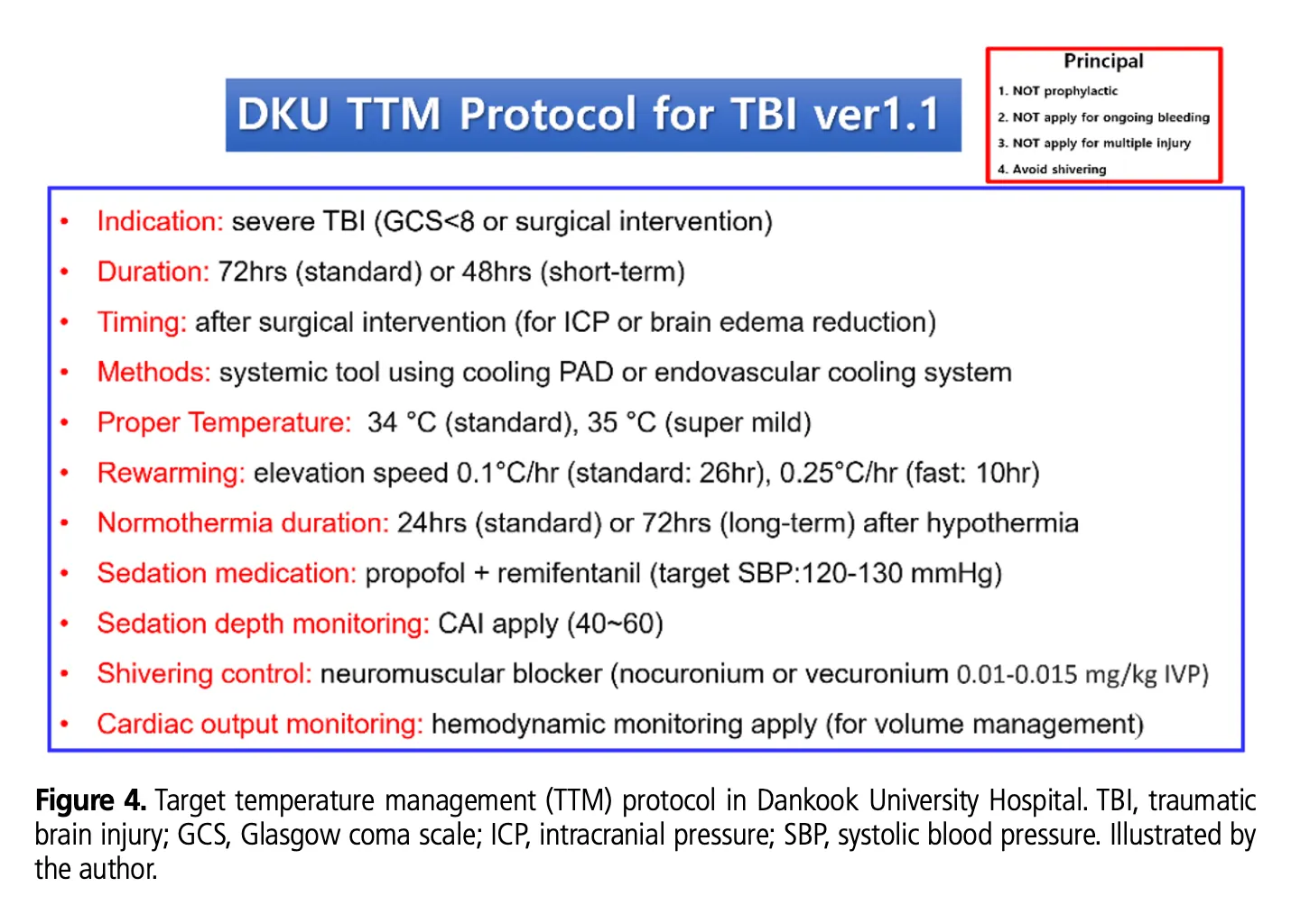
저혈압 교정과 airway 유지가 가장 큰 목표
•
PaCO2 35~45 가량 (Hyperventilation 피할 것)
•
저혈압이 있을 경우 fluid resuscitation
E2. ED treatment
•
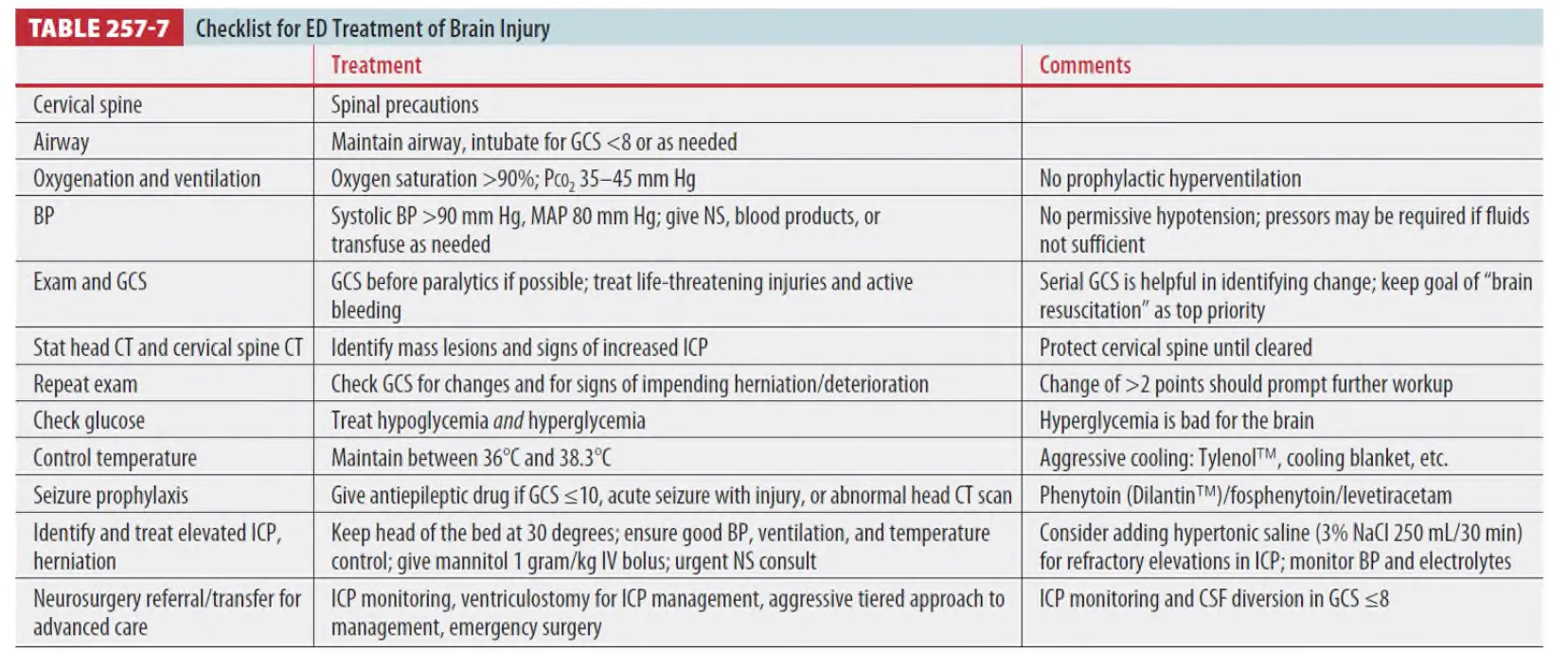
저산소증, 저혈압, 저관류, 고이산화탄소혈증, 고혈당, 고열 교정이 목표
•
BP,SpO2 등유지해야할수치★
◦
Hypotension (SBP <90)
◦
hypoxia (PaO2 <60) increase mortality
◦
ICP 증가는 m/s, pupil, neurologic deficit 등 확인
(1) Airway & Breathing
1 GSC<8 이하면 즉각적인 intubation
2 Intubation 중에는 ★ in-line cervical spine stabilization
: 경추 보호대 풀고 손으로 고정하는 것
3 ★ Nasotracheal tube intubation (CiX facial traumam skull base fx)
4 Sat > 90%, PaO2 >60, PCO3 35~45 유지
5 ICP 상승을 방지하기 위해 RSI 사용을 권장 (Ketamine은 not advocated)
: Circultation – agg. fluid Tx는 필요, N/S recommend
: 50~69yr은 SBP >100mmHg, 15~49 & > 70yrs는 SBP를 110mmHg 이상 유지
(2) Patient positioning
1 ICP를 줄이기 위해 머리를 드는 것이 효과적인지에 대한 의견 있으나 비교적 추천됨.
2 30° 가량 head elevation / MAP 80 이상으로 유지되었을 때 시행
(3) Glucose & Temperature
1 Moderate~Severe TBI에서 Glucose target 은 100~180mg/dL / Insulin 사용 가능.
2 Temperature은 정상 체온으로 (고체온도 저체온도 추천되지 않음)
(4) Seizure
•
seizure는 2nd injury를 악화시킴, IV lorazepam을 먼저 사용, 지속될 경우 AED loading
•
(within 1wk에서 Sz risk를 낮춤) : GCS<10, Brain CT 이상, injury 후 seizure한 경우
•
Phenytoin/Phosphenytoin 으로 18mg/kg dose를 25mg/min 속도로 주입
(5) Mannitol, Hypertonic saline
•
Cerebral herniation - ICP elevation : HA, Visual change, Numbness, N/V Seizure
- Sequential GCS : 신경악적 악화 과정을 평가
•
Mannitol은 ICP를 낮추는데 효과적
◦
0.25-1g/kg bolus 반복주입, dose-dependent 하지 않아서 constant infusion은 하지 않는다.
◦
Mannitol 없을 경우 hypertonic saline으로 대체 가능.
(3% 250ml for 30 minutes / 23.4% 30ml for over 30 minutes)
★ CPP manage
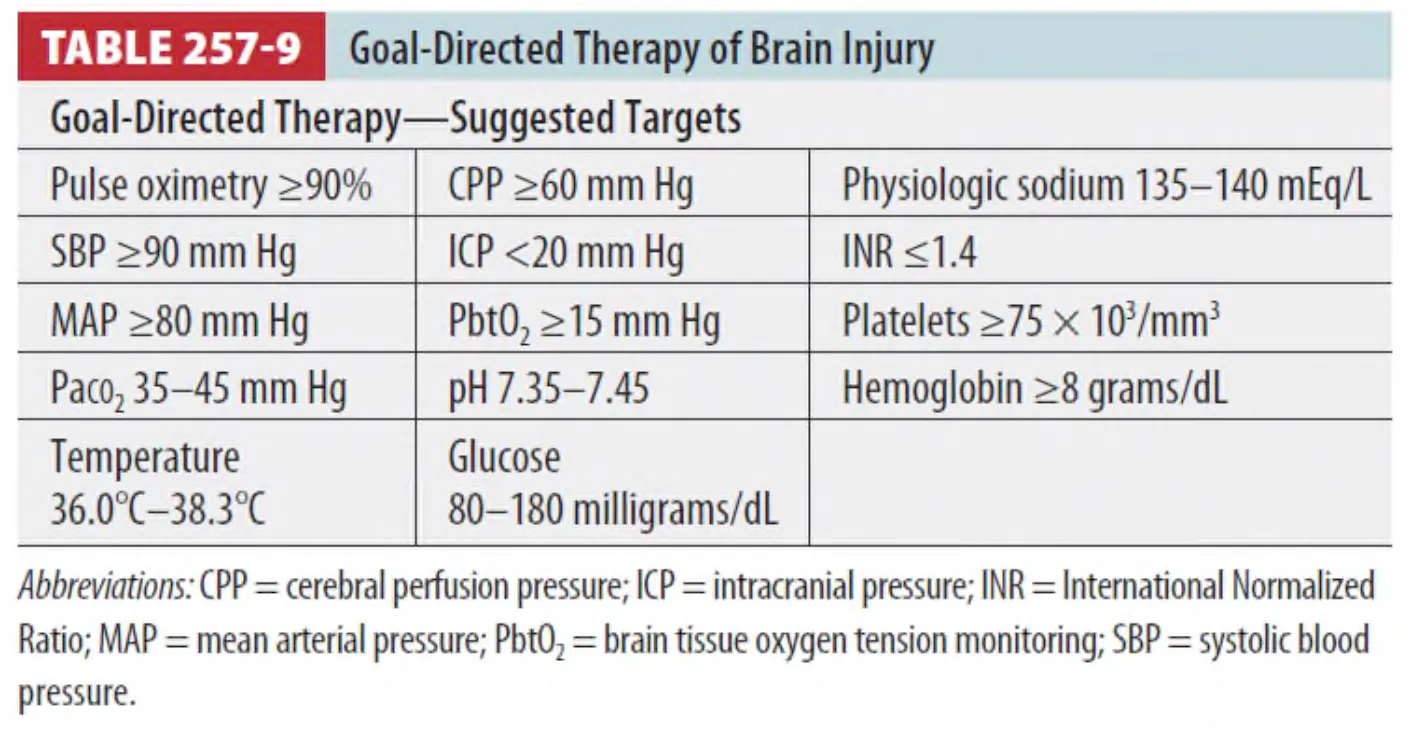
F. Specific head injury
F1. Scalp laceration
•
Bleeding control 빠르게 해야 함. (Massive bleeding 있을 수도 있기 때문)
•
상처 foreign body 있는지, Fx 있는지, galeal laceration 있는지 확인 필요함.
•
큰 galeal disruption은 repair 필요함.
F2. Skull Fx
•
Location, pattern, open & closed 여부 확인 필요함.
•
Middle meningeal artery, major venous sinus를 건드린 경우 혹은
Linear occipital fracture가 동반된 경우
⇒ intracerebral complication 발생 확률이 높아짐.
•
Open skull fracture의 경우 vancomycin 1 gram IV + ceftriaxone 2 grams IV 사용
F3. Basilar Skull Fracture and Cerebrospinal Fluid Leaks
(1) 호발위치
: petrous portion of temporal bone, external auditory canal, tympanic membrane
(2) Basilar skull fracture와 동반된 증상
•
CSF otorrhea or rhinorrhea
•
Mastoid ecchymosis (Battle sign)
•
Periorbital ecchymoses (raccoon eyes)
•
Hemotympanum
•
Vertigo
•
Decreased hearing or deafness, and 7th nerve palsy
(3) Cribriform plate Fx 의심
•
Nasogastric tube 삽입은 금기
•
empirical antibiotics
F4. Cerebral Contusion and Intracerebral Hemorrhage
: Subfrontal cortex에 때때로 occipital lobe에도 발생
F5. Subarachnoid Hemorrhage
: Severe TBI를 보이는 환자 중에 가장 흔하게 보이는 Abnormal CT finding임
F6. Epidural Hematoma
•
injury의 primary mechanism은 temoral 혹은 temporoparietal area에 blunt trauma가 있고 이로
인해 skull과 dura mater 사이공간에 middle meningeal artery disruption시 발생.
•
일시적으로 의식이 명료해지는 lucid interval 있을 수 있고, 이후 의식저하 발생할 수 있음.
•
Posterior fossa에 parieto-occipital legion의 venous sinus에 tear 있는 경우에도 발생가능.
F7. Subdural Hematoma
•
뇌실질 acceleration-deceleration damage가 가해져서 dura mater와 arachnoid 사이에 있는
bridging veins이 손상되는 기전
•
Brain atrophy가 있는 노인 혹은 chronic alcoholics가 더 취약함
•
24시간 이내는 acute, 24시간~2주는 subacute, 2주 이상은 chronic으로 구분함.

F8. Diffuse Axonal Injury
•
White matter 또는 brainstem에 damage로 인해 axonal fiber의 disruption을 유발하는 것.
•
CT에서는 대부분 정상소견 보임
: Classic CT demonstrates punctuate hemorrhagic injury along the grey-white junction of
the cerebral cortex and within the deep structures of the brain
G. Mild traumatic brain injury (TBI)
•
Brain imaging 상에서 hemorrhage 등의 grossly abnormal lesion이 없음에도 brain function의
impairment를 보이는 경우. GCS는 14~15.
G1. 증상
•
의식의 변화, 기억소실, 구토, 두통, 의식소실 등
•
증상은 빠르게 회복되며, concussive injury는 저명한 structural damage를 남기지 않음.
•
대사이상이나 electrolyte imbalance, mitochondrial dysfunction은 axonal transport system에 damage를 줄 수 있고, 이로 인해 TBI가 유발 가능함.
G2. 위험요인
•
Age>65, 응고장애, Dangerous mechanism, focal neurologic deficit
G3. 진단
(1) P/Ex는 대부분 normal. GCS 평가가 필요하며 brain CT 필요함.
(2) 진단은 임상적이며, 외력과 연관된 신경학적 손상으로 진단
7. Physical exam
(1) GCS (2) Racoon’s eye (3) Battle’s sign
(4) CSF rhinorrhea (5) Pupil awareness, and awakeness
(6) Brief cognitive assessment
8. Biomarkers
(1) Glial fibrillary acid proteni (GFAP) (2) Ubiquitin c-terminal hydrolase (UCH-L)
(3) S100B
9. Global impairment
(1) Such as confusion, perseveration, or amnesia. gait and test balance. cognitive function. (
(2) ER에서 인지검사와 신경학적 검사를 바로 하는게 가장 좋음
10. 수일에서 수주간 지속될 수 있음.
11. Neuroimaging and EEG : CT (DOC), mild TBI는 MRI가 더욱 sensitive
G3. 치료 및 거취결정
•
Primary treatment는 Rest! Aspirin과 NSAID는 금기.
•
정상 생활을 회복할 수 있을 때까지 회복하는 것이 가장 중요함.
환자가 퇴원할 컨디션이 되는 경우 퇴원설명을 잘해서 보내야 한다.
→ Delayed hemorrhage 등에 대한 warning 필요함.
•
증상 심해져 ER 다시 내원한 경우 further evaluation과 followup care 가능한 과로 refer

