



A. Introduction & Epidemiology
•
Spine trauma → spinal column injury 나 spinal cord injury, 또는 둘 다를 말한다.
•
Spine trauma의 경향성은 운수사고 (38%) > 추락 (31%) > 폭행 (13%)
B. Functional anatomy
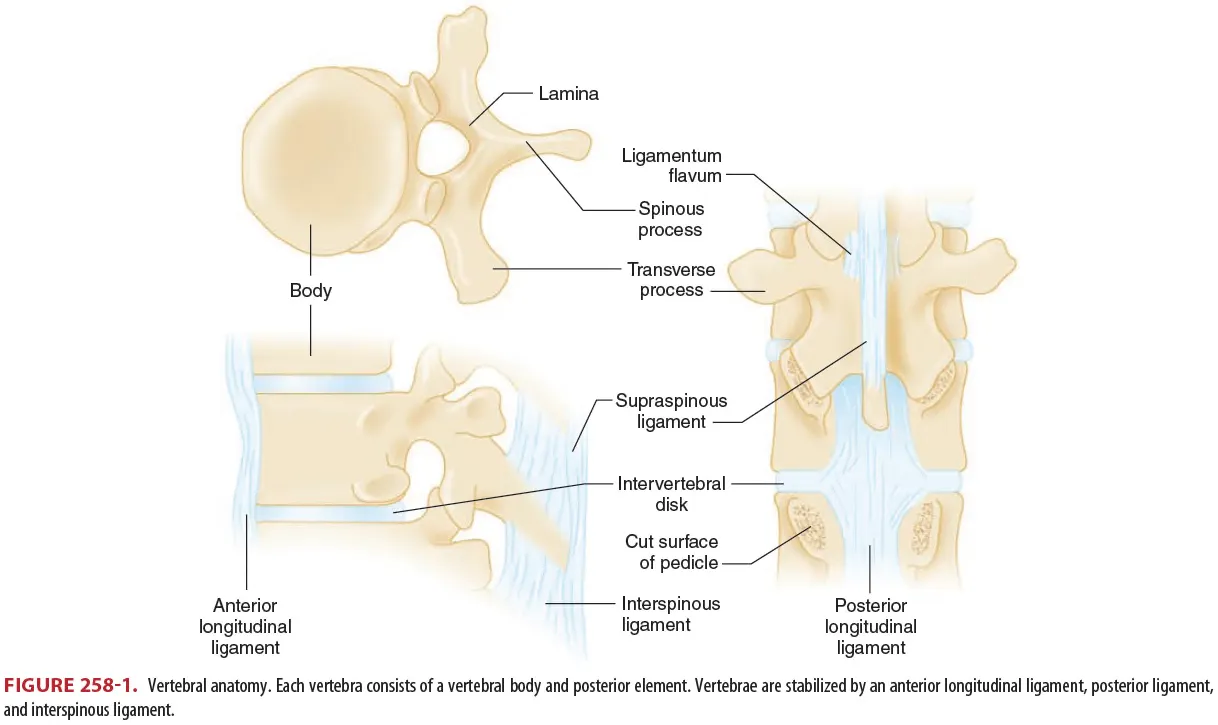
1. Vertebral column (Fig 258-1 참고)
(1) Vertebral column → 33개 (C-7, T-12, L-5, S-fused 5, coccyx-4)
(2) C-spine → m/c injured region, C2와 C5~7사이가 m/c
(3) Second m/c region → T-L transition zone (TA : Cervical, Fall : Lumbar spine)
(4) Vertebral body 사이 intervertebral disk → Rupture 시 spinal cord compression 유발
2. Spinal cord
: 31 pairs of spinal nerves - 8 cervical, 12 thoracic, 5 lumbar, 5 sacral, and 1 coccygeal
Ⅲ. Pathophysiology
1. Spinal column injuries (Table 258-1) ★ (책 사진과 내용을 같이 보면서 꼭 공부하세요)
★ Cervical spine fractures (중요!)
: 다양한 기전에 손상 - Transitional zone (모양이 바뀌면서 힘방향이 바뀌어 vulnerable)
: 손상 기전은 flexion, extension, compression(axial loading), distraction, rotation, lateral
bending 등이 하나 혹은 combination 되어 나타난다.
: Table 258-1 ★ - 골절과 기전, stable/unstable을 연결시켜 외워야 합니다.
★ Sacral fx : involve the central canal can produce bowel and bladder dysfunction
(1) Flexion injury
Anterior subluxation (Hyperflexion ① sprain, usually stable)

② Atlantoaxial dislocation (Unstable)

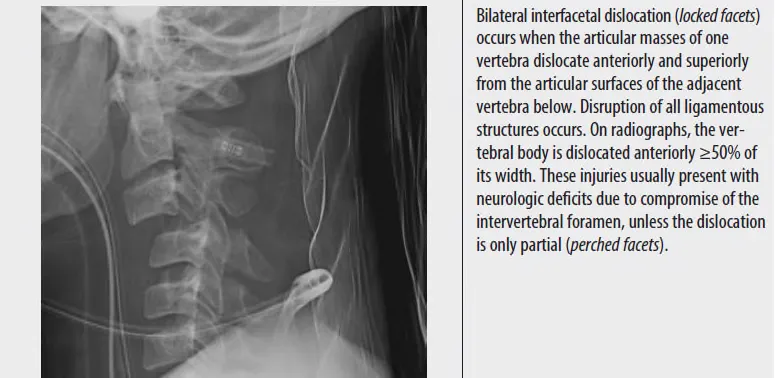
③ Bilateral interfacetal dislocation (Unstable)
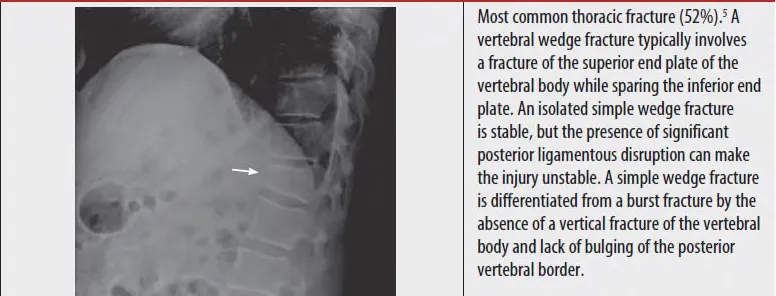
④ Simple Wedge (compression) Fx. (usually stable)
⑤ Spinous process avulsion (clay shoveler's) fx (Stable)

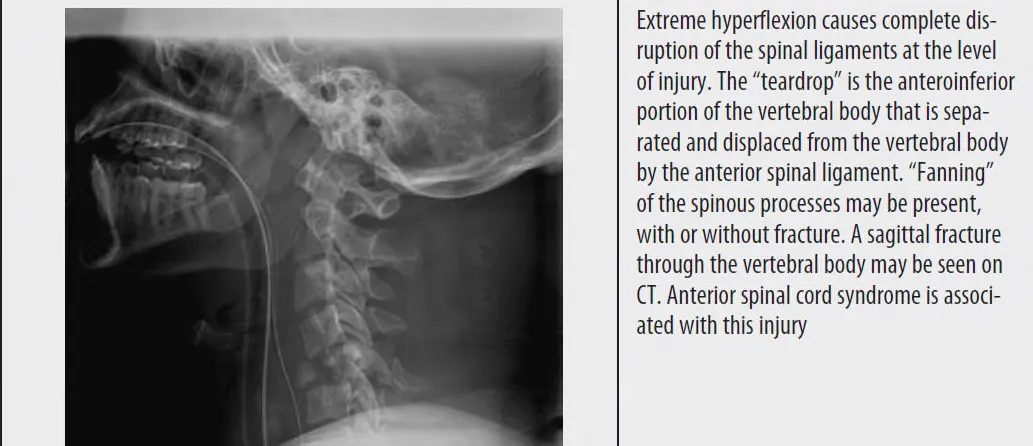
⑥ Flexion ⑥ ⑥ Teardrop fx (Highly unstable) ★
(2) Flexion rotation
① Unilateral facet dislocation (Stable unless associated with an articular mass fracture)

② Fracture of lateral mass (Can be unstable)


(3) Flexion-distraction
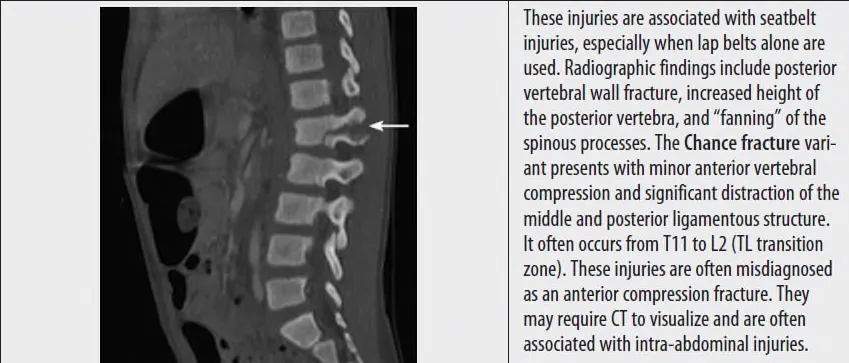
Ant. compression with associated transverse fx ① through vertebral body (Chance fx.)
(4) Vertical compression
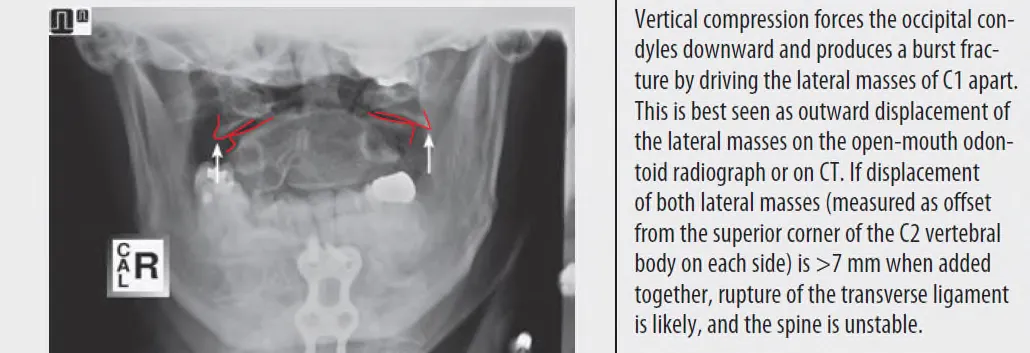
① Jefferson burst fracture of atlas (potentially unstable)
② Burst fx (unstable)

(5) Extension
① Hyperextension dislocation (unstable)

② Hyperextension teardrop fx or extension corner avulsion fx (unstable in extension)

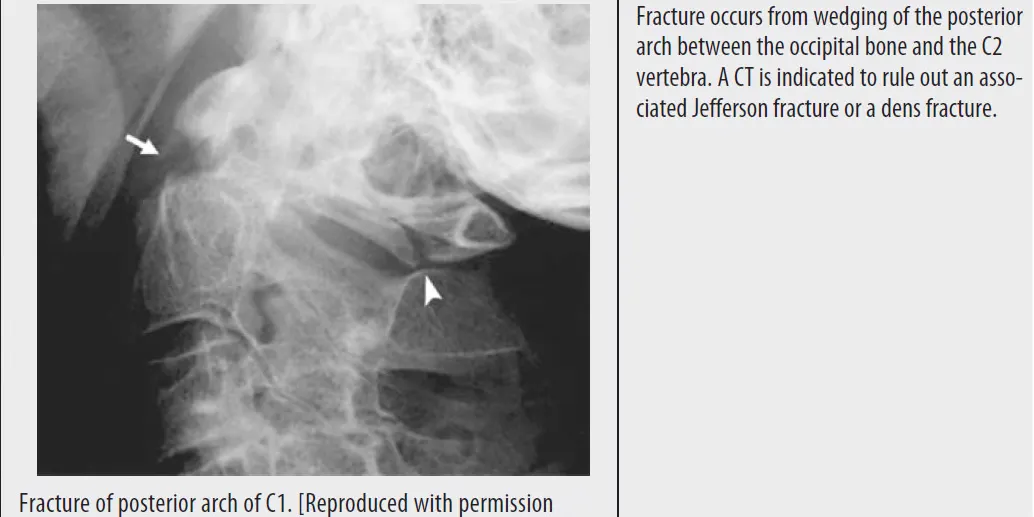
③ Fracture of post. arch of atlas (stable) ★
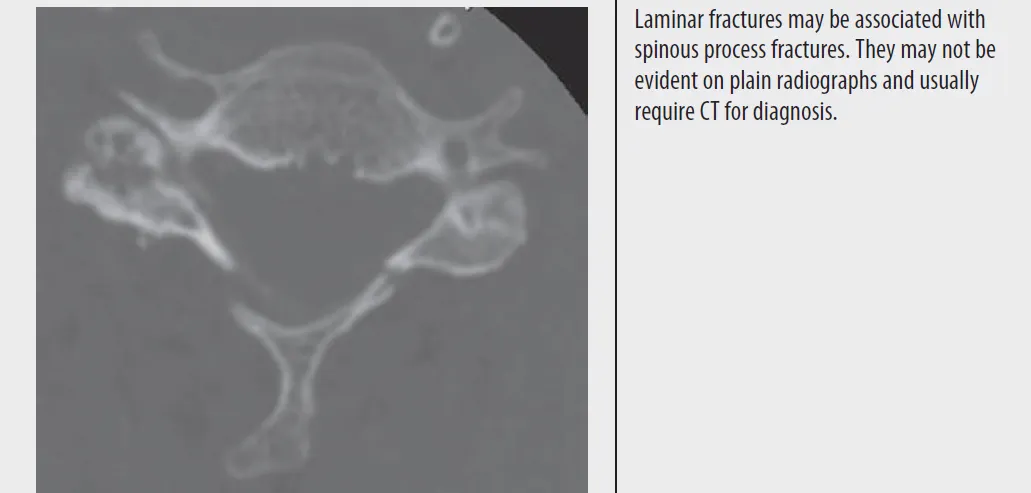
④ Laminar fx (stable)
⑤ Traumatic spondylisthesis (Hangman's fx) (unstable) ★

(6) Combination or poorly understood mechanism
① Occipital condyle fx (usually stable)

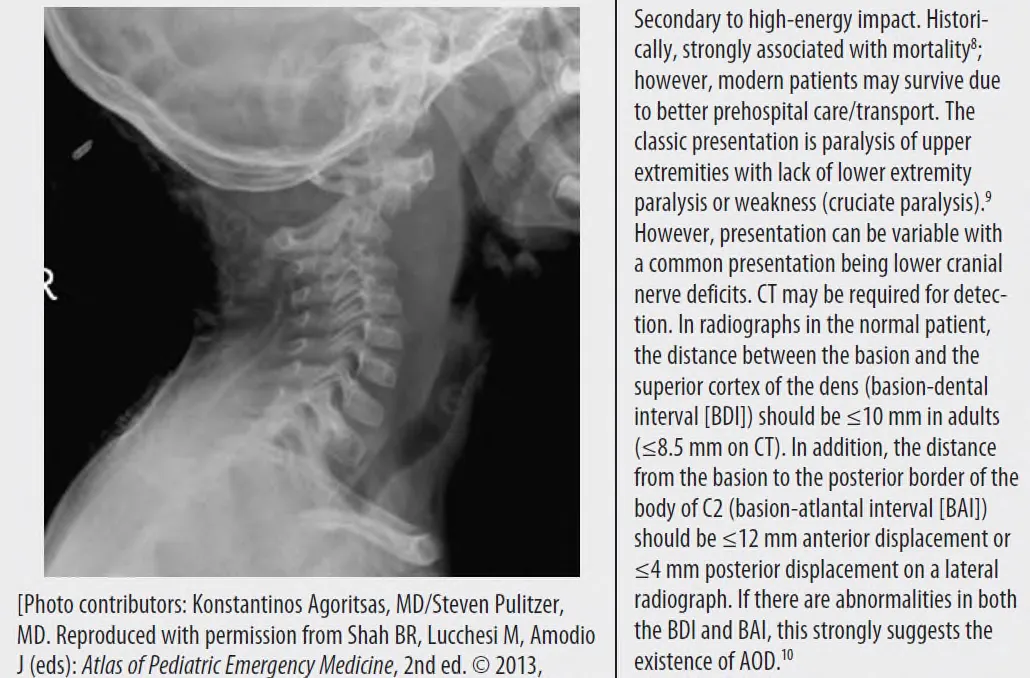
② Atlanto-occipital dissociation (AOD) (highly unstable) ★
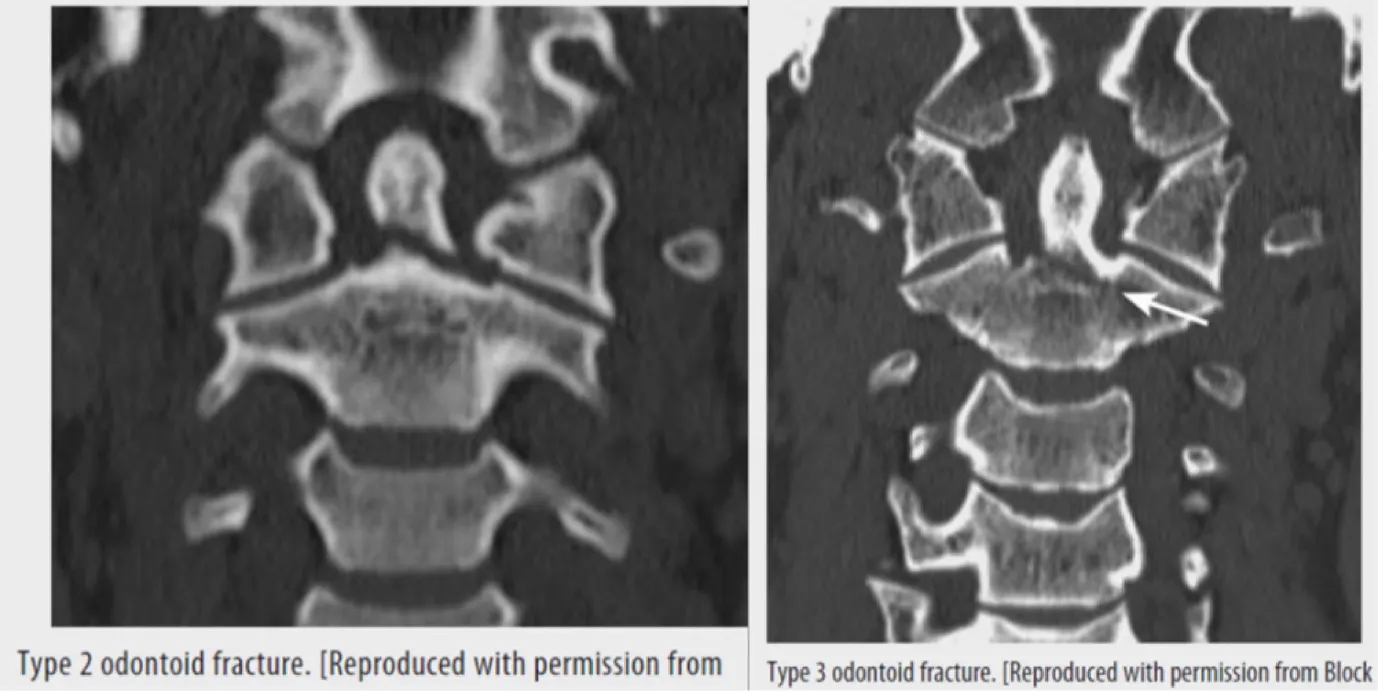
③ Odontoid (dens) fracture (type Ⅱ & Ⅲ are unstable)

④ Translational fracture-dislocation (Unstable)

2. Fracutre 각론
(1) Occipital condyle Fx. (Can be unstable ★)
① High-velocity cervicocranial injury (흔하지는 않다.)
② 구분 : Type Ⅰ (Comminuted), Type Ⅱ (Extension of a linear basilar skull Fx)
Type Ⅲ (Avulsion of a fragment)
③ Plain radiographs에서 잘 안 보임 → 대개 CT가 필요.
④ Neurologic impairment가 흔함 : Lower cranial nerve deficit and/or limb weakness
⑤ Lower cranial n. deficit or type Ⅲ → 반드시 internal fixation 필요
(2) Occipitoatlantal disslocation (highly unstable ★)
① Skull이 cervical spine의 전방 혹은 후방으로 displace 될 수 있으며 종종 사망에 이른다.
② Occipitoatlantal subluxation : Basion-dental interval ≥ 8.5mm on CT일 때 진단
(3) C1 (Atlas) Fx.
① Jefferson Fx (potentially unstable ★)
: 머리 위로 충격을 받아 cervical spine이 axial load를 받을 때 발생한다.
: C1 lateral mass의 burst fracture를 만듦.
: Open-mouth odontoid view에서 밖으로 밀려 나간 것이 보임.
: Displacement of both lateral masses (offset from the superior corner of C2 vertebral body
on each side) is >7mm when added together, rupture of the transverse ligament is likely,
and the spine is unstable.
: Predental space >3mm on lateral radiograph (2mm for CT)
→ Damage to transverse ligament / >5mm → Rupture of transverse lig.
② Avulsion fracture of the Anterior Arch or the Atlas (stable)
③ Fracture of the Posterior Arch or the Atlas (stable) ★
→ 둘 다 hyperextension injury
(4) C2 (Axis) Fx.
① Odontoid Fx
: 기전이 확실치 않음.
: Type Ⅰ (Avulsion of the tip : stable), Type Ⅱ (Junction of odontoid : unstable),
Type Ⅲ (Superior portion of C2 : unstable)
② Traumatic Spondylolisthesis of the Axis (Hangman’s Fx) (Unstable ★)
: C2의 양쪽 pedicle이 골절되면서 C3에 비해 앞쪽으로 전위됨.
: Hyper-extension에 의해 발생
: C2 level의 spinal canal의 직경이 넓어서 신경학적 손상이 유발되지 않을 수도 있음.
(5) Lower Cervical Spine (C3 to C7) Fx.
① Anterior subluxation (usually stable)
: Hyperflexion sprain 이라고도 한다.
: Interspinous 혹은 posterior longitudinal ligament의 손상에 의해. X-ray에서 안 보이는 경우도
많다.
: Cervical disk space aligment 가 11도 이상 차이나면 인대 손상을 의심한다.
② Flexion Teardrop Fx (highly unstable)
: Vertebral body의 anteroinferior portion이 분리되어 전위된 것
: 손상 level 인대의 complete disruption 동반. Anterior spinal cord syndrome과 연관됨.
③ Spinous Process Avulsion (Clay-Shoveler’s) Fx.(stable)
: 대개 C7의 spinous process의 끝이 떨어져 나옴.
④ Unilateral Irterfacetal Dislocation (stable) : Flexion-rotation에 의해 발생.
⑤ Bilateral interfacetal Dislocation (unstable)
: Hyperflexion에 의해 발생하며 모든 인대의 disruption이 동반되고, 주로 신경학적 증상이 동반됨.
: Lat. view에서 vertebral body가 폭의 50% 이상 앞으로 전위되어 있다.
⑥ Pillar or Pedicolaminar Fx (can be unstable) : Extension-rotation with impaction
⑦ Burst Fx. (unstable)
: Direct axial loading
: Fragment가 모든 방향으로 전위될 수 있어 spinal canal로 들어가 cord를 손상시킬 수 있다.
⑧ Hyperextension Dislocation (unstable)
: Hyperextension 되면서 ALL이 완전히 끊어지며, post. ligamentous complex도 손상됨.
: 환자들은 대개 안면부 손상과 central cord syndrome이 동반된다.
⑨ Extension Teardrop Fx. (unstable)
: Hyperextension 되면서 ALL에 의해 anterioinfeior fragment가 avulsion 됨.
3. Fracture stability
* Spinal stability : 크게 3가지로 평가한다.
(1) Obvious separation of adjacent vertebral bodies or arches
(2) Use radiography (clinical experience에 기반하여 평가)
(3) Denis 3 column principle
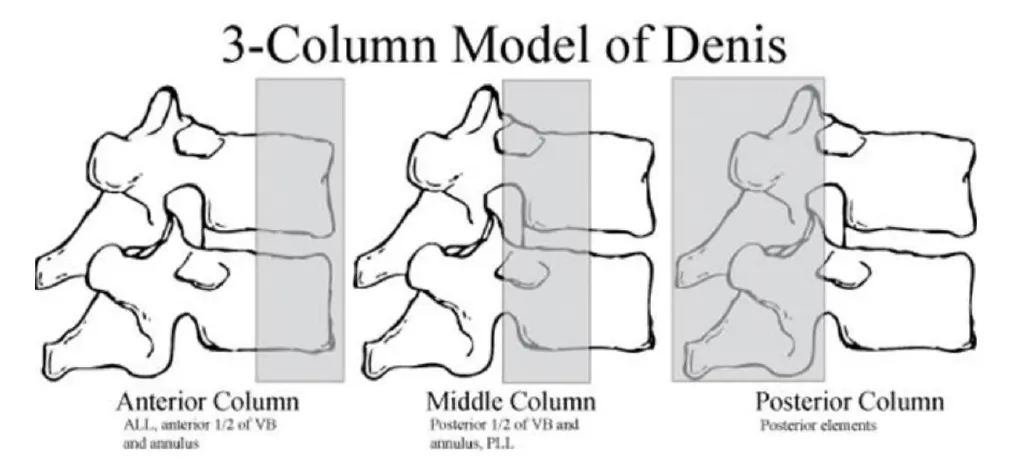
① Anterior, middle, posterior column으로 구분
② 2개 이상의 column이 disruption 되었을 때 unstable로 간주
③ Vertebral body compression이 25% 이상 (C3~7) 또는 50% 이상 (T-L spine)인 경우 unstable
④ 응급실 환자 평가에서 실제적인 원칙은 어떤 neurologic deficits이 있거나, radiographic evidence
of injury 가 있는 환자는 unstable injury 가 있는 것으로 간주해야 한다.
⑤ Assume any spine fracture is unstable and maintain appropriate precautions until expert
consultation can be obtained from a spine surgeon.
4. Spinal cord injuries
(1) Two types of injury
① First is the primary injury from mechanical forces from traumatic impact
② Primary injury가 a series of vascular and chemical processes에 영향 주면 secondary injury
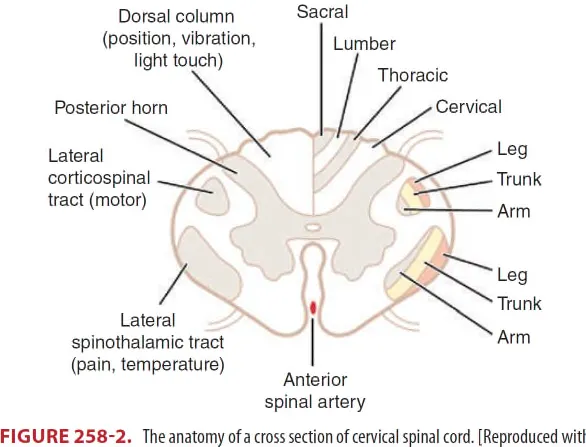
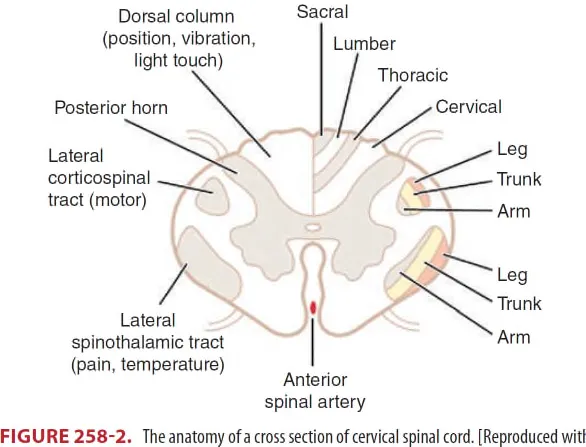
5. Spinal cord lesions (Fig 258-2)
(1) Spinal cord injury의 severity → 기능 회복 예후에 따라서 결정
→ Complete와 incomplete 감별 중요
★
(2) Complete neurologic lesion → Absence of sensory and motor function below the level of
injury (minimal chance of functional motor recovery)
(3) Incomplete lesion → Sensory, motor, or both functions are partially present below the
neurologic level of injury (일부 기능은 회복될 가능성이 있음)
(4) Patients in spinal shock lose all reflex activities below the area of injury, and lesions
cannot be deemed truly complete until spinal shock has resolved.
★ 매우 중요
(5) Damage to the corticospinal tract neurons (upper motor neurons) in the spinal cord
results in ipsilateral clinical findings such as muscle weakness, spasticity, increased deep
tendon reflexes, and a Babinski’s sign
(6) When the spinothalamic tract is damaged, the patient experiences loss of pain and
temperature sensation in the contralateral half of the body.
→ Begins one or two segmental below the level of damage
(7) Injury to one side of the dorsal columns will result in ipsilateral loss of vibration and
position sense. (at the level of the lesion)
(8) Light touch is not completely lost unless there is damage to both the spinothalamic
tracts and the dorsal columns.
Ⅳ. Prehospital care (Recognition, Immobilization and triage)
1. Spinal immobilization is no longer recommended for fully conscious, neurologically intact
patients with isolated penetrating neck injury because collars can delay resuscitation and
obscure neck injuries
2. Prehospital care : C-collar → Controversial
Ⅴ. Initial ED stabilization
1. Airway
(1) The higher the level of spinal injury, the more likely is the need for early airway
intervention
(2) Any patient with an injury at C5(★) or above should have the airway secured by
endotracheal intubation
(3) Maintain in-line spinal stabilization while intubating
2. Hypotension
(1) Neurologic shock, blood loss, cardiac injury, tension PNX
(2) Blood loss as the cause of hypotension in spinal injury patients until proven otherwise
(3) Hypotension is initially treated with IV crystalloid.
3. Spine immobilization
(1) Long spine board는 sore 생기고 가능한 한 최대한 빨리 remove 하는게 좋다
(2) Log rolling (Traditional method) → 적은 인력, 환자 뒤를 볼 수 있고 rectal exam 시행 가능
(3) 6+lift and slide maneuver
* 많은 인력 필요하고 환자 뒤를 볼 수 없으나 spine motion 더 적어 일부 전문가는 더 recommend
① Board에서 환자를 unstrapping 한 뒤, 한 사람이 머리에서 inline stablization을 시행,
나머지 6명이 각각 가슴, 골반, 하지 부분에 위치하고, 환자를 보드에서 10~20cm lift 한다.
② 다른 사람이 그때 보드를 환자 밑에서 빼고 다시 환자를 침대로 내린다.
이렇게 하여 spine alignment를 유지한다.
③ 단점은 사람이 많이 필요하고 등을 볼 수 없다.

(4) Hard cervical collar
: 환자에게 불편감과 pressure sore를 유발할 수 있어 clinical decision rule in cervical spine
imaging (뒤에 나옴)에 가능한 한 하지 않을 것
(5) 두부 외상 환자에서 jugular venous compression → ICP 상승 가능 → Overtighten에 주의
Ⅵ. Clinical features
1. History (Injury mechanism도 매우 중요)
(1) Pay particular attention to any symptoms indicating present or impending respiratory
compromise, including dyspnea, palpitations, abdominal breathing, and anxiety, which may
indicate a high cervical spine injury.
2. Physical examination
(1) Physical exam은 spinal cord injury level, tenderness, motor grade등을 확인해 기술해야 함
(2) Test deep tendon reflexes along with anogenital reflexes because “sacral sparing” with
preservation of anogenital reflexes denotes an incomplete spinal cord level, even if the
patient has complete sensory and motor loss. ★
3. Neurologic examination
(1) Urinary or fecal incontinence or priapism → high risk for spinal injury
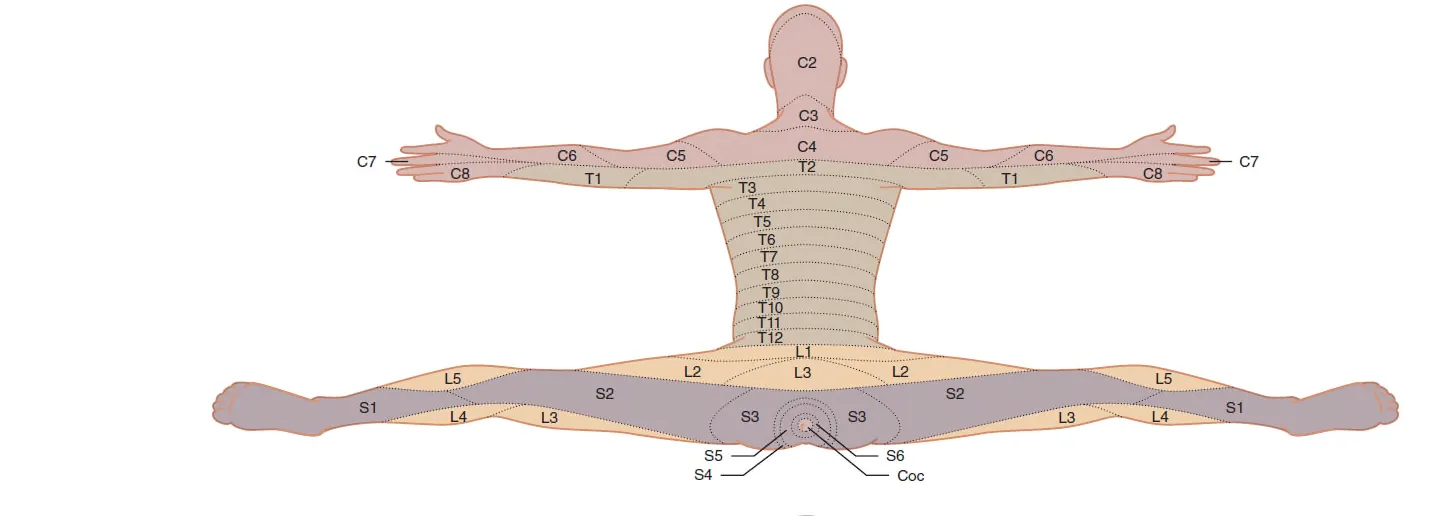
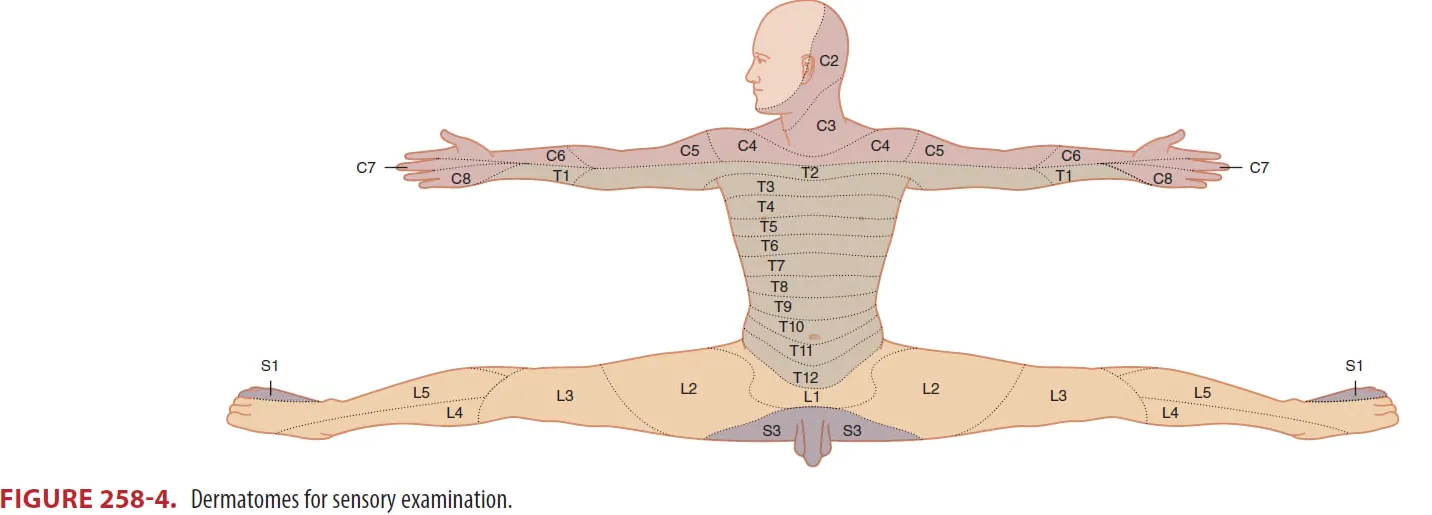
(2) Fig 258-3 - ★ 매번 족보에 나오는 내용으로 반드시 기억해야 함.
① C5, C6 : Arm abduction, elbow flexion, Biceps reflex
② C6, C7 : Wrist extension
③ C7, C8 : Elbow extension, triceps reflex
④ C8, T1 : Finger abduction, hand grasp
⑤ T2~T7 : Chest muscles / T9~T12 Abdominal
muscles
⑥ L1~L3 : Hip flexion
⑦ L2~L4 : Knee extension, knee jerk reflex / L4~S2 Knee flexion
⑧ L4, L5 : Ankle dorsiflexion
⑨ L5, S1 : Great toe extension
⑩ S1, S2 : Ankle plantar flexion, Plantar reflex
⑪ S2~S4 : Voluntary rectal tone


4. Incomplete spinal cord syndrome ★ 매우 중요
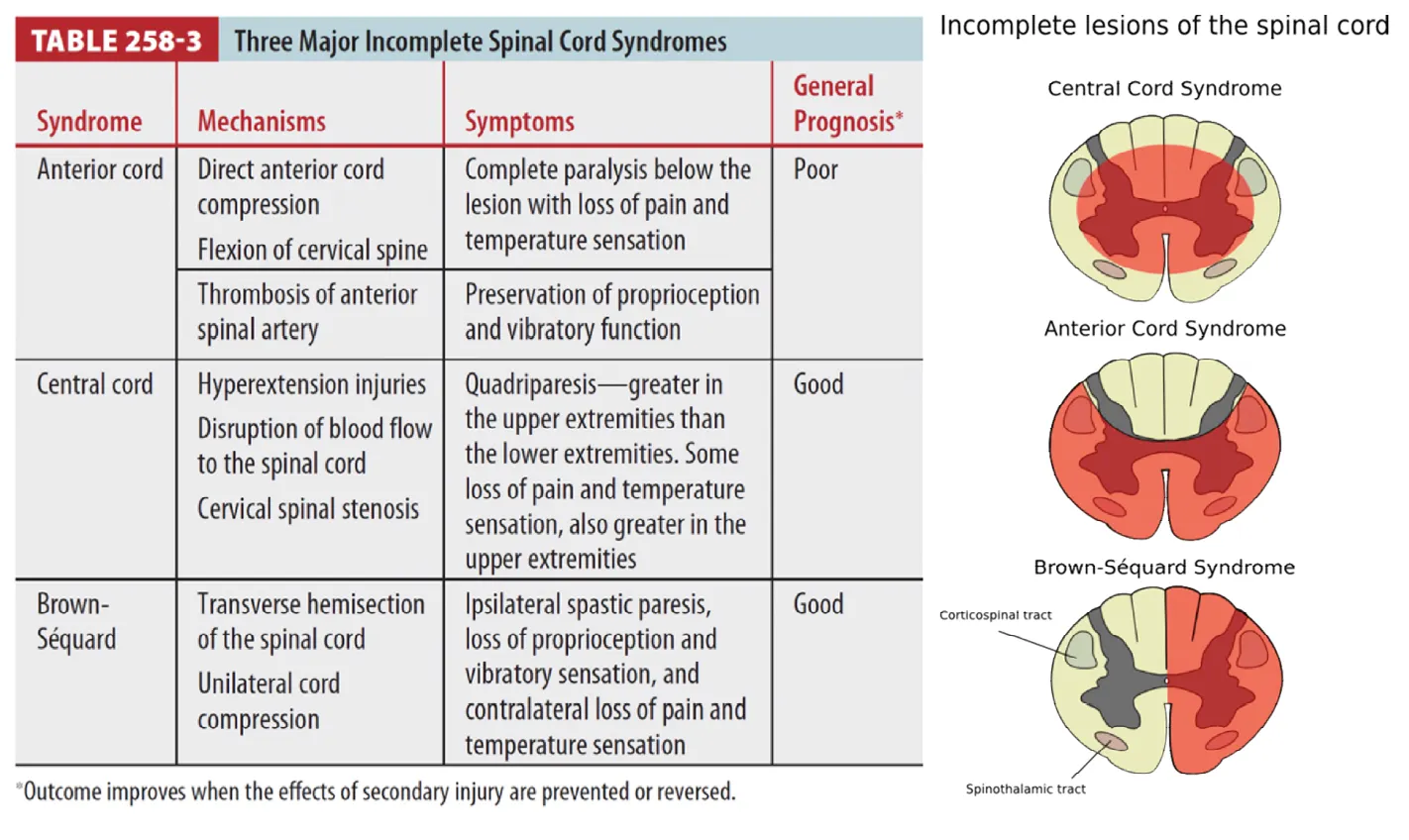
* There are three major incomplete spinal cord syndromes identified by predictable physical
examination findings, although overlap in findings may occur (Table 258-3).
5. Anterior cord syndrome
(1) Damage to the corticospinal and spinothalamic pathways, with preservation of posterior
column function.
(2) This is manifested by loss of motor function and pain and temperature sensation distal
to the lesion. Only vibration, position, and tacticle sensation are preserved.
운동 통증 온도 감각이 떨어지고 (3) Anterior cord damage = , , , 진동, 고유위치, 촉각 등은 살아 있다.
6. Central cord syndrome
(1) Usually seen in older patients with preexisting cervical spondylosis who sustain a
hyperextension injury, patients with a central cord syndrome present with decreased strength
and, to a lesser degree, decreased pain and temperature sensation, more in the upper than
the lower extremities.
(2) Vibration and position sensation are usually preserved
(3) Central cord damage = 힘이 빠지고 (완전히는 아님), 온도, 통증감각이 떨어진다.
상지가 하지보다 심하다. 진동/위치는 보통 유지된다.
7. Brown-sequard syndrome
(1) Ipsilateral loss of motor function, proprioception, and vibratory sensation, and contralateral
loss of pain and temperature sensation
(2) 주로 penetrating injury에 의하며, emegent MRI를 필요로 함
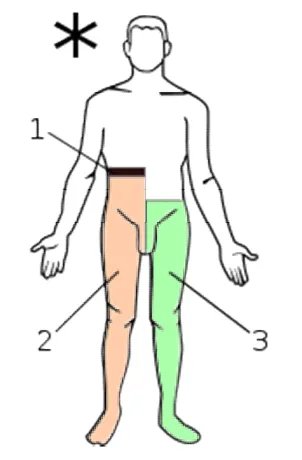
1. Hypotonic paralysis
2. Spastic paralysis and loss of vibration and proprioception and find touch
3. Loss of pain and temperature sense (1~2 level below)
8. Cauda equina syndrome
(1) Not a true spinal cord syndrome, peripheral nerve injuries.
(2) Symptoms and signs may include bowel and/or bladder dysfunction, decreased rectal
tone, “saddle anesthesia” (sensory deficit over the perineum, buttocks, and inner thighs)
(3) Variable motor and sensory loss in the lower extremities, decreased lower extremity
reflexes, and sciatica
9. Neurogenic shock
(1) Distributive shock이며 진단은 exclusion diagnosis
(2) Probably occurs in less than 20% of spinal cord–injured patients.
In general, patients with neurogenic shock are warm, peripherally vasodilated, and
hypotensive with a relative bradycardia. → 신체검진 특징을 알아두자. ★
(3) Hypotension in the trauma patient can never be presumed to be caused by neurogenic
shock until other possible sources of hypotension are excluded.
10. Spinal shock
(1) Spinal shock is not neurogenic shock
(2) Spinal shock is the temporary loss or depression of spinal reflex activity that occurs
below a complete or incomplete spinal cord injury.
(3) Flaccidity, loss of reflex, loss of voluntary movement
(4) Delayed plantar and bulbocavernous reflex (First to rectum as spinal shock resolved)
Ⅶ. Diagnosis
1. Clinical decision rules in cervical spine imaging
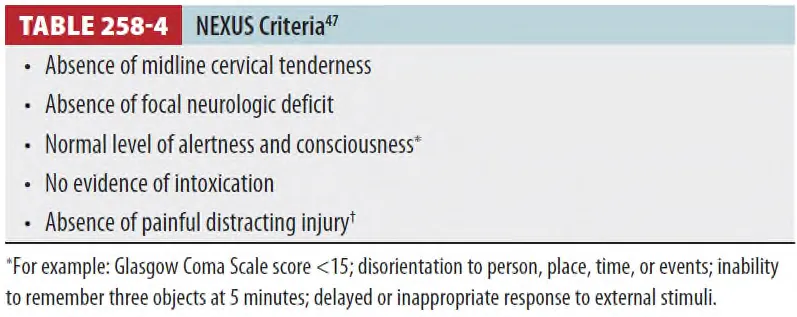
(1) National Emergency X-Radiography Utilization Study (NEXUS)
: Which determined that plain cervical spine imaging is unnecessary in patients who lack
any one of five clinical criteria.
(2) Canadian cervical spine rule for radiography (CCR)
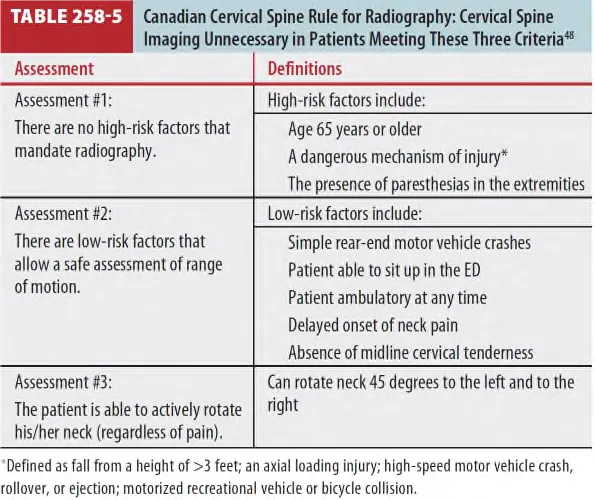
(3) In summary, many experts feel that because both NEXUS and CCR have been widely
validated and have demonstrated adequate sensitivity, either rule may be used to determine
which low-risk patients should undergo plain or CT cervical spine imaging.
2. Cervical spine imaging
(1) Plain radiography
It is important to image all seven cervical vertebrae, ① along with the superior border of
the first thoracic vertebra
② Lat, Ant-Post, odontoid view
(2) Cercival spine CT
① Multidetector CT is more sensitive and specific than plain radiography for evaluating the
cervical spine in trauma patients and can be performed quickly
② Primary initial diagnosis tool
(3) MRI : lig. & spinal cord injury 시 DOC
① MRI is the diagnostic test of choice for describing the anatomy of nerve injury.
② Entities such as herniated disks or spinal cord contusions can also be delineated on MRI
Ⅷ. Treatment and disposition of spinal column injuries
* To prevent secondary injury, alleviate cord compression, establish spinal stability
1. Cervical spine fractures
(1) 대부분은 입원이 필요하고, 연관 손상들을 위한 치료가 필요하다.
(2) Surgeon이 보기 전까지는 stabilization, monitoring (respiratory, neurologic sx) 등을 볼 필요가
있다.
2. Thoracic and lumbar spine fractures
* 내부장기 (aorta, intrathroax, abdominal organ)의 손상 risk가 높다. 많은 경우에서 입원이 필요함..
(1) Stable compression fracture (wedge or anteior column) without neurologic sx, loss of
verterbral height 40% 미만
① Surgeon과 discussion 후 외래 f/u 가능, 그러나 50% 이상 height loss 있고, fracture angle이
25~30%가 넘어가면 unstable로 간주.
② 모양이 유사한 Burst fx 나 chance fx 와는 감별해야함
(2) Chance fx
① Flexion-distraction mech.
② Minor and vertebral compression and significant distraction of the
③ Mid and post ligament structure
3. Sacrum and coccyx fractures (very unusual)
(1) Sacral fractures that involve the central sacral canal can produce
(2) ★ Bowel or bladder dysfunction, 동반한다면 주로 pelvic fx도 가능
(3) Coccyx fx → Treatment : 도넛 배게
Ⅸ. Special considerations
1. Corticosteroids
(1) Benefit
① Decrease free radical induced lipid peroxidation
② Increase level of spinal cord flow
③ increase extracellular calcium loss
④ Prevent loss of potassium from injured cord tissue)
→ 부상 후 8시간 이내 High dose methylprednisolone 투여하면 상단한 장점이 있지만, 합병증 발생
가능성이 높아 논란의 여지가 있다.
(2) High-dose methylprednisolone remains a controversial treatment in acute blunt spinal
cord injury and should not be given routinely.
→ 논란이 있어 루틴 사용은 하지 말라고 함.
(3) In fact, high-dose methylprednisolone therapy has not been found to be efficacious in
penetrating spinal cord injury → 금기
2. Cardiovascular complications
(1) If neurogenic shock is present, initiate an infusion of IV crystalloid to correct this relative
hypovolemia.
(2) If IV fluids are not adequate to maintain organ perfusion, positive inotropic pressor
agents may be beneficial adjuncts to improve cardiac output and raise perfusion pressure.
→ 일단 Hydration부터 해서 BP 안정화
(3) Bradycardia, when present, usually occurs within the first few hours or days after spinal
cord injury because of a redominance of vagal tone to the heart. In cases of
hemodynamically significant bradycardia, atropine may be needed
→ Inotropics나 atropine은 추후 상태에 따라 고려
(4) SBP > 90mmHg, MAP 85~90mmHg를 trauma에서 유지하라고 하지만 penetrating injury에서는
일반화하면 안된다.
3. Penetrating injury
: 관통상에서는 스테로이드 금기이다.
