



Chapter 5. Lightning related injuries and safety
HIATORICAL OVERVIEW
Lightning has caused injuries to people since human evolved on Earth.
Religion, culture, astronomer, weather prediction, myths, supernatural origin, God
Because lightning was a manifestation of the gods, any spot struck by lightning was regarded as sacred. (Greek vs Roman)
Lightning is associated with wind, rain, crop growth.
Church bell ringer would make as much noise as possible because steeples were struck frequently by lightning.
Lightning and thunder were often regarded with great fear as mysterious, uncontrollable, and unmanageable.
MODERN LIGHTNING MYTHS AND MISCONCEPTIONS
Medicine and meteorology are replete with myths, false impression, and misunderstanding.
These myths and misunderstandings are not idle issues; they can result in fatalities, maltreatment of patients, and erroneous court testimony.
LIGHTNING LORE
Lightning appears during thunderstorms that are often small and local, so the related time and space scales are short and limited.
The effect of lightning begins with a 1-inch diameter channel that has an extreme but spatially limited area of influence in most cases and only lasts a fraction of a second.
As with other environmental threats, avoidance activities often need to be taken before lightning appears a certain threat.
1.
The most important myth is that something can be done to make people completely safe from lightning wherever they may be
Take advantage of two generally safe location
A large, substantial, and enclosed, frequently occupied structure
A fully enclosed, metal topped vehicle
In the event of lightning strike, these locations conduct energy around the person to the ground through structural metal (e.g., plumbing, wiring, metal vehicle body).
Outside these places, no posture, location, or action will make a person completely safe.
Developed countries vs developing countries
1.
A second safety myth is that a person is safe if it is not raining hard or thundering frequently.
Protection from the rain is not the same as protection from lightning.
Approximately 10% of cloud to ground strike occur when no rain is falling at the time or location of the ground strike.
At least 1/3 of lightning casualties occur as the thunderstorm is approaching, because people misjudge its location or speed of approach, do not pay attention to warning signs, or want to finish an activity before seeking shelter. Lightning may travel horizontally as far as 16km (10miles) or more in nearly any direction from the edge of a thunderstorm. Approximately 1/3 of victims are struck at the end of a thunderstorm because they have gone outside too soon.
One of the most consistently dangerous location of injury is standing near a tree or other tall object. Tent, regardless of their construction, do not prevent lightning injury. Standing in an isolated flat area larger than 15-30m in diameter is a recipe for disaster.
The takeaway is that no place outside is safe from lightning threat when thunderstorms are in the area.
Small structure is not lightning safe, although it provides rain or sun protection. Although beach, sun, rain, bus, golf shelter and shed, including hiker’s lean-to, can be protected to some extent against lightning strikes by adhering to National Fire Protection Association (NFPA) lightning codes (NFPA780), this does not mean the people inside area safe.
In fact, it is likely that using such shelters may actually increase a person’s risk for injury because of side flash and ground current. Sheltering withing a shallow cave on a mountainside, very dangerous.
“When thunder roars, go indoors” is a primary teaching phrase in many lightning safety education efforts, including for the National Weather Service’s Lightning Safety Awareness Week.
Seeing lightning is a reliable warning? Plain up to 160km, but forested area, not be seen at all
Thunder is a more reliable tool for estimating distance and danger, seldom audible from more than 16km away. Unfortunately, such as in a city, heavy traffic area, or noisy sports stadium may be inaudible.
The flash to bang method. 3sec/km
The 30-30 rule: the first “30” is for counting the seconds from seeing lightning to hearing its thunder at the beginning of a storm. If the count to thunder is 30 seconds or less, lightning is 10km distant or closer, indicating that a person is in danger and should be seeking safe shelter. The second “30” indicates the minutes elapsed to reach the conclusion of the storm after seeing the last lightning or hearing the last thunder. Wait 30 minutes before going outside and resuming activity. Basis for safety rules, such as airports, mines, sport stadiums, and industrial sites. Objective lightning detection network data should be used instead of imprecise colloquialisms.
In developed countries, indoors lightning injuries. Rarely, if ever fatal: the causes are contact injury or side flashes from plumbing fixtures, computers, hard-wire telephones or electronic devices, and other appliances. With a hard-wired phone, persons may suffer acoustic damage, neurocognitive deficits, death, or other lightning related problems. Not grounded to the house’s electrical system, but rather acts as a conduit for lightning either to come into or to exit from the home. Cell phones and cordless indoor phones offer complete protection from indoor electrical effects of lightning.
MEDICAL MYTHS AND MISCONCEPTIONS
A persistently myth is that lightning strikes are invariably fatal. In truth, mortality rate may be as low as 5-10%. One study of lightning cases carries a mortality of 30% and morbidity rate of 70%.
The lightning victim retains an electrical charge and is dangerous to touch because the person is still electrified. Lead to unnecessary deaths by delayed resuscitation. A person in contact with a live electrical power wire may transmit electricity.
Lightning injuries should be treated as are other high voltage electrical injuries. Be very different from high voltage injury and should be treated differently. Iatrogenic morbidity, mortality.
Although burns are commonly thought to be the major cause of death, this is not the case. Less than 1/2 of lightning survivor have any sign of burns or marks on their skin. “Crispy critter” is science fiction, not fact. Lightning frequently flashes over the outside of a victim, sometimes damaging or disintegrating clothes, but leaving few external signs of injury and few, if any, burn. The only cause of immediate death is from cardiac arrest, sometimes following respiratory arrest. Persons who are stunned or lose consciousness without cardiopulmonary arrest are highly unlikely to die, although they may have serious long-term sequelae. Suicide induced by depression related to disabilities. Severe burn because victim suffer temporary paralysis (kerauno-paralysis) may not be able to escape.
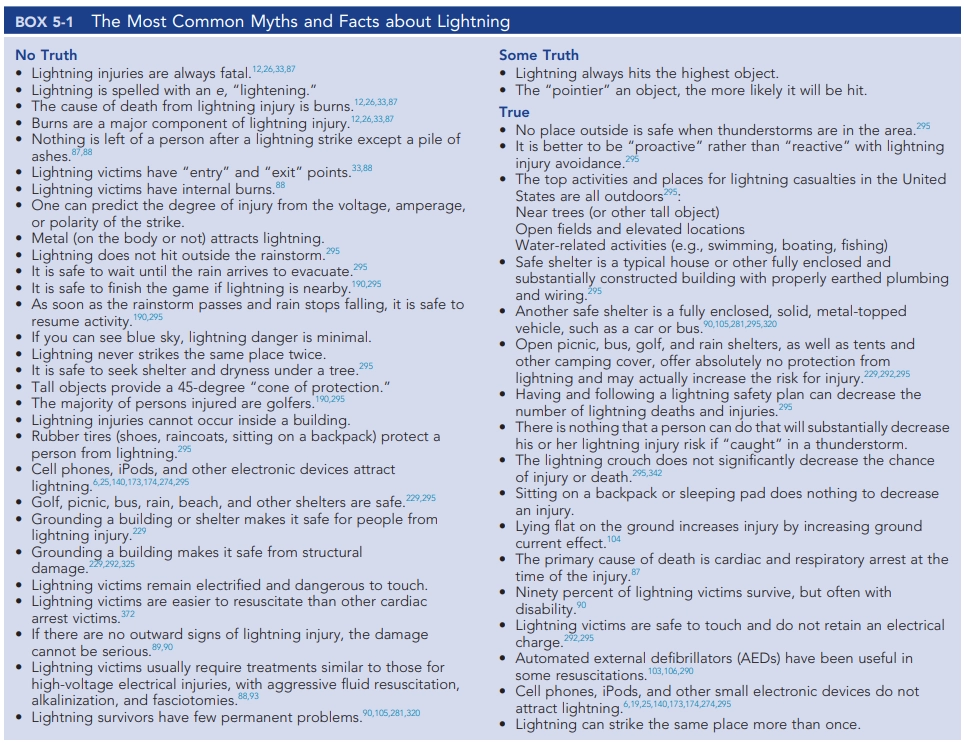
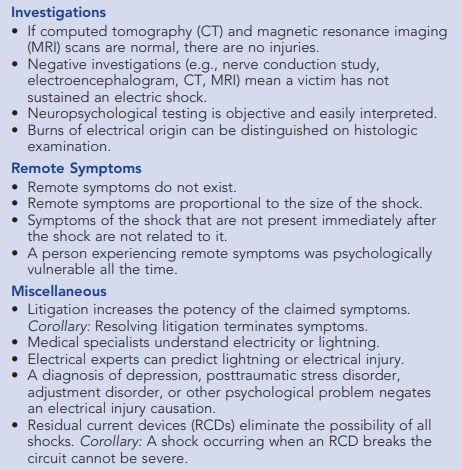
Two other myths are, “if you’re not killed by lightning, you’ll be OK”, and “if there are no outward signs of lightning injury, the damage can’t be serious”. Several permanent sequelae, including nervous system injury (e.g., peripheral neuropathy, chronic pain syndromes) and neuropsychological symptoms (e.g., severe short term memory difficulty, difficulty processing new information, attention deficit, depression, post-traumatic stress disorder (PTSD).
“Suspended animation” tenet that lightning victims who have resuscitation for several hours or who have been in cardiac arrest for a prolonged period without resuscitation may still successfully recover. Prolongation of the QT interval, raising the theoretical possibility of Torsades de Pointes as a mechanism for the suspended animation reports. A study of Australian sheep struck by simulated lightning showed histologic evidence of damage to respiratory centers located beneath the fourth ventricle.
Another series of animal experiments with simulated lightning strikes to hairless rats showed that it is possible to obtain skin changes (kerauno-graphic markings), primary and secondary cardiac arrest with prolonged respiratory arrest, and temporary lower extremity paralysis.
METEOROLOGIC LORE
Small rivers, lakes, buildings, and hills can influence the formation or path of thunderstorms. A small lake that is 1km wide will have a thunderstorm traverse it at a typical velocity of 30km/h over approximately 2minutes. A very large mountain or ocean shoreline poses a different situation because of stationary large surface temperature contrasts
“Lightning never strikes the same place twice”, noted Benjamin Franklin in the late 1700s. If the same meteorologic circumstances that caused the original lightning strike to occur are present, it is likely that lightning will strike repeatedly in the same place.
MYTHS REGARDING ELECTRIC CURRENT CONDUCTION
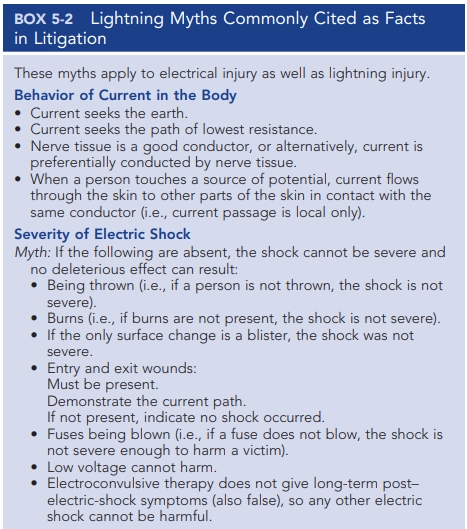
The myth that “electricity seeks the least resistant path between two points” leads to the conclusion that there is only one line or tissue in which current will travel and produce damage. To the contrary, electric current is carried along all tissues and paths in inverse proportion to the resistance within the tissue/path. All structures be risk, may be multiple paths between any two points.
Another myth is that lightning always seeks the earth, and furthermore, seeks the shortest path to the earth. Electrical energy may be conducted between two points on a body, neither of which need be connected to the earth (e.g., the shock delivered to a person with each hand touching separate conductors).
People commonly assume that no psychological effect will occur if lightning/ electric current does not transit the brain. Multiple pathways exist. Be PTSD from the injury, blunt injury, and other factors (e.g., cortisol release) can cause profound effects on the brain. Certainly, peripheral electric shocks have been shown to have effects on brain tissue.
Lightning and electric currents are highly nonlinear and not amenable to simple circuit analysis.
MISCELLANEOUS LORE
Using a cell phone: no scientific evidence that electromagnetic wave, the metal in a phone, or any other factor increase the risk for lightning strike. Be outside and distracted from paying attention to the weather while they are talking or texting.
Other specific myths and misconceptions
· Victims may have internal burns. False; there may be cellular and nervous system damage.
· Wearing rubber-soled shoes is protective. False; wearing raincoat, sitting on a foam pad or backpack.
· The rubber tires on a vehicle protects a person. False; electrical energy travels along the outside of a metal conductor (the car body). It dissipates through the rainwater to the ground or flashes off the axles or bumper of the car. Tires may be torn or exploded.
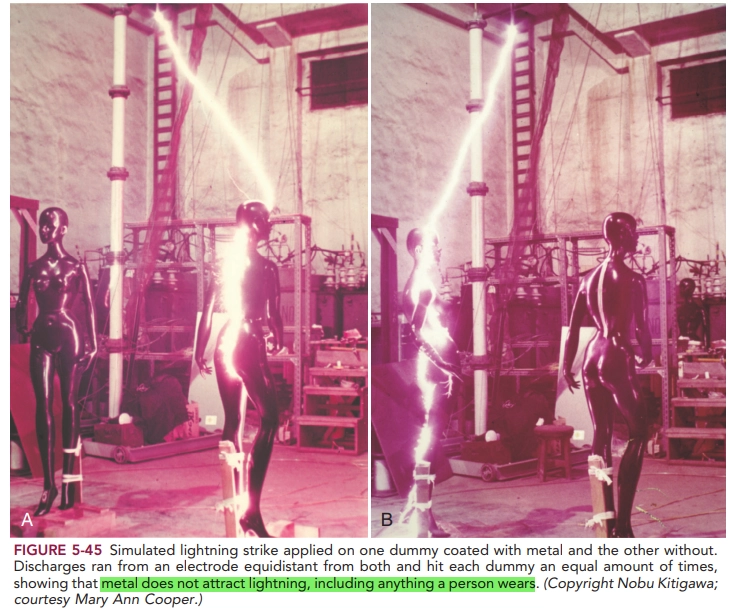
· Metal attracts lightning. False; conduct electricity and lightning after they have been struck. Their composition is not itself a significant factor for the propensity to be struck. The primary factors – height of an object, isolation of an object from taller objects, pointed object (not a factor for people).
· Lightning always hit the highest object. False; lightning is only affected by objects within approximately 30-50m from its leading tip. Lightning branching meets the earth in several places, difficulty in being sure of the path of a cloud to ground lightning event.
· Carrying an umbrella increase risk. False; a foot or two has a very minor effect.
· The lightning crouch position can be used to significantly protect someone caught in a thunderstorm. False; a foot has a very minor effect. Ground current, side flash, direct contact, upward streamer.
· Lightning may occur without thunder. False; whenever there is lightning, there is thunder. Thunder is seldom heard more than 16km from the lightning stroke. Be difficulty to hear because of wind, tree blowing, noisy activities, sound being blocked by building or mountains.
INCIDENCE OF INJURY
The number of lightning fatalities in the United States and other developed countries is well known, but the global figures are not reliable. The trend from an agricultural to urban economic milieu.
U.S. LIGHTNING CASUALTIES AND LIGHTNING
The number of annual lightning fatalities in the U.S. decreased greatly from a maximum of more than 400 deaths early in the 20th century to less than 30 deaths in recent years.
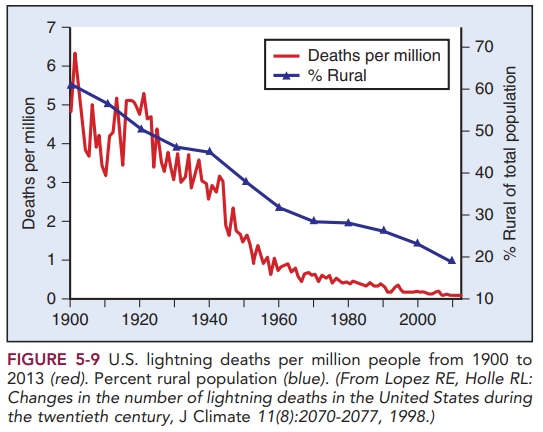
During this period, in addition to the rural to urban shift, there was also a significant increase with respect to lightning safety in the quality of dwelling, workplaces, schools, and public and private building. Since the early 20th century in availability of fully enclosed, metal topped vehicle. Lightning safety education and awareness campaign.
On average, 10 lightning-related injuries require medical treatment per lightning fatality over a large geographic area and a long period. 84% of fatality: males, most common situation: single victim.
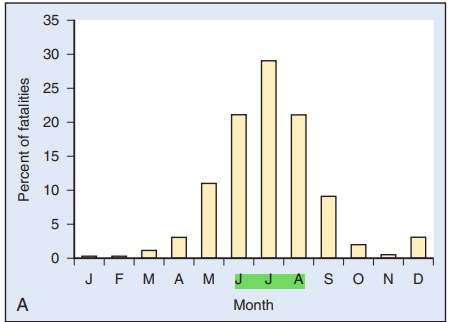
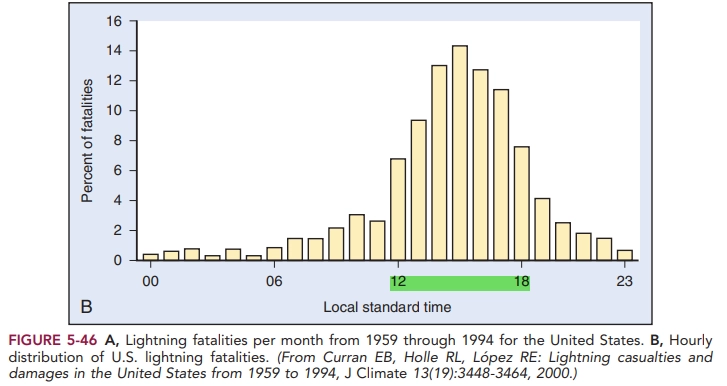
Approximately 2/3 of cloud to ground lightning flashes and casualties occur between noon to 18:00, during summer of June, July, August. Sometimes unexpected variation.
The first steps to combining population with lightning data were made by noting that U.S. lightning fatalities tend to be concentrated in urban areas. Combines lightning frequency with population data.
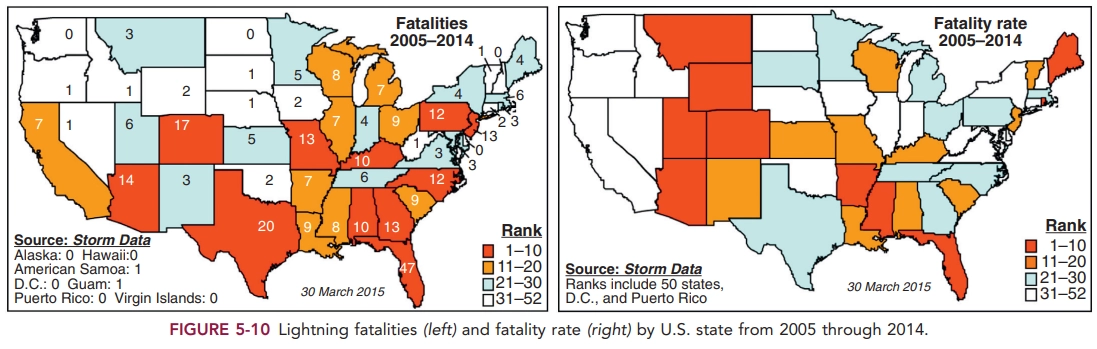
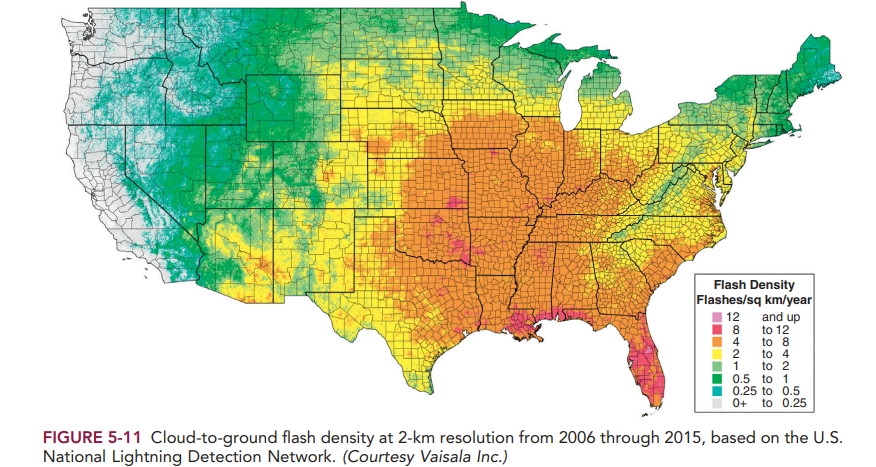
GLOBAL LIGHTNING CASUALTIES AND LIGHTNING
No reliable complete global information exists regarding fatalities or injuries.
Two recent global lightning fatality studies estimate 6000, 24000 fatalities per year.
Injuries are 10 times as frequent as are fatalities.
Developed vs developing countries. Single incident case vs multiple fatalities, indoor environment.
Low lightning fatality rates in yellow (<0.5/million/year), medium in orange (0.6-5.0), red (>5.0) for highest.
The most common shading is white, which indicates that no national lightning casualty summaries have been published.
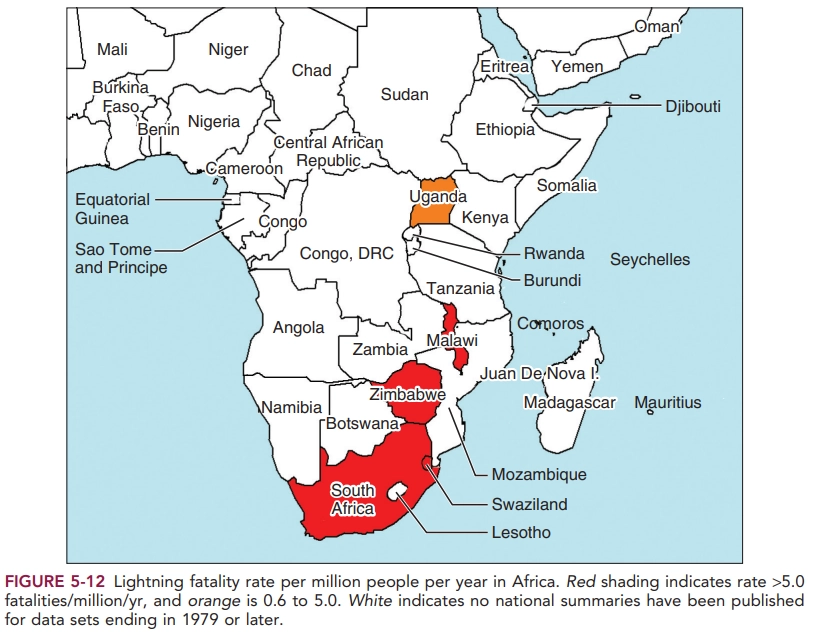
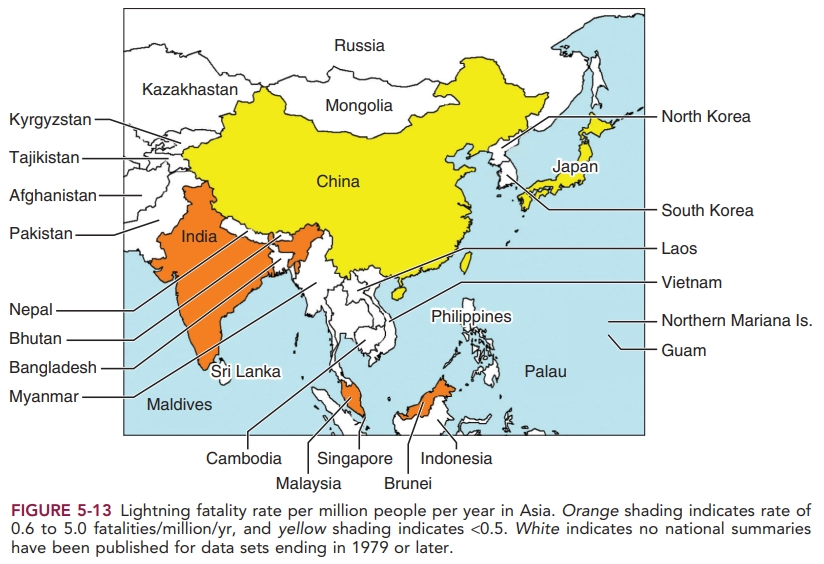
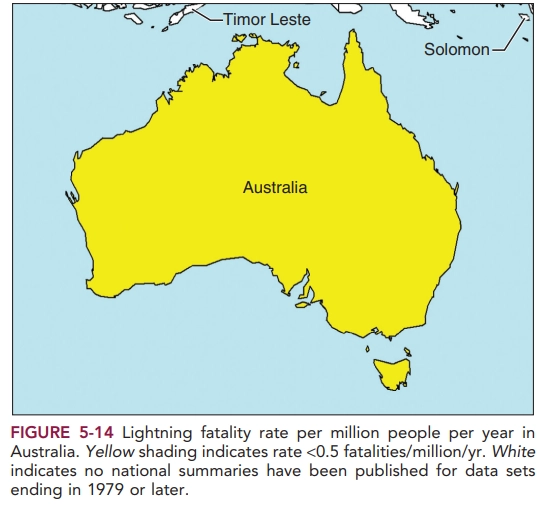
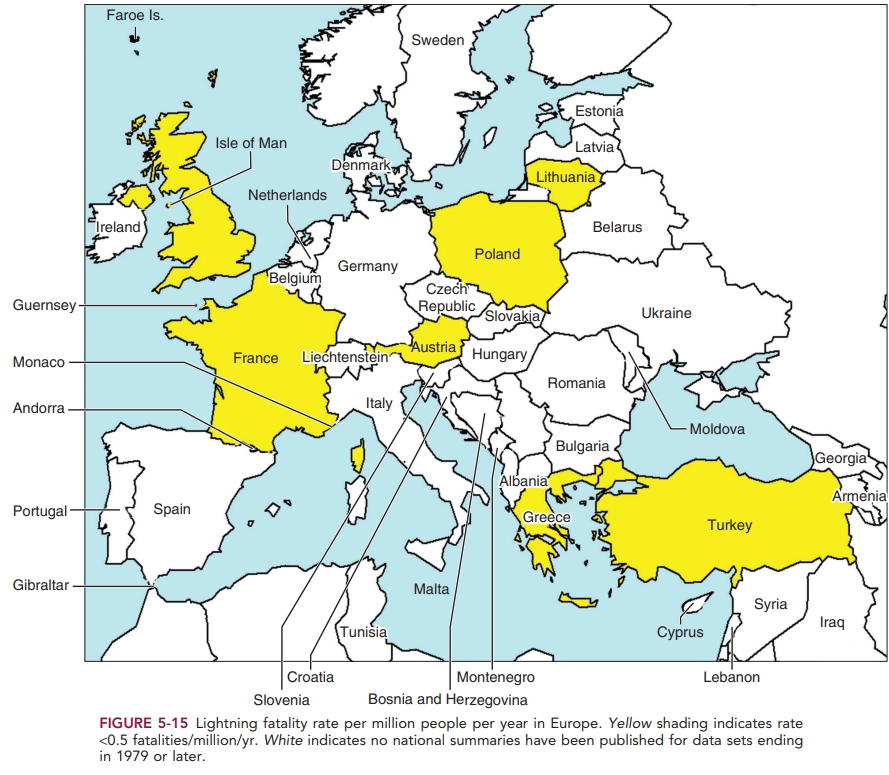
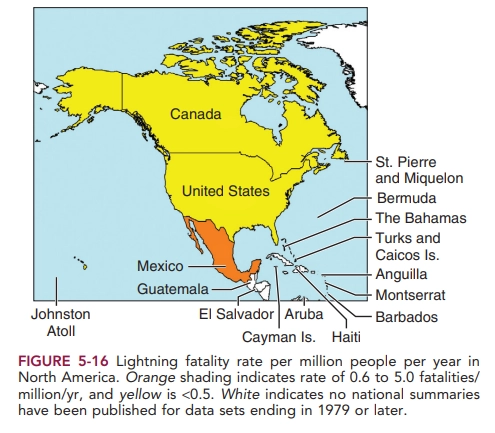
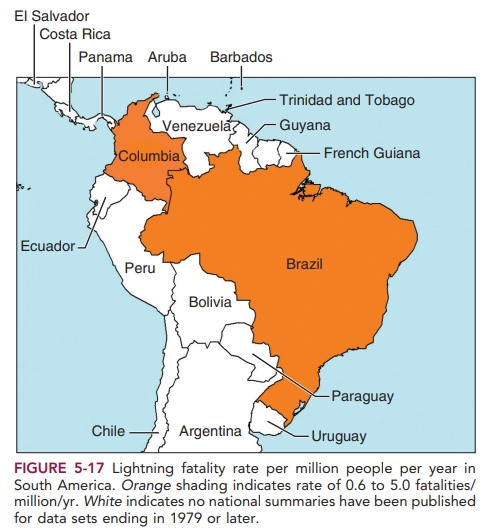
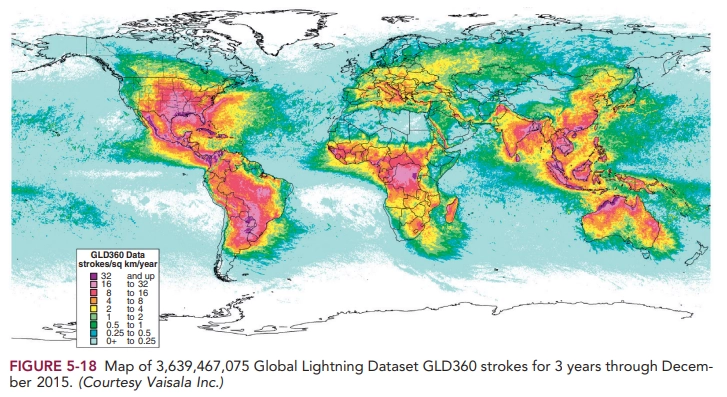
Global Lightning Network (GLD 360) is a real time network that seamlessly covers continents as well as oceans to show lightning on monthly, regional, and annual scales. Most of the threat, land area.
Lightning is not uniformly distributed. Slopes of tall mountains, tropical coastlines have much more lightning at certain times of day and year than do others.
TRENDS IN LIGHTENING FATALITIES
The highest population weighted annual rates of lightning fatalities occur in countries with the following feature:
Fewer lightning safe dwellings, workplaces, school, and other facilities than in more developed countries.
Fewer easily available, fully enclosed, metal topped vehicles.
High rate of labor-intensive manual agriculture, mining, and other activities.
Lack of awareness or data about the lightning threat and its avoidance.
Unavailability or delay in medical treatment.
CONCLUSIONS
The impacts of lightning vary greatly between developed and less developed countries. In the U.S. the population weighted rate of lightning fatalities and injuries has greatly decreased from a maximum approximately a century ago.
Two priorities: protecting people working in labor-intensive agriculture, providing lightning-safe dwelling, buildings, and vehicles.
Data from global lightning detection networks can help identify areas with the highest density of lightning. Sound science, education, data, infrastructure, inexpensive lightning protection system.
EARLY SCIENTIFIC STUDIES AND INVENTION OF THE LIGHTNING ROD
Benjamin Franklin is generally regarded as the father of electric science and during his lifetime was known as the American Newton. Before his work, it was thought two distinct types of electrical phenomena existed. Franklin’s work unified these two aspects and is responsible for renaming them “positive” and “negative”. He went on to prove that lightning is an electrical-phenomena and that thundercloud are electrically charged, as demonstrated by the famous kite and key experiment. Because of the damage he saw to buildings, he invented the lightning rod and announced its use on 1753 in Poor Richard’s Almanack.
In the 1750s and 1760s, use of lightning rod became prevalent in the U.S. for protection of building and ships. In Europe, be blasphemy to install such devices on church steeples vs “divine protection”.
Properly installed lightning rods and lightning protection systems neither diffuse nor attract lightning, but rather protect a building by providing a preferential attachment point for the lightning stroke, allowing the current to be harmlessly directed through the system to the ground.
Lightning can otherwise travel into or through the building and cause extensive damage.
The first lightning rod conference was held in London in 1882, recommendations from this conference were published that year and again in 1905.
Building codes and industrial standards may require particular structure to have lightning protection systems. Be considered include relative frequency of strike in an area, height, construction, design, degree of protection desired, utility.
Economic impact vs human impact, individual vs larger groups.
At home, the most reliable way to protect electronic equipment is to unplug it from the wall before arrival of a thunderstorm. Surge protector, not completely. The best source of information on lightning risk for people is the lightning protection institute.
PHYSICS OF LIGHTNIG STROKE
LIGHTNING DISCHARGE
Describes the simplified and most common mechanisms of thundercloud formation and lightning strike.
Thunderstorms can be formed in a number of ways to produce the necessary vertical updrafts. These ingredients are afternoon heating of warm moist air, large scale upward atmospheric motions, sea and lake breezes, lifting of deep layers of the atmosphere by mountains, and cold fronts.
As warm air rises, turbulence and induced friction cause complex redistribution of charges within the cloud. Although the ground temperature may be very warm to hot, thunderstorms are tall enough that their highest parts are colder than freezing. In fact, all lightning comes from clouds that have ice aloft at temperature colder than freezing; at these temperatures, water droplets and ice particles of several types within the cloud acquire and increase their individual charges as they interact and transfer charge. The varying sizes and shapes of the frozen snow and ice crystals, supercooled water droplets, and hail are moving vertically at different speeds because of their different fall speeds. The result is separation of charge into several layers. A large potential difference develops between layers as a result of interaction of charged water and ice particles, updrafts that vary in time and space, and internal and external electric fields within the cloud.
Lower layers of the cumulonimbus cloud generally become negatively charged relative to the earth. The earth, which normally is negatively charged relative to the atmosphere, has a strong positive induced charge as the negatively charged thunderstorm passes overhead. The induced positive charge tends to flow as an upward current from trees, tall buildings, poles, people, or sometimes very small objects or flat open ground beneath the overhead thunderstorm cloud and may move up in upward-propagating leaders.
Normally, the discharge of the potential difference is discouraged by the strong insulating nature of air. Too strong the potential difference may break down, developed, dissipated as lightning.
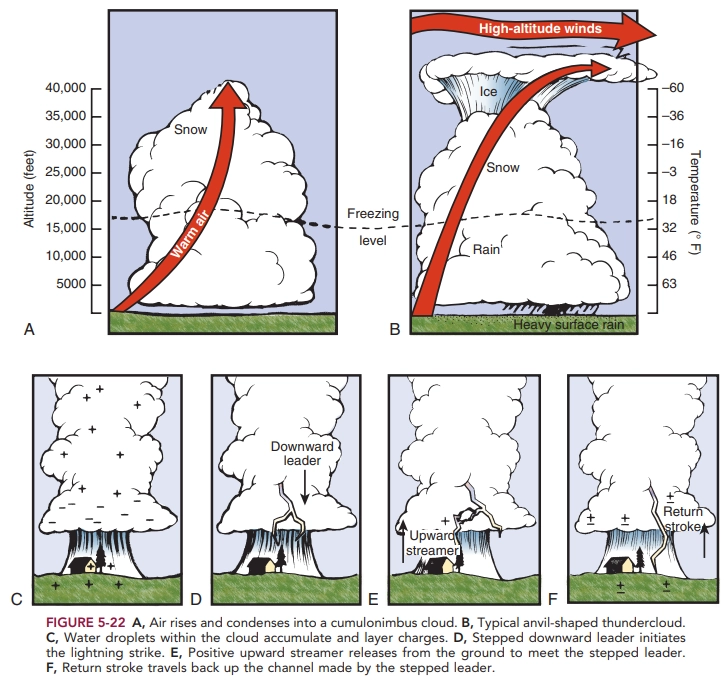
The leader travels at about 1/3 the speed of light (1*108 m/sec), the potential difference between the leader’s lower tip and the earth ranges from 10-200 million volts. The leader travels in relatively short branch steps downward about 50m and then retreats upward. The next branches go down another 50m. This up and down multiple branching process continues until the leader comes to within 30-50m of the ground. Because lightning follows this ionized path, its lower tip only can sense the existence of nearby objects within a radius of about 30-50m, meaning that lightning will not affect by the existence of a hill or tower farther away. Being within 50m of the lowest tip of cloud to ground lightning flash as it comes to ground is extremely unsafe.
DIAMETER AND TEMPERATURE OF LIGHTNING
Standard photograph: 2-3cm
The diameter of the channel, measurement of hole and strips of damage: 0.003-8cm
Hard metallic structures sustain smaller punctures than such as tree
The ionized sheath around the tip of the bright leader stroke 3-20m
The temperature, 8000° vs 50000°, after a few milliseconds fall to 2000-3000° (high voltage electric arc)
FORMS OF LIGHTNING
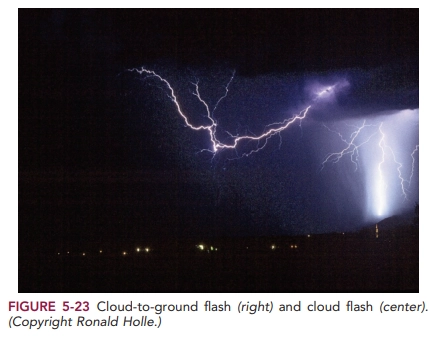
Lightning can be divided into cloud to ground and cloud (intracloud) flashes.
Cloud to ground: return strokes, average 3-4/flash, 1.47 ground contact/flash
All ground to cloud: (<0.01 of 1%), special circumstance of high towers or mountains
Cloud flashes: be measured to extend 305km, last 5.7seconds
Ball lightning: orange, blue, white globe between the size of a softball and a basketball
5-10% positive cloud to ground flashes, during winter, on the high plain
One return stroke, more to have long, continuing current that may impart more energy to a person
THUNDER
Thunder is formed when shock waves result from the almost explosive expansion of air heated and ionized by the lightning channel. Accepted features of thunder.
· Cloud to ground lightning flashes produce the loudest thunder
· Thunder is seldom heard more than 16km away
· The time interval between the perception of lightning and the first sound of thunder, 3sec/km
· Wind, rain, man-made noise such as traffic, vegetation, intervening buildings, hills, mountains reduce audibility of thunder
· Atmospheric turbulence reduces audibility of thunder
Flash to bang method of counting the seconds between seeing a flash and hearing thunder.
3sec/km
MECHANISMS OF INJURY BY LIGHTNING
ELECTRICAL INJURY PHYSICS REVISIED
Kouwenhoven’s 6 factors – AC vs DC, voltage, amperage, duration, pathway, resistance
Be neither useful clinically nor useful predictively
CONCEPTS IN ELECTRICITY
Voltage can be regarded as an external force or pressure applied to an object to force it to conduct electric current, like water pressure.
When voltage is applied, a current (measured in amperes) flows though the conductor (e.g., object).
The amount of current is inversely proportional to the resistance of the object.
For a given applied voltage, the higher the resistance of the object, the smaller the resulting current.
For technical or generated electrical injuries, the voltage is externally selected, the resistance of an object is a given, and the current is the result.
If the resistance is predictable, then resistance, voltage and current can be linearly related.
Ohm’s law (voltage = resistance * current)
However, as tissue reacts to injury, resistance changes. Uncertainty, too complex, error to be used.
Generated electricity, voltage-driven phenomenon: resistance change, calculated or measured current.
Lightning, current-driven phenomenon: the resistance of the body is not uniform. Advanced calculation methods must be used to find the voltage across the body when struck and subjected to lightning current. Once lightning attachment occurs and an open channel is made, the voltage drops to zero, making Ohm’s law meaningless as an avalanche of current begins to flow.
Another concept to consider is that of an electric field. When a voltage is applied across a definite area of space (e.g., the gap between a cloud and the ground), an electric field result. Air generally has a high resistance and is a good insulator, conducting very little current under these circumstances. Electric field is defined as the voltage across the gap, divided by the width of the gap. If the magnitude of the field is increased, it reaches a size where the intervening insulator will break down. That is an avalanche of electron will occur in the gap. The voltage necessary to flash over the air gap about 4000 V/cm depending on humidity and other factors.
Technical electricity supply vs lightning current
Technical electricity is provided to a household at a constant voltage: current flows in devices connected to this supply. Flashover is rare at relatively low voltage in domestic use. The behavior of any current that results is much more linear, although not perfectly so when it involves the human body. The possibility for conduction of large internal current exists, and for longer periods of time, because flashover is absent. Heat generated by this current is much more likely to result in burning. Conduction is likely to be much more prolonged. Resultant muscular reaction for a prolonged period locks muscle through contraction to the source, prolong the contact. Prolonged conduction internally can expose the heart to prolonged, damaging passage of current. VF arises proportionate to the amount of conducted current and the duration of time over which it is conducted. The current flowing for a given time allows one to estimate the likelihood of VF. A victim who is till in contact with the electrical source continues to be dangerous for the human rescuer to touch.
Lightning current is of very short duration (microseconds). Burning is therefore minimal. Flashover is highly likely, making interval conduction minimal. Once discharge is completed (fractions of a second), a victim is safe to touch, current, though short lived, is large. Some sequelae of both types of current passage are similar otherwise, particularly the psychological sequelae.
MECHANISMS OF INJURY
General conduction effects
Lightning is dangerous to human predominantly because of heat and less because of concussive force. Lightning may injure indirectly through forest fires, house fires, explosions, or falling objects. Only injuries directly caused by lightning are discussed here. When lightning current is injected into an individual, current is initially transmitted directly through the individual for microseconds until internal structures (capacitances) become charged, and flashover occurs over the surface of the individual as the breakdown field is reached. After that, internal current reduces dramatically.
Internal current phase may cause cardiac and respiratory arrest, particularly if the pathway primarily includes the heart. As the body’s electric potential builds up in response to internal current, it produces an electric field over the surface of the body.
Specific strike mechanisms
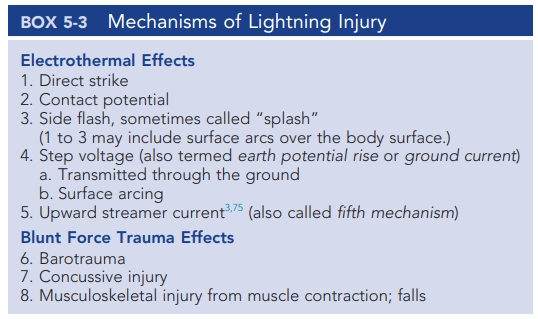
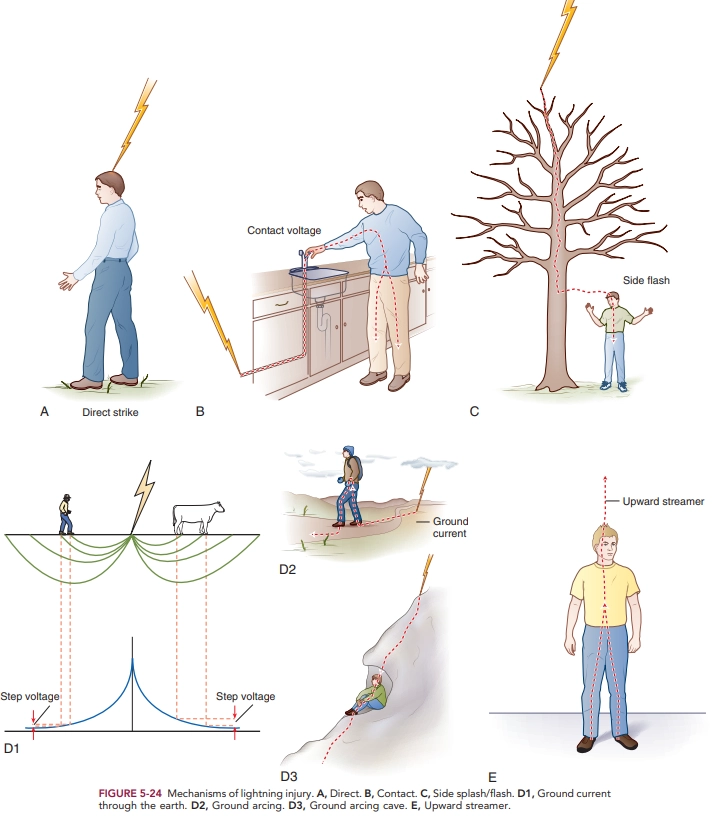
There are 5 mechanisms by which lightning current may impinge on a body.
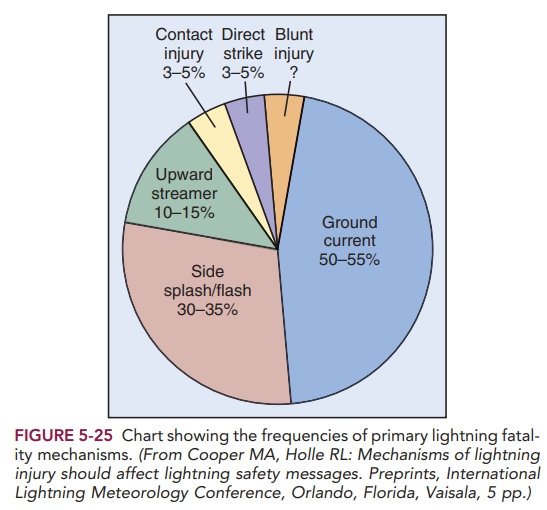
The percentage of injuries, mortality, speculative, not derived from studies.
1.
Direct strike
This most often occurs in the open when a person has been unable to find a safe location
3-5% of fatalities in developed countries
1.
Contact (touch potential) injury
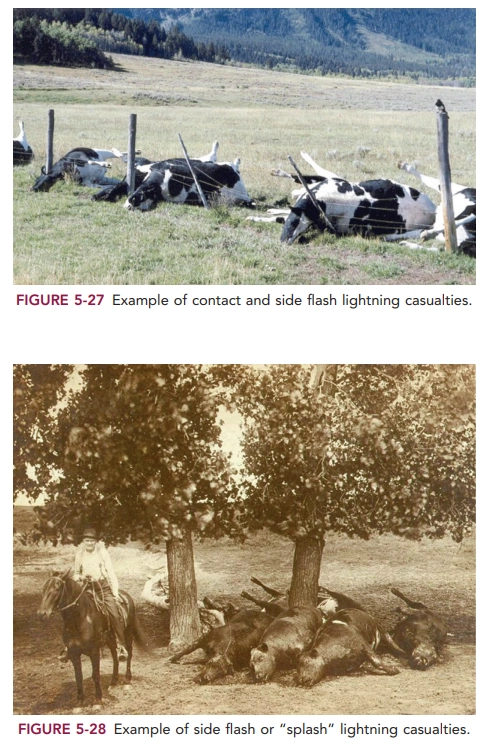
A voltage gradient is created on that object from strike point to ground or to another point of contact, and the individual in contact with the object is subject to the voltage between his or her contact point and the earth.
Static electricity may be discharged when a person reaches for a car door or stands close to a metal window or door frame during a thunderstorm, because of the surrounding electric field induces static electrical charges. Be not lightning injury.
1.
Side flash
Side flashes occur when lightning that has hit an object, such as a tree or building, travels down that object before a portion jumps to a nearby victim. Safety protocols stress that standing under or close to tree or other tall objects is dangerous and to be avoided. Current divides itself between the two paths in inverse proportion to their resistances. Side flash may also occur from person to person. 측면 섬광은 나무나 건물과 같은 물체에 부딪힌 번개가 그 물체를 따라 이동하다가 일부가 근처의 피해자에게 떨어질 때 발생합니다. 안전 프로토콜에서는 나무나 기타 높은 물체 아래 또는 그 근처에 서 있는 것은 위험하므로 피해야 한다고 강조합니다. 전류는 저항에 반비례하여 두 경로로 나뉩니다. 측면 섬광은 사람 간에도 발생할 수 있습니다.
1.
Earth potential rise (step potential, ground current)
Earth has a defined resistance, and thus voltages are set up in the ground, decreasing in size with distance from the strike point. If a person is standing in an area where EPR is active, that is, near the location of a cloud to ground lightning strike, a voltage will appear between the feet, and current will flow through the legs into the lower part of the body. Four legged animals are likely to sustain even more serious damage if the current goes between back and front legs, where the path may involve the heart.
For the special case of indoor or telephone injury, EPR may account for 80% or more of the injuries; all these relate to hard wired phones. Any practices that bring earth voltage more easily inside a dwelling will make this worse.
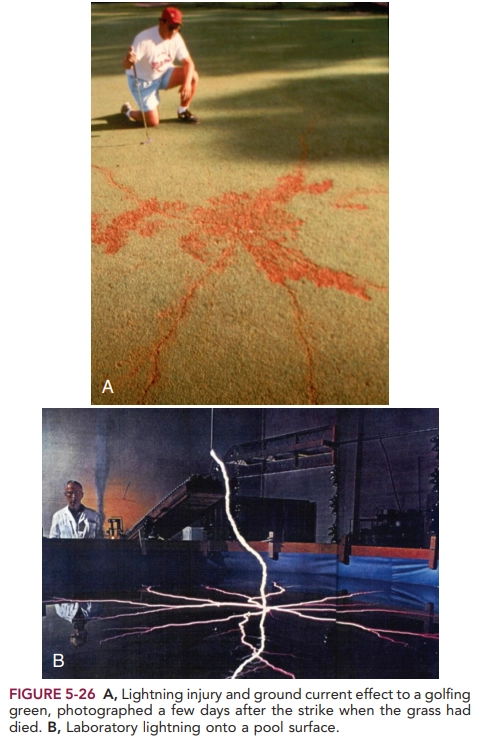
EPR can also occur in a manner similar to the surface flashes over a body, with arcs developing over a ground surface. The grounding earth is not homogenous and provides arc generation points.
Irregularities occur on mountainsides.
Ground current effects are more likely to be low level and less likely to produce fatalities. However, multiple victims with injuries are frequently found in an arc around the strike point to earth.
1.
Upward streamers
Injury may occur when a victim serves as the conduit for one of the usually multiple upward leaders induced by a downward stepped leader and its field. Streamers occur even when there is no attachment between them and the stepped leader. Although one might think that these streamers are weak in energy compared with full lightning strike, they may carry significant and dangerous current through or around the victim.
BAROTRAUMA AND BLUNT INJURY FROM LIGHTNING
Injuries may also be characterized by more indirect, nonelectrical mechanisms, such as concussive injuries, blast injuries, and blunt force injury from being thrown.
Persons may sustain blunt injury either by being close to the concussive force of the shock wave produced as lightning strikes nearby of if ground current or some other mechanism induces an opisthotonic contraction.
A curious but common and often diagnostic finding is the tearing, melting, magnetizing, or signs of arcing seen in clothing, watches, and other objects worn by the victim.
1.
Flash moisture vaporization theory.
Blast injury results from the explosive vaporization of superheated water along the path of the surface flashover. Lightning blast injury to the skull, brain, and viscera has been demonstrated in animals.
1.
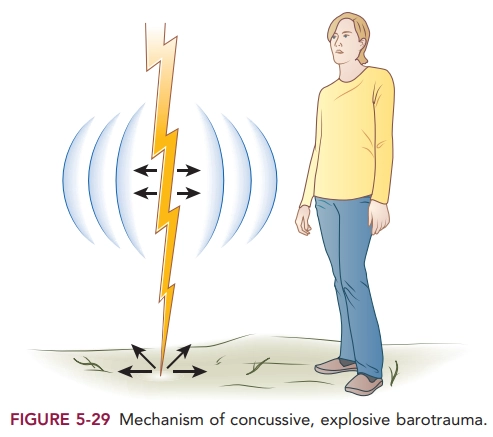
Concussive/ explosive force, from being close to the lightning channel
As lightning superheated and the air expands explosively, a pressure-shock wave can occur. One can hear thunder from as far away as 14km - 25km, indicating a tremendous amount of energy in involved in generation of thunder. Even before the noise is produced, a pressure blast wave can affect people close by the lightning channel. During a lightning strike, the channel temperature will be raised to about 25,000 kelvins (K) (24,727°C) in a few microseconds, and as a result, the pressure in the channel may increase to several atmospheres (10-20atm: 1013-2026 kilopascals: kPa). The resulting rapid expansion of the air creates a shock wave.
Shrapnel injury; one victim had multiple small fragments of shattered concrete pavement embedded in her skin.
Tear and tatter clothing, fracture bones, cause TM rupture, lung contusion.
TM rupture may make the diagnostic difference in difficult cases.
A minimum threshold of about 20 kPa to produce minor eardrum rupture. The threshold for lung damage occurs at about 103 kPa of blast overpressure.
Pneumomediastinum and bleeding lung. As the blast wave impacts the human body surface, a pressure differential is generated at that surface, resulting in rapid acceleration and movement of the surface, with propagation of shear and stress wave through the tissue. The force of the pressure blast wave may be another mechanism that causes falls, in addition to head, brain, and other blunt trauma.
No evidence suggests that lightning victims sustain severe blast related disfigurement, such as blast related cavitation. About 690kPa is the minimum threshold for serious damage to humans.
A 4.5kg TNT equivalent bomb would rupture the eardrum of a 70kg person within approximately 10m; lung damage at about 5m, the body at about 3m.
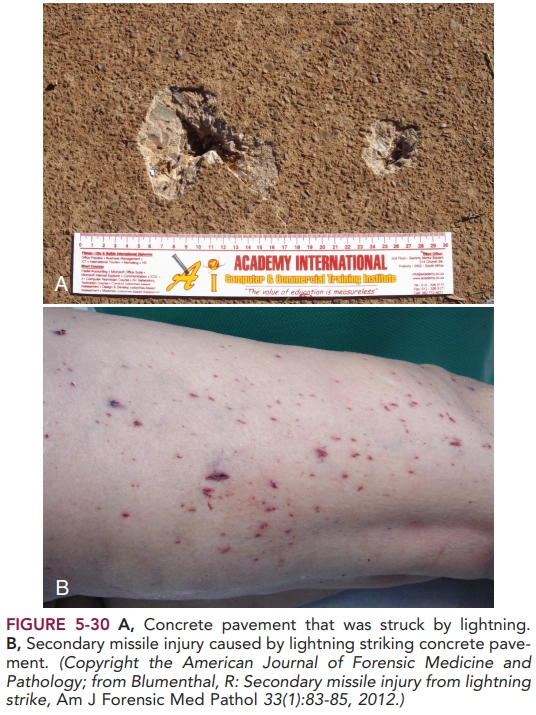
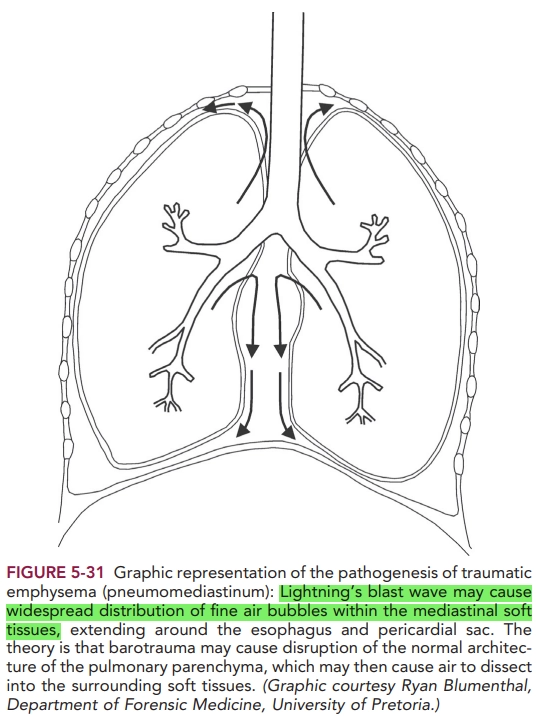
PATHOPHYSIOLOGY OF LIGHTNING
ELECTRIC FIELD EFFECT
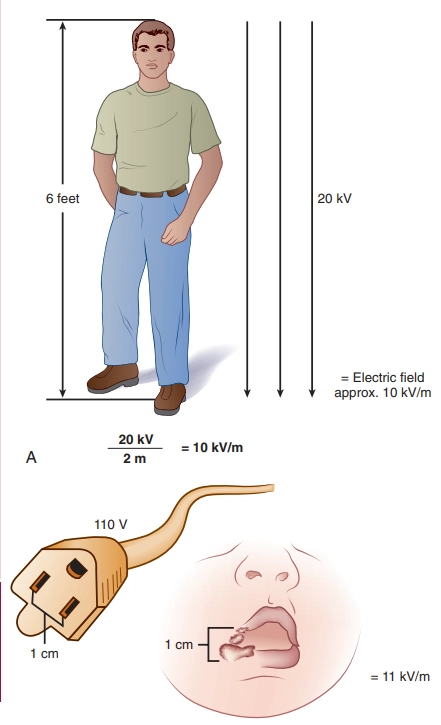
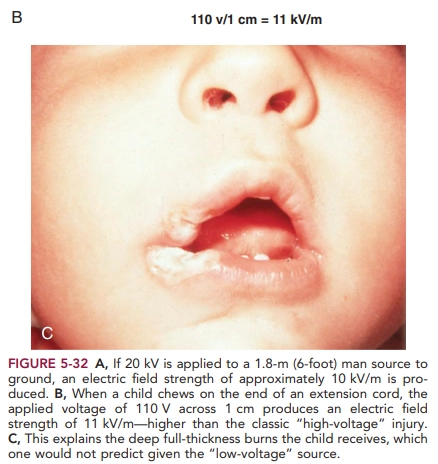
Even though no one would classify the child’s injury as being caused by high voltage, it is from a high electric field strength and produces the same tissue destruction (internal damage) in a small localized area, much as would a high voltage injury to the standing man. The difference is the distance over which the field is applied, and the localization of the field. High electric fields of approximately this size, if applied for a sufficiently long period, can rupture cell membranes by generating pores in cell membranes (electroporation).
Characteristic of lightning current vs industrial electricity
Industrial current is usually inflicted at low voltage, although voltage is a poor predictor of injuries. It is usually alternating current (AC). If the supplied voltage is measured at any one location, the voltage swings negative and positive in a sinusoidal manner. AC was chosen for electrical distribution because of ease of generation and transmission.
Lightning is neither direct nor alternating current. The best description of lightning is that it is a unidirectional massive current impulse. The cloud to ground impulse results from breakdown of a large electric field between cloud and ground, measured in million of volts. Once connection is made with the ground, the voltage difference between cloud and ground disappears, and a large current flow largely in a single direction impulse over a very short time.
Ohm’s law (V = I * R)
Energy (heat) = current2 * resistance * time
where a current flows through a resistance for a period of times
The energy is produced in the tissues, subject to the current, and largely appears as heat. This is often referred to as joule heat but is seen as temperature rises in the tissue if current is applied for a sufficiently long time.
As resistance increases, such as in the high resistance of skin, so does the heat generate by passage of the same current. In humans, when low current levels are encountered for a given time, much of the electrical energy may be dissipated by the skin, so that superficial burns are often not accompanied by internal injuries. Similarly, high level current injuries, such as lightning, applied for a very short interval will cause little burn damage.
Burns are a most important distinction between lightning and industrial electric shocks. Lightning more frequently causes only superficial streaking burns. The exception to this is when a long, continuing current stroke occurs. This is a prolonged stroke lasting up to 0.5 second that delivers a tremendous amount of energy, capable of exploding trees and setting fires. Skin at the site of a direct strike can also be mechanically or electrostatically disrupted. However, skin breakdown should not be the expectation for all lightning strikes, because direct strikes occur in only 3-5% of cases. The absence or presence of skin breakdown should not be used to deny that injury occurred or to diagnose a direct stri
ESTIMATION OF LIGHTNING CURRENTS
It takes a finite amount of time for skin to break down when exposed to heat or energy. Lightning is not present long enough to cause skin to break down. A large portion of current travels along the outside of the skin as flashover. Some experimental evidence indicates that a portion of the current may enter cranial orifices: the eyes, ears, nose, and mouth.
Functional consequences of lightning on cardiorespiratory function showed that entry of current into cranial orifices allows passage of current directly to the brain stem. In a sheep study, specific damage to neurons at the floor of the 4th ventricle was demonstrated in the location of the medullary respiratory control center. Blood and CSF are preferential path that conduct current to impinge directly on the myocardium, of inferior myocardial necrosis.
A model for skin resistance and its connection to the internal body milieu
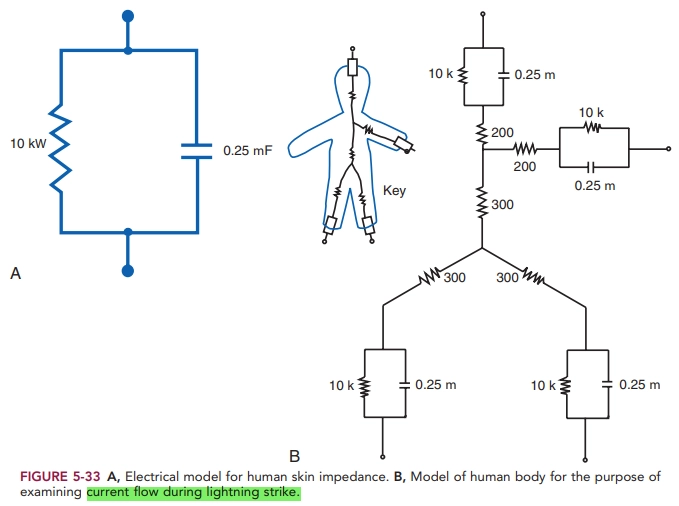
The strike begins with the stroke attaching initially to the victim’s head. For a brief moment, current flows internally as the skin becomes charged. At a voltage taken as 5kV, the skin was assumed to break down. Once the internal current increased, the voltage across the body to the earth built up, and external flashover across the body occurred, when the field reached the breakdown strength of air, 4000v/cm
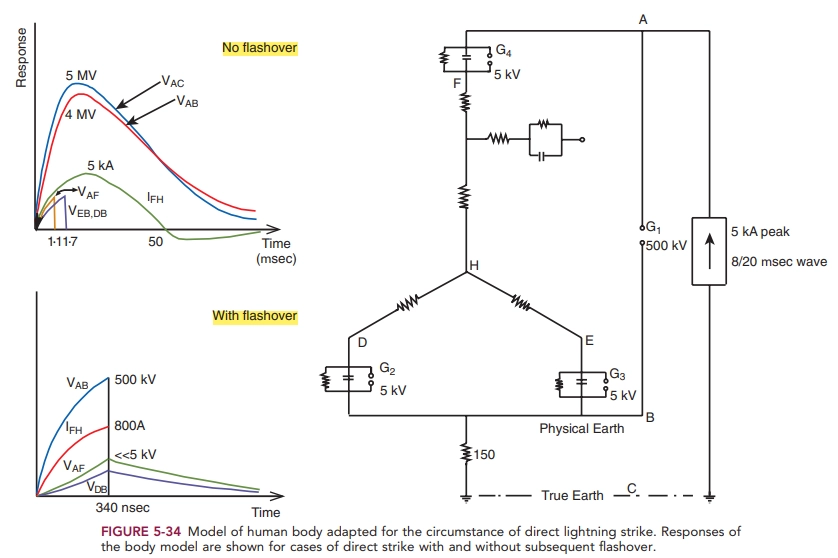
In this model, lightning applies a current to the human body. This current initially is transmitted internally, and then skin breaks down quickly and external flashover occurs.
Further modeling of step voltage injury verified, less dangerous than direct strike.
A fast flashover appreciably diminishes the energy dissipation within the body and results in survival.
Developing a model of lightning injury and showed primary cardiac arrhythmia, prolonged ventricular arrest, secondary cardiac arrest, keraunographic skin changes, and temporary lower extremity paralysis.
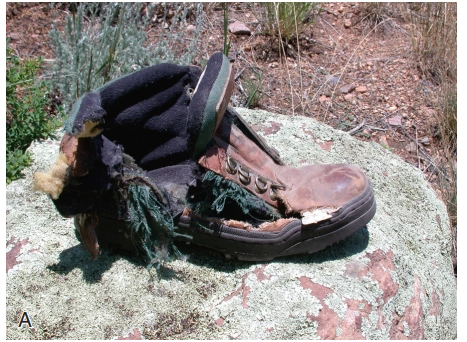
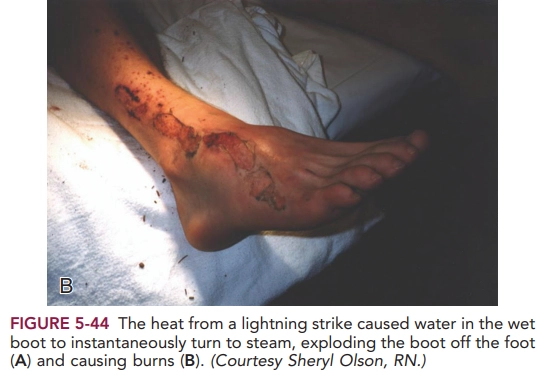
As current flashes over the outside of the body, it may vaporize moisture on the skin and blast apart clothes and shoes, leaving the victim nearly naked.
The amount of damage to clothing or the surface of the body is not an index of the severity of injuries sustained within a human. However, forensic evidence of damage to shoes and clothing, sometimes accompanied by TM rupture, may be the most important and reliable indicator.
The factor that seems most important in separating the effects of lightning form high voltage electrical injuries is the duration of exposure to the current.
ESTIMATES OF STREAMER CURRENTS
As a stepped leader steps toward the earth form a cloud, an upward leader will emanate from several objects that are possible points of attachment. The current needed to establish and maintain any upward leader nonetheless must be supplied from the earth, and if a person is the source of an upward leader, current must flow through the person. These are highly significant currents that are large enough to produce significant injury and death.
If this stream meets the downward leader, a direct strike result.
BEHAVIOR OF ELECTRIC CURRENT IN TISSUE
High voltage or low voltage electric current may be carried through tissue in a direct conduction manner, obey simple linear equations such as Ohm’s law. The result is heating of tissues under Joule’s law, with thermally indued cellular death and dysfunction. Simple passage of current may interfere with neural and muscular function. It is a feature of the nonlinearity of tissue that as conduction takes place, tissue modifies and its properties change.
MAGNETIC FIELD EFFECTS
It has been stated that some effects of lightning might be magnetically mediated. A golfer under a tree in the company of 3 other persons. Death occurred without evidence of current entering or leaving the index case. One accompanying golfer showed evidence of current traversal, but survived. Direct strike, side flash, and ground potential/ streamer potential – no evidence of any was seen.
If the stroke is close to a victim, attachment to the victim takes place and electrical effects apply.
If farther away, the magnetic fields operative without attachment and magnetic effects need to be examined. Ground potential also exists at this 1m distance.
Ds = 10 * I 0.65
D: striking distance, I: stroke current
If an object lies inside this distance, attachment of the leader to the object will take place.
Magnetic field danger in normal circumstances does not seem to exist. Certainly, special circumstances, such as the presence of a pacemaker or of an arrhythmic pathway, might exist, but in normal term, magnetic effects would not seem to be clinically significant during occurrences of lightning strike.
X-RAY AND GAMMA RAY EFFECTS
Much too small, short lived, far too distant to cause harm to people
THE FARADAY CAGE
Any hollow symmetric shape made of conducting material is such that charge introduced at any one point of its surface will distribute quickly over the entire surface. Because current flow depends on a difference of potential, there can be no internal current flow. A person inside such a container is safe from whatever impinges on the outside, with the following conditions:
1.
Provided the shape is surrounded by conducting material, the same principles apply to a nonsymmetric shape, such as a car body.
2.
Provided the wall of a building or structure are sufficiently conductive, the same principles apply to a solid building, but not an open-shield building.
3.
Full metal will form such a cage; however, wire meshing or metallic framing is sufficient to achieve the same end.
Conductivity of building walls is enhanced by metal internal wall framing and addition of metal piping, external down-piping, metal roofing, and any continuous metal or framing enclosing the space.
INJURIES FROM LIGHTNING
Exposure to high voltage generated electricity tends to be more prolonged, particularly if the victim freezes to the circuit. “long” could mean only a few to several seconds of contact. With skin breakdown, electrical energy surges through the tissues with little resistance to flow, causing massive internal thermal injuries, that sometimes require major amputations.
Lightning contact with the body is almost instantaneous, often leading to a flashover with very little energy going through the body, if at all, particularly because the vast majority of lightning injuries are indirect, as with side flash and ground current. Lightning injuries are primarily neurologic, not burns. Two useful categorization of lightning injuries by severity of injury, based on (1) the initial presentation and (2) the neurologic outcome.
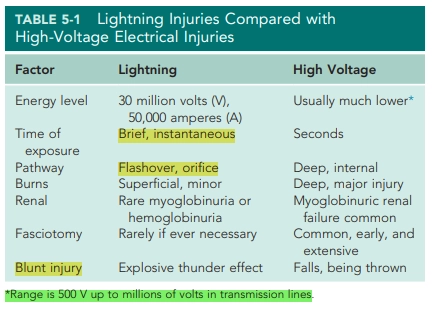
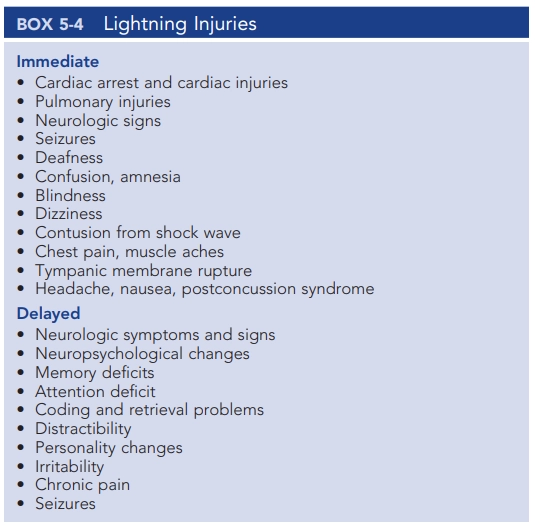
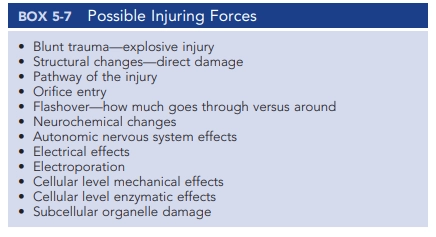
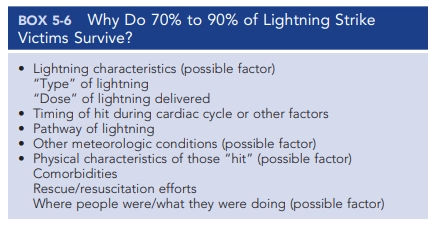
INITIAL PRESENTATION MODEL
Minor injury
Awake, dysesthesia in an extremity or feeling of having been hit on the head, recall an explosion. At the scene, they often suffer confusion, amnesia, temporary deafness or blindness, unconsciousness. Seldom demonstrate cutaneous burns or paralysis. Paresthesia, muscle pain, and headaches may last for days to months. TM rupture. Some victims may suffer PTSD and other psychological sequelae.
Moderate injury
Disoriented, combative, or comatose. Kerauno-paralysis, motor paralysis, particularly of the lower extremities, with mottled skin and diminished or absent pulse. Nonpalpable peripheral pulses may indicate arterial spasm and sympathetic instability, which should be differentiated from hypotension. If true hypotension occurs and persists, the victim should be scrutinized for fractures and other signs of blunt injury. Spinal shock from cervical or other spinal fracture (rare).
Occasionally, victims have suffered temporary cardiopulmonary standstill, although it is seldom documented. Spontaneous recovery of the pulse is attributed to the heart’s inherent automaticity. However, respiratory arrest that often occurs with lightning injury may be prolonged and may lead to secondary cardiac arrest from hypoxia or some other, yet to be elucidated cause. Seizure may occur.
Burns are uncommon. TM rupture, along with hemotympanum, may indicate a basilar skull fracture.
Whereas the clinical condition often improves within the first few hours, victims are prone to permanent sequelae, such as sleep disorders, irritability, difficulty with fine psychomotor function and attention, chronic pain and dysesthesia, generalized weakness or easy fatigability, sympathetic nervous system dysfunction, chronic headache, and sometimes PTSD. Atrophic spinal paralysis.
Severe injury
Cardiac arrest with either ventricular standstill or VF. Cardiac resuscitation may not be successful if the victim has sustained a prolonged period of cardiac and CNS ischemia. Direct brain damage may occur from the lightning strike or blast effect. TM rupture with hemotympanum and CSF rhinorrhea is more common.
The prognosis is usually poor in the severe injured group, worsening further with any delay in initiating CPR, thus causing anoxic injury to the brain and other organ system, there are anecdotal reports of successful resuscitation of lightning victims with AED.
NEUROLOGIC OUTCOME MODERL
The classification consists of 4 groups, based on time of onset, duration of symptoms, and severity of the clinical situation.
Immediate and transient symptoms
LOC, amnesia, confusion, headache, paresthesia, weakness. Kerauno-paralysis affects the lower extremity more than the upper limbs. Muscle strength and sensation usually return to normal within a few hours. Paralysis accompanied by pallor, severe vasoconstriction, and hypertension. This peculiar state is caused by transient outpouring of catecholamines.
Immediate and prolonged or permanent symptoms
Patients have structural lesions that may be seen on imaging studies or on postmortem examination. The great majority of these neurologic complications involve the CNS, including post hypoxic ischemic encephalopathy, ICH, cerebral infarction, cerebellar syndromes, and spinal cord injuries.
Possible delayed neurologic syndromes
Motor neuron disease and movement disorders. From days to years. The cause and-effect relationship remains open to question.
Lightning linked secondary trauma from falls or blast
Lightning can cause trauma when the patient is thrown or falls. Injuries include EDH, SDH, SAH. TM rupture, the most common blast effect seen in victims of lightning strike.
CARDIOPULMONARY ARREST AND CARDIAC INJURIES
Cardiac arrest
The most common cause of death in a lightning victim is cardiopulmonary arrest. A victim is highly unlikely (p <0.0001) to die unless cardiopulmonary arrest is sustained as an immediate effect of the strike. In the past, almost 75% of persons who sustained cardiopulmonary arrest from lightning injuries died, mainly because CPR was not attempted.
A primary cardiac arrest, asystole and respiratory standstill. Because of the heart’s automaticity, myocardial contraction is possible within a short time.
Unfortunately, respiratory arrest caused by unknown factors may persist, and unless the victim receives immediate ventilatory assistance, attendant hypoxia may induce arrhythmias and secondary hypoxic cardiac arrest. It is unknown whether cardiac arrest and arrhythmias induced lightning are a result of damage to central cardiac and respiratory centers in the brain, to the carotid body and other pacemakers along the cardiac control paths, to feedback control mechanisms within the autonomic nervous system (ANS), to the heart, or to a combination of these. Certainly, clinical evidence of general damage to ANS regulation has been well documented and confirmed in the laboratory.
Asystole and VF
Other cardiac injuries
Multiple mechanisms, such as direct thermal damage, coronary artery spasm, increased circulating catecholamine levels, myocardial ischemia secondary to arrhythmia, and coronary artery ischemia as part of generalized vascular injury, have been suggested.
Immediate prolongation of the QT interval has been shown in up to 64% of cases evaluated, with consequent predisposition to arrhythmia. With direct injuries, 3/4 QT prolong vs with splash or ground strike, none.
Tachycardia, bradycardia, PVC, AF have been reported after months and years.
The ST segment and T wave changes generally occur on the inferior side of the heart.
CPK, CK-MB, troponin
A typical case of infarct changes with normal coronary angiography.
The ECG changes may not occur until the 2nd day following the strike, making the initial ECG a poor tool for ischemia.
Several reports of cardiomyopathy exist. “stunned myocardium”, severe cardiogenic shock but recovered fully with no long term disability. Explained by oxygen free radical, proteolysis of the contractile apparatus, cytosolic overload of intracellular calcium, followed by reduced myofilament sensitivity to calcium.
Takotsubo shaped hypokinesis with aneurysmal dilation. Maybe due to vascular spasm, such as kerauno-paralysis.
PULMONARY INJURIES
Pulmonary edema may accompany severe cardiac damage.
Pulmonary contusion with hemoptysis, pulmonary hemorrhage, pneumomediastinum may result from blunt injury or direct lung damage.
NEUROLOGIC INJURIES
Lightning injury is primarily neurologic, with damage possible to central, peripheral, and sympathetic nervous systems.
SPECT, PET, CT, MRI, neuropsychological assessment, cognitive retraining, pharmacotherapy, psychotherapy. EEG is seldom helpful.
CNS injury
Almost 72% of victims in one study had LOC. Nearly 3/4 of these victims also suffer cardiopulmonary arrest.
Persons with cranial burns: 2-3 times arrest, 3-4 times death probability.
Autopsy findings include meningeal and parenchymal blood extravasation, petechiae, swelling and herniation of the brainstem, dura tears, scalp hematomas, and skull fractures.
Gross structural changes to the brain: coagulation of the brain substance, EDH, SDH, paralysis of the respiratory center, IVH. In hemorrhagic injuries, there is a pattern of compromise to the basal ganglia.
Animal studies: direct cellular damage occurs to basal ganglia, the respiratory center beneath the 4th ventricle, and the anterior surface of the brainstem. The path of current flow in direct strike patients is through orifices of the head (eyes, ears, nose), and the current travels caudally from the neocortex toward the basal ganglia, pituitary, hypothalamus, and brainstem.
As a result, signs and symptoms of endocrine dysfunction, respiratory and cardiac arrest, and sleep disturbances can be reasonably expected to occur. Cerebellar compromise may eventually manifest as parkinsonism, EPS, or other involuntary movement disorders.
Seizure vs absence spells, memory loss, or black out are often diagnosed as pseudo-seizure.
Some degree of lower extremity paralysis (kerauno-paralysis): demarcating around the waist or pelvis, 1/3 had upper extremity paralysis. The affected extremities appear cold, clammy, mottled, insensate, pulseless result of sympathetic instability and intense vascular spasm. Clears after several hours.
Atrophic spinal paralysis: persistent paresis, paresthesia, incoordination, delayed and acute cerebellar ataxia, hemiplegia, aphasia, quadriplegia (immediate or delayed), and progressive muscle atrophy of the upper extremities.
Antegrade amnesia and confusion, which may last for several days.
Persistent sleep disturbances, difficulty with fine mental and motor functions, dysesthesia, headache, mood abnormalities, emotional lability, storm phobias, decreased exercise tolerance, and PTSD. Centrally derived pain and psychological syndromes.
Peripheral nerve injury
Pain and paresthesia are prominent features of lightning injury, particularly in the line of presumed current passage. Symptoms may be delayed by weeks to months. Any peripheral nerve, involved.
ANS injury
Central hyperadrenergic state with superimposed autonomic storms and diffuse degeneration of the peripheral autonomic system have been reported. Autonomic dystrophy, also called sympathetic dystrophy or sympathetically mediated pain syndrome, may occur.
Such chronic pain syndromes: complex regional pain syndromes, type 1(reflex sympathetic dystrophy) or type 2(previous causalgia). Characterized by pain, edema, autonomic dysfunction, trophic changes (including atrophy 2ndary to disuse from pain), and movement disorder.
Posttraumatic headache
Resemble post-concussion symptoms. Severe, unrelenting headaches for the first several months along with nausea, vomiting spells/ Dizziness, tinnitus (telephone transmitted lightning strikes)
BURNS
The incredible short period of exposure may explain the lack of significant burn injury. Burn location provides a prognostic indicator. Cranial and lower extremity burns are associated with a 4-5 folds increase in mortality.
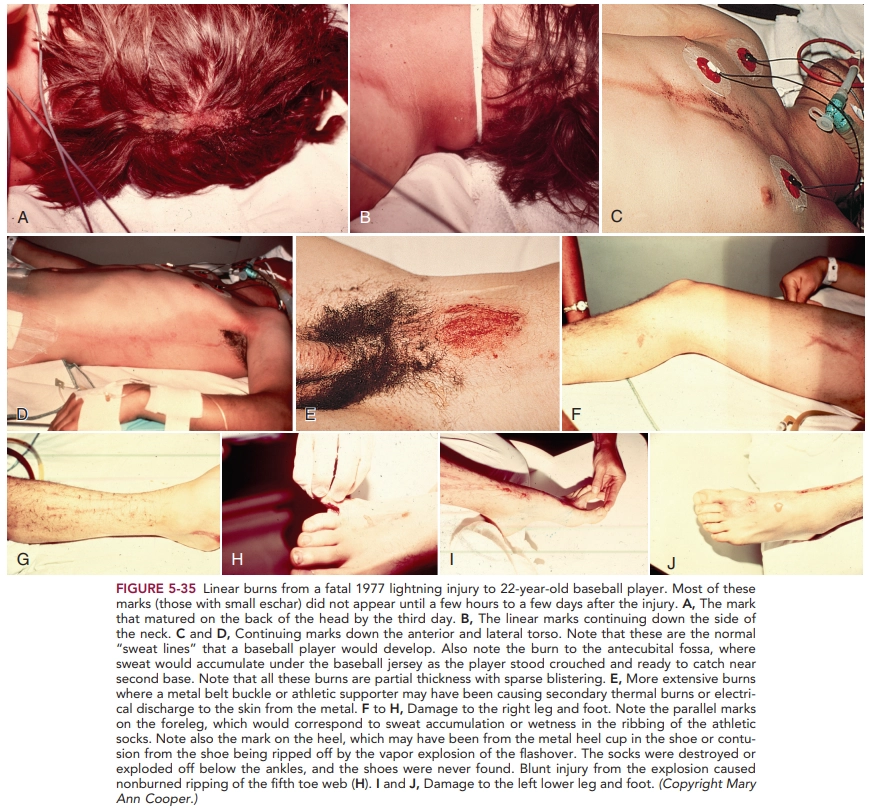
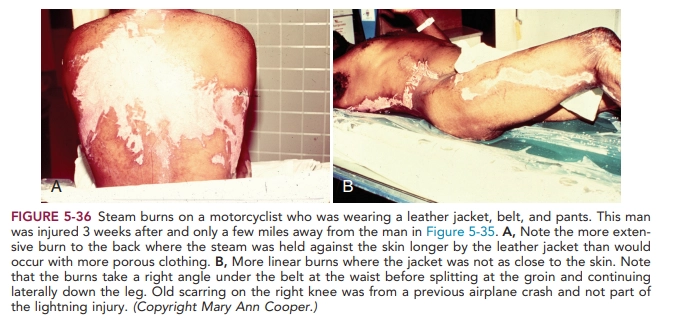
Skin injuries are influenced by amount of moisture of the surface type of clothing, and presence of metal objects worn or carried during the strike.
Entry, exit, and types of burns
Discrete entry and exit points are uncommon with lightning.
5 categories: linear/ punctate, full thickness/ feathering or flower/ thermal from ignited clothing or heated metal/ combination
1.
Linear burns
Often begin at the victim’s head and progress down the chest, where they split and continue down both legs. 1-4cm wide, follow areas of heavy sweat concentration such as beneath breast, middle chest, midaxillary line. They are not primary lightning injuries, but more likely steam burns caused by vaporization of sweat or rainwater on the victim’s skin as flashover and current flow occur around the body. In patients wearing thin or cotton clothing (be bunched area)/ nonporous leather jackets
1.
Punctate burns
Discrete circular burns, a few mm to 1cm in diameter, multiple and closely spaced. Be full thickness, resemble cigarette or cinder burns. Particular useful for forensic investigation is explosion of clothing, may show singed fibers at the edge of the damage and absence of very fine fibers on material, such as cotton, because these were vaporized or burned away.
1.
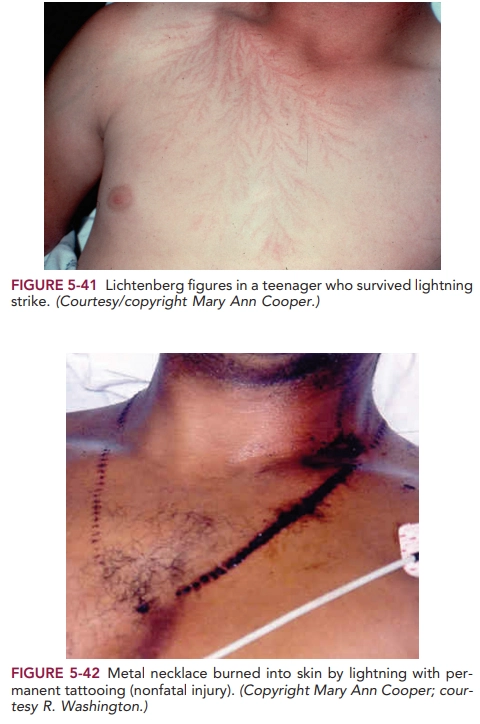
Feathering or fern-leaf mark figures
Be pathognomonic of lightning and known by such name as Lichtenberg flowers or figures, filigree burns, arborescent burns, fern leaf, and kerauno-graphic marking. These markings are not true burns, usually appearing as transient pink to brownish, sometimes lightly palpable, arborescent marks that follow neither the vascular pattern nor nerve pathways. The pattern found is similar to that on a photographic plate exposed to a strong electric field and has been compared with fractals. The most current theory is that they represent blood cells forcefully extravasated into the superficial layers of the skin from contracting capillaries, similar to a superficial bruise, which is consistent with their rapid resolution and pattern of color changes.
1.
Metal worn close to skin
Metal belt, necklace
Another theory involve discharge of current from metal to underlying skin.
On rare occasions, clothing is ignited by lightning, causing severe thermal burns.
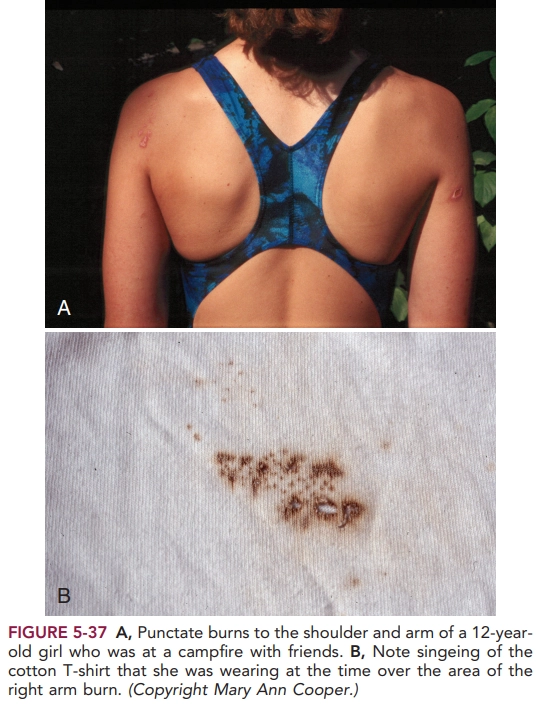
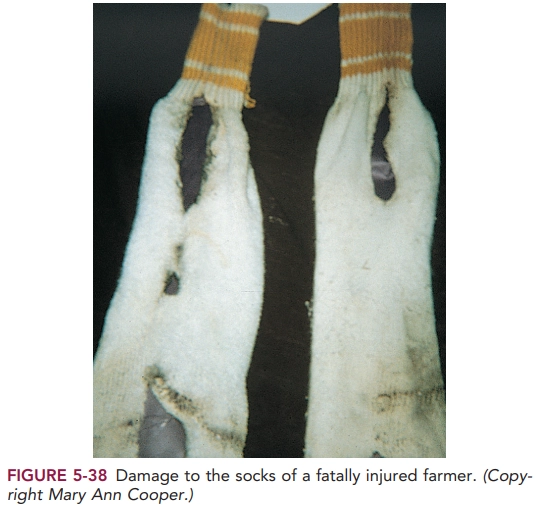
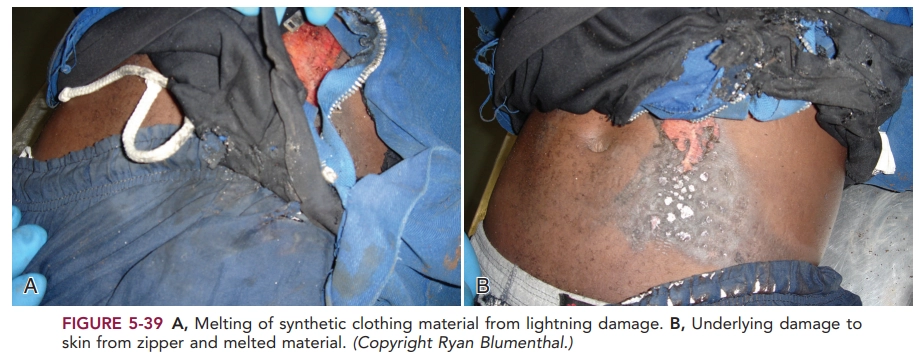
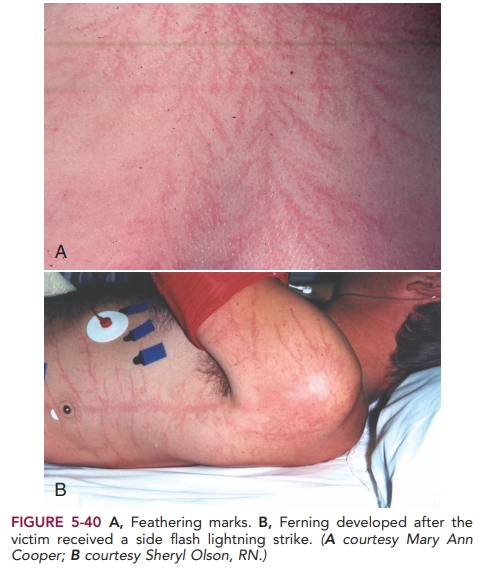
BLUNT, CONCUSSION, AND EXPLOSIVE (BLAST) INJURIES
Primary explosive injuries, like to the shock wave formed on a battlefield, an explosion, or barotrauma, mainly manifest with damage to organs containing air or gas in their interior (ear, lung, intestines), or in area with air-liquid and air-solid interphases. Pulmonary effects, pneumomediastinum, GI perforation or contusion, TM damage.
Secondary injury, fragments that impact and penetrate the body
Tertiary injuries of explosion are closed and concussive, and usually produced by falls. Back and spinal injuries unrelated to the electrical effects of lightning may result from these mechanisms. Unfortunately, these are often missed.
A burst-like injury of soft tissue occurs and discloses extensive underlying injuries, especially in the feet, where boots or socks may explode because of vapor expansion.
Alert to persistent hypotension.
Several victims have complained of jaw pain. A number have suffered loss of teeth or fillings or necrosis of the jaw & teeth and many describe metallic taste in the mouth for months.
EYE INJURIES
Ocular injuries may be caused by direct thermal or electrical damage, intense light, contusion from the shock wave, or combination of these factors.
Cataracts: within the first few days, may occur late, often bilateral. Posterior subcapsular opacities and vacuolization vs anterior midperipheral type
Corneal lesions, hyphema, uveitis, macular holes, iridocyclitis, vitreous hemorrhage, choroidal rupture, chorioretinitis, RD, macular degeneration, optic atrophy, diplopia, loss of accommodation, decreased color sense
Autonomic disturbances of the eye: mydriasis, Horner’s syndrome, anisocoria, loss of LR, transient bilateral blindness, intense photophobia.
Dilated or nonreactive pupils should never be used as a prognostic sign or criterion for brain death in a lightning victim until all anatomic and functional lesions have been excludes.
EAR INJURIES
Between 30-50% of more severely injured lightning victims may have ruptured one or both TM from shock wave effect, concomitant basilar skull fracture, or direct burn damage because of current flow into this orifice.
Conductive hearing loss: otorrhea of CSF, hemotympanum, disruption of the ossicle and mastoid
Sensorineural HL: microhemorrhage, microfracture in the cochlea or hypoxic theory
CN 8th injury: balance problems, tinnitus, ataxia, nystagmus
Otologic injury from hard wired telephone transmitted lightning strike, common
FETAL SURVIVAL
Unpredictable prognosis. Of 11 cases reported, 1/2: full term live birth, healthy/ 1/4 live birth with subsequent neonatal death/ stillbirth or death in uterus
HEMATOLOGIC ABNORMALITIES
DIC, transient positive Coombs test, Di Guglielmo syndrome (AML), erythroleukemia, allergy, risk for cancer
ENDOCRINE AND SEXUAL DYSFUNCITON
SIADH
Decreased libido, impotence, sexual dysfunction caused by neural, spinal cord, endocrine (hypoadrenalism, hypogonadism), autonomic, neuropsychological, side effect of therapeutic drugs
PSYCHOLOGICAL AND NEUROCOGNITIVE DYSFUNCTION
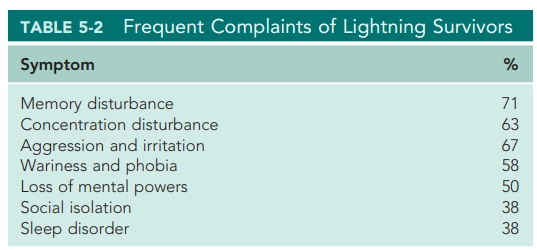
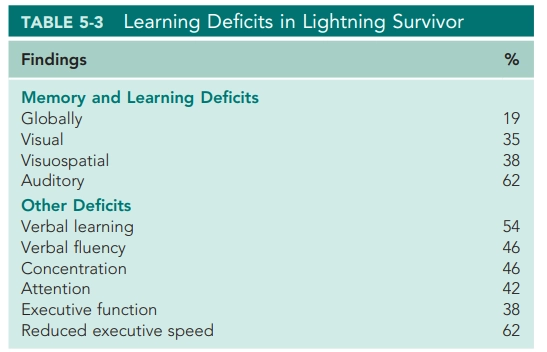
Decreased work tolerance, short term memory problems, easy fatigability, difficulty assimilating new information, chronic pain syndrome will be unable to continue the prestrike occupation.
Although every syndrome has its pretenders, there is a tendency, both medically and legally, to discount survivor’s complaints as evidence of malingering, excessive reaction, conversion reaction, personality problems, or manifestation of “weak” coping strategies. Patients are often young, previously healthy, and generally productive, with young families. Serious injury may change the family structure, family economic expectations, social structures, and future planning. Relationship breakdown.
Functional issues
1.
Memory disturbance
Marked diminution of short-term memory ability such as recent name, places, shopping item. Tend to self-isolate, stop mixing socially, avoid new circumstance.
1.
Concentration disturbance (adult attention deficit disorder)
Individuals show deficits in their working memory, are unable to focus attention of more than a short period and are easily distracted. Poor reading & understanding, worsened by sleep disturbance.
1.
Cognitive function
Calculation, estimation, and managing account and telephone calls become erratic. Ability at mental manipulation and problem solving is greatly decreased.
1.
Higher executive functioning
Neither able to coordinate multiple tasks simultaneously nor able to follow orders for complex tasks.
Behavioral issues
Emotional lability and aggression, sleep disturbance, phobic behavior
Depression: both from biologic injury and secondary chronic pain, loss of work, sleep deprivation, decreased mental abilities, or changes in family dynamics, is almost universal and should be anticipated.
The first 12 months after injury are crucial to recovery. It is during this period that the most recovery is seen, with possible mild improvement up to 3 years after injury.
RECOGNITION AND ACUTE TREATMENT OF LIGHTNING INJURIES
DIAGNOSIS
Diagnosis of lightning injury may be difficult. The history of thunderstorm, witnesses who can report having seen the strike, and typical physical findings in the victim make diagnosis easier but are not always present.
Any person found with linear burns, mental status changes, ruptured TM, and clothes exploded off should be treated as a victim of lightning strike.
INITIAL FIRST AID AND TRIAGE OF VOCTIMS
Ensuring scene safety is paramount. Rescuers are at risk if thunderstorms are in the area. If the situation makes it possible, the victim is transferred to a safe quickly, or to a location under lesser risk.
If the victim is unresponsive with no breathing or no normal breathing, rescuers should immediately activate the EMS, if possible, CPR should be started immediately with a CAB sequence. The victim will probably die unless pulse and respiration resume spontaneously in a short time. The heart may resume activity but may slip into secondary cardiac arrest. It is unknown whether the secondary arrest is caused by primary brain damage, hypoxia from prolonged respiratory arrest, primary cardiac damage, ANS damage, or any of a number of other mechanisms. If no pulse is obtained within 20-30 minutes of starting CPR, it is reasonable to stop further resuscitation efforts: 77% of victims do not respond to CPR.
Multiple victims, limited resource and rescuers, triage/ “resuscitate the dead” is the rule in lightning incidents because victims who show some return of consciousness, or who have spontaneous breathing, are already on the way to recovery. The most vigorous CPR attempts should be directed to the victims who appear to be dead because they may ultimately recover if properly resuscitated.
Because lightning victims may suffer traumatic blunt injuries, rescuers may need to perform spinal immobilization and splinting of fractures, if possible, before transport.
Most lightning injury victims can be treated and discharged from the ED, but more complex patients are considered to transfer.
HISTORY AND PHYSICAL EXAMINATION
An eyewitness report is helpful. Description of the event, victim’s behavior
Undressed, check V/S, prevent hypothermia
HEENT: scalp, eye, ear
Cardiovascular system: distal pulse/ cardiogenic, hypovolemic, spinal shock/ arrhythmia/ lung, bowel/ skin/
Careful observation and documentation
LABORATORY TESTS AND RADIOGRAPHIC EXAMINATION
Routine, ABGA, serum osmolality (ICP monitor), ECG
Imaging, CT, MRI
TREATMENT
Fluid therapy
Fluid restriction in normotensive or hypertensive victims is recommended because of the risk for cerebral edema, particularly if intracranial injury is suspected.
Fasciotomy not needed
Intense vascular spasm with lightning is usually transient and caused by sympathetic instability. Steady improvement in the mottled and cool extremity, with return of pulses in a few hours, is the rule rather than the exception.
Antibiotics and tetanus prophylaxis
Open fracture or cranial fractures that violate the dura.
Appropriate tetanus prophylaxis, burn or laceration
Cardiovascular therapy
Management of cardiac arrest, including use of an AED, is standard. Vasospasm vs pulse
Hypotension: fracture, trunk, spinal shock, cardiogenic shock
If lightning did not cause immediate cardiac arrest, there is very low risk of death.
CNS injury
The victim with TM rupture, cranial burn, or LOC, or who shows decreasing level of consciousness, should undergo cervical spine imaging, brain CT, and possibly brain MRI.
Cerebral edema, early seizure (caused by anoxia), paralysis (if not improve)
Burns
Burns occur in less than 1/2 of lightning survivors and are generally superficial, unlike high voltage electrical burn, and seldom cause massive muscle destruction.
Topical agents
Eye injuries
Visual acuity should be measured and the victim’s eyes thoroughly examined. Cataracts may develop in the first weeks or months. Case reports exist of successful treatment of optic neuritis with high dose corticosteroids similar to those used with spinal cord injury.
Ear injuries
Loss of hearing mandates otologic evaluation. Blast as well as direct injury may occur. Simple TM rupture, conservatively/ sensorineural damage to the auditory nerve, resulting in hearing changes, dizziness, and permanent tinnitus and facial nerve palsy/ ossicular disruption, surgical repair/ otorrhea and hemotympanum, basilar skull fracture/ complaints of pain around the angle of the victim’s jaw, fracture of the styloid process
Pregnant victim
Assess the fetal viability using the U/S, fetal heart tones, fetal activity.
Other considerations
Abdomen: nasogastric tube, ileus or hematemesis/ EFAST, comatose patients who remain hypotension/ CT, hemodynamically stable
Endocrine dysfunction: a result of pituitary or hypothalamic damage, amenorrhea, impotence, hypogonadism, decreased libido
Spinal cord or sympathetic nervous system injury
Pronouncing the victim dead
Dilated pupils should not be taken as a sole sign of brain death in the lightning victim. Hypothermia with lightning injury may cloud end of life decisions. If the victim has not regained a pulse after 20–30min of resuscitation, it is reasonable to cease CPR.
Long term care
Lightning is a nervous system injury that can involve chronic pain, neuropathy, and brain injury, sometimes complicated by initially unrecognized musculoskeletal injury. Most symptoms can be treated in standard fashion, including cognitive therapy, pain management, job training, and counseling, as indicated by the survivor’s signs and symptoms. The caregiver and family may be the unsung heroes and need support, recognition, and counseling, as well as respite.
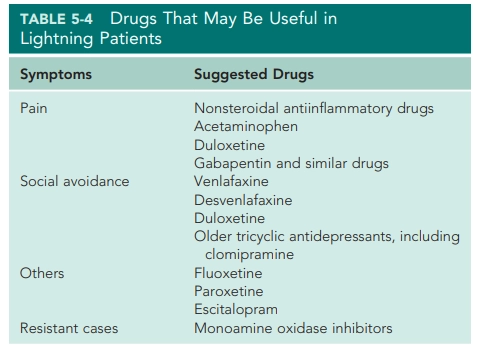
Pain control
Neuropathy and autonomic pain syndromes: NSAIDs, antiepileptic agents, antidepressants, ganglionic blocks.
Acupuncture may be helpful for resistant post-traumatic headache that often accompany lightning.
Psychological problems and cognitive deficits
Neuropsychological deficits from lightning: heightened anxiety state, hyperirritability, memory deficits, attention deficits, aphasia, sleep disturbance, PTSD/ early rehabilitation program.
Often, the victim’s family and co-workers have difficulty understanding the change in personality. Neuropsychological testing to define the injury, establish a baseline, and plan appropriate cognitive therapy may be helpful. It is unknown if certain personality types may predispose to more pronounced neuropsychological symptoms.
The feeling of isolation can lead to depression, substance abuse, and suicide ideation. Because of unfamiliarity with lightning injuries and their sequelae, many physicians are poorly equipped to manage long-term care or may be so skeptical.
It has been shown that clinical depression and electrical injuries are associated with decreased hippocampal mass and hippocampal cell atrophy. The conclusion that untreated depression can cause brain damage necessitate almost mandatory antidepressant use. Treatment should not be delayed until litigation is complete.
A mainstay of treatment is ongoing psychologist consultation and support. Therapy should be multifactorial and guided by the individual’s symptomatology, as follows:
〮for reestablishment of personal image and personal integrity in the face of lost function
〮aids and techniques for living with memory dysfunction
〮aids and techniques for concentration and motivation assistance
〮consideration of adapting to other limitations
〮social support, support for adaptation to a new life circumstance
〮family and relationship counseling
〮adjunctive treatment for depression and anxiety
〮eye movement desensitization and reprocessing (EMDR)
Referral to support groups and other information sources
Lightning strike and electric shock survivors international (LSESSI)
FORENSIC INVESTIGATION
An unwitnessed lightning event can be one of the most difficult clinical presentations to diagnose. The forensic examination of a critical lightning event can be divided into 5 stages.
Case history/ scene investigation/ physical and/or autopsy examination/ special procedures/ collation
CASE HISTORY
If a witness is available, it is important to answer the following questions:
〮was there a storm?
〮was there lightning?
〮did the witness actually see the lighting strike the victim?
〮was death immediate, or not?
〮where was the deceased person at the time of strike (e.g., under a tree, on an open golf course)?
〮what was the activity of the deceased person before death?
〮a meticulous description of the lightning event must be given.
〮how many people were involved?
〮were there any survivors? If so, where are they?
〮what was the medical history of the deceased person? Specifically, were there any cardiac problems?
A history of electrical storm activity should be ascertained from the weather service/ the exact time and location of the strike.
SCENE INVESTIGATION
Attending a critical lightning incident is a very specialized activity that cross many disciplines. Insurance investigators, electrical engineers, scene reconstruction expert, investigating officers will be called to review the scene of the lightning strike. Signs of lightning strike on the scene can be subtle or blatant.
Lightning scene investigation can be divided into the following:
Environmental signs of direct lightning strike
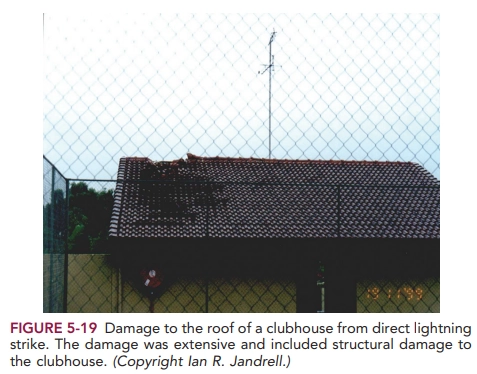
Damage to nearby tree, arc mark, a fern pattern on ground, fulgurite, crater of up to 2m
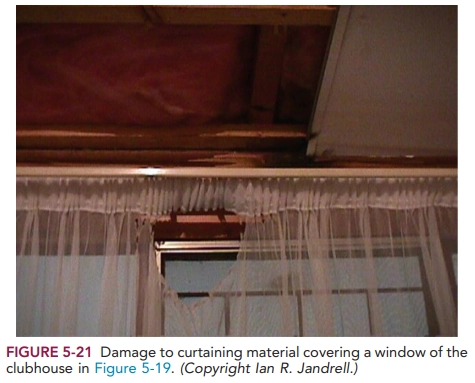
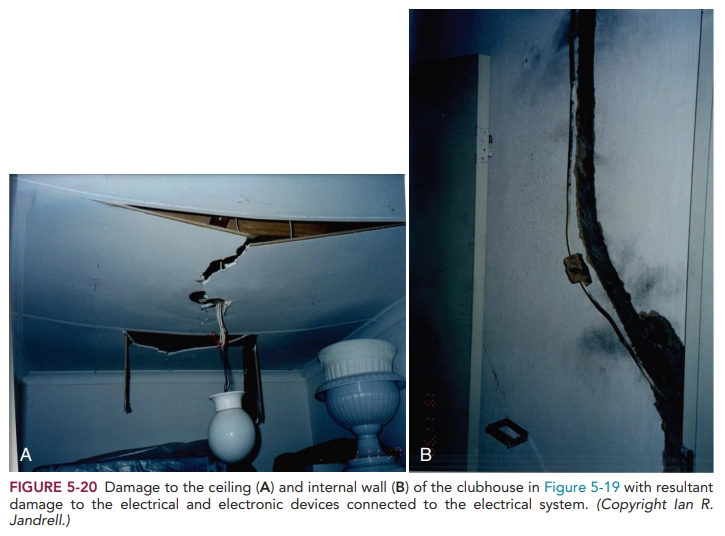
Structural signs of direct lightning strike
Be extensive and included structural and internal damage
Trace evidence signs of direct lightning strike:
A direct strike can be very difficult to prove. Cindering on clothing or arc marks on metallic structures may be seen. “zincification” and “cuprification”, metal with a lower melting point vaporizes, leaving the other metal behind.
PHYSICAL AND/OR AUTOPSY EXAMINATION
A complete postmortem examination
〮the external examination: a meticulous description of clothing, evidence of resuscitation
〮metallic objects: 〮
〮the type, pattern, and distribution of any cutaneous thermal burn
〮HEENT
〮tip-toe sign typically on the base of the foot
〮the procedure for internal examination, identical to that for any forensic autopsy
〮in female, ascertain if the victim was pregnant.
SPECIAL PROCEDURES
Diagrams and photographs:
pattern and distribution of the lightning injury to the body
Radiographs
Histologic examination
Skin: vacuolation in the epidermis, eosinophilia, elongation and streaming of nuclei in the lower epidermis
Heart: waviness of the myofiber, necrosis, contraction bands. Special preparation may aid the diagnosis of myofiber breakdown, an antemortem change.
Neuropathologic condition
Toxicologic studies:
ethanol, recreation drugs, CO
Collection of evidence:
nearby damaged electrical equipment should be sent to an electrical engineer for testing. Only by means of a careful forensic investigation, with strict adherence to guidelines, will the truth be revealed. This becomes even more important in determining whether a lightning strike was the cause of a later medical condition.
COLLATION
If the fresh facts which come to our knowledge all fit themselves into the scheme, then our hypothesis may gradually become a solution. Sherlock Holmes
Data become information, which becomes knowledge, which becomes scientific opinion. Scientific opinion depends on experience, cognitive ability, and facts. At the end of the investigation, investigators should collate their findings with the known physics and effects of lightning.
PRECAUTIONS FOR AVOIDING LIGHTNING INJURY
LIGHTING SAFETY GUIDELINES
Most lightning casualties in the U.S. involve only one person at a time. The possibility for multiple injuries exists. Lightning injury prevention behavior should be proactive, rather than reactive, after the threat becomes imminent. Clearly defined education is important, in advance, to help make proper decisions at the critical times when lightning threatens. Prevention is more important than cure. There are 20-25 million cloud to ground lightning flashes in the U.S. every year, and 1/2 have a subsequent return stroke coming to ground at a different location up to a few km from the first stroke. The key to safety is individual education and responsibility rather than National Weather Service (NWS).
Lightning deaths and injuries occur in generally equal portions before, during, and after the strongest lightning activity in a thunderstorm. A detailed study found that almost half of lighting victims had enough warning to reach safety from nearby lightning before they became a lightning casualty.
A multidisciplinary group of lightning safety expert met in 1998 to develop guidelines that had not been adjusted in any meaningful way for several decades. At this point, most pre-1998 recommendations are considered to be based on false assumptions and have become obsolete.
LIGHTNING SAFETY PLAN
Thunderstorms take tens of minutes to developer move into an area. A surprise is avoided by a series of steps in a lightning safety plan. The plan includes knowing the safest place to reach, how long it takes to reach it, how far in advance action should be taken, who makes the decision, and backup plans when people or situations change. The national athletic trainers’ association (NATA) has recently published a full description of how to make such decision. The national collegiate athletic association (NCAA) website has a succinct version. The NWS works with groups to tailor large venue situations to their setting. Their storm ready program covers most outdoor storm threats and is useful for camps and hiking programs and in planning for many other wilderness or near wilderness situations.
Before working in the outdoors or going on a recreational trip, be aware of weather forecasts and conditions. Users should be aware that many sources of weather data.
Most lightning occurs during the summer months of June, July, and august. Most lightning occurs between noon and 6pm. Storms begin before noon on some days, particularly in locations such as over the high mountains of Colorado, where a few flashes can occur by 10am on active days.
AN APPROACHING THUNDERSTROM
Pay more attention to lightning than rain. Approximately 10% of all cloud to ground lightning strikes occur without rain at the location of the ground strike. A simple rule at the beginning of a storm is, “when thunder roars, go indoor.” This rule removes any doubt about whether it is time to take action and is effective as a thunderstorm approaches.
For a more objective approach, use the 30-30 rule developed at the 1998 lightning safety meeting. The first 30 refers to the time in seconds between seeing lightning and hearing thunder from that flash. If the interval from flash to bang is 30 seconds or less, people are in danger from lightning and should actively seek a designated safe place. This count of 30 seconds indicates lightning to be no more than 10km away, using the speed of the sound of thunder of 5 sec/mile (3sec/km). 10km includes about 80% of all subsequent cloud to ground lightning flashes in a storm.
END OF THUNDERSTORM
Do not underestimate the danger of lightning t the end of a thunderstorm.
The second 30 of the 30-30 rule say to wait 30 minutes after the last lighting is seen or thunder is heard before resuming outdoor activities. 30 minutes is longer than is needed.
In a large group situation, where a long evacuation time is required
vs in one’s own backyard
In practice, most airports and other industrial situations use a warning expiration time of 15 minutes.
Less than a 10-minutes wait time is not recommended.
SAFE PLACES INSIDE
There are two reliable places to be safe from lightning: inside a large, substantial building and inside a fully enclosed, metal topped vehicle.
Buildings
The protection in modern building is provided by grounded wiring and plumbing as well as metal structural members inside the buildings that carry the charge of a strike to the structure around people and into the ground. Contact with conducting paths of wiring, plumbing, corded telephones, and large openings, such as garages and door, can result in injuries.
Unsafe indoor locations are small structures such as those used as golf, beach, sun, rain, school, agricultural, or bus shelters. And all tents that only provide rain protection but no barrier to lightning. Pad on the ground surface inside a tent are of no value. Composition of the tent structure and poles provides no protection.
It is possible to provide low-cost lightning protection for unsafe structures by using simple towers and natural local materials for grounding.
Vehicles
Full closed, metal topped vehicles are safe from lightning and should be used as a safe place when no large substantial building is available. There have been no documented electrical injuries to occupants, with the exception of those involving direct wiring, such as from older handheld police radio. Safety is provided from a direct vehicle strike by the lightning energy traveling across the outside shell of the metal vehicle and around anyone inside, with subsequent arcing to the ground through bumpers or axles. The mistaken impression that tires are the safety feature.
Unsafety vehicles are those without the safety of fully enclosed metal surroundings, Faraday cage.
Those with cloth tops (convertibles) or fiberglass or plastic bodies and golf carts.
Any place, outside such a vehicle is as unsafe as anywhere else outside. Particularly dangerous is step voltage, when a person is in contact with both the vehicle and the ground, stepping into or out from a vehicle. When lightning strikes the vehicle, the step potential between the energized vehicle and the ground is very large. Conversely, a nearby ground strike will travel to a person with one foot on the ground and the other in contact with an unaffected vehicle.
ALWAYS UNSAFE OUTSIDE
There are no reliable places outside to be safe from lightning. One of the most important misconceptions of such outdoor safety advice is the expectation that the direct strike is the most common mechanism of lightning injury.
The reliable lightning safety approach is to recognize the lightning threat early and go to the known safe places of buildings and vehicles. Know where a safe building or vehicle is located, how long it will take to reach that location, complete the plan by reaching safety before lightning arrives.
Lightning is not a predictable in its path to ground and exactly what it strikes is not predictable with any certainty. Which branches reach the surface appears to be random within the flash. If every precaution were to be followed, and some are quite difficult, only a 50% reduction in risk wound be achieved. The other 50% of the time would result in an injury or fatality.
The difficulty of wilderness situations
Manage the risk by choosing the time and place, avoid when lightning is most prevalent.
SAFETY OF LARGE GROUPDS
An individual can respond to lightning threat quickly by going inside. But for larger crowds, all these steps are more difficult. The sound of thunder is probably not applicable. Stadium manager need to know low ling a lead time is needed to evacuate people to safety.
Instead of moving a large group from one place to another, it is possible, and usually much less expensive than managers might expect, to provide safety in place. The approach is to place large, properly grounded poles and overhead wires that divert the flash from striking a crowd by using these down conducting paths into the ground.
Lightning protection is situ
The Franklin rod is often the basis of lightning protection schemes.
CONTROVERSIES AND ONGOING RESEARCH IN LIGHTNING INJURY
Much remains to be learned about lightning, and knowledge at present remains partial. Specific areas of controversy, limitations of present research, and currently debated features point the way for future research.
2 major thrusts in kerauno-medicine
1.
The interaction between electric current and human – the pathophysiologic changes that are induced and how they underlie lightning injury symptomatology.
2.
The protection of individuals and crowds from lightning injury.
An entirely uninvestigated area is whether there is way to mitigate the process of injury once it has occurred so that common sequelae can be avoided.
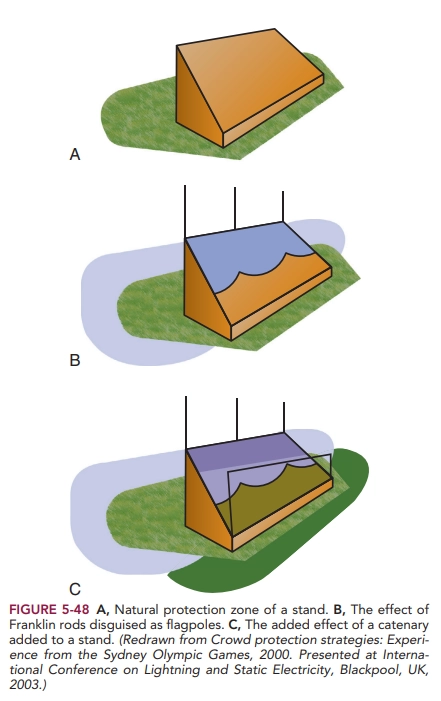
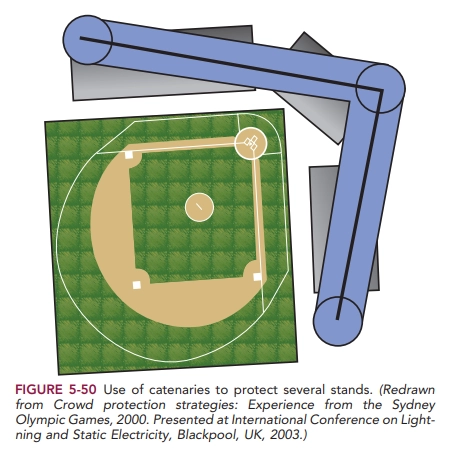
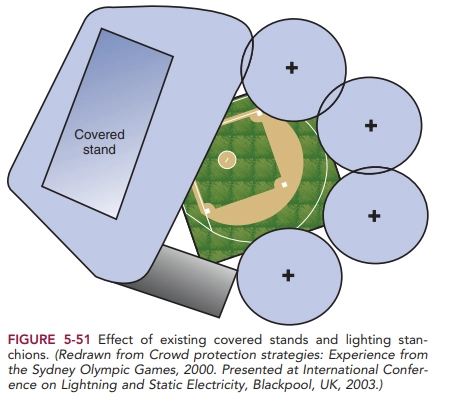
PROBLEMS WITH EXPERT REPORTING
At regular stage, medicolegal reporting, including to workers compensation entities, is required for documentation and evaluation of an injury.
Totality of the injury
Rarely is there a report on the totality of an electrical or lightning injury. Most reports focus only on the section of an injury that is in a particular medical specialist’s realm (orthopedic, neurologist).
1.
There is seldom expert assessment of the physical/ engineering aspects of the injury.
2.
There is little perception of the total injury complex and its nuances
3.
There is assumption, often erroneous, as to the precise physical aspects if the injury.
Recent vascular research has demonstrated the importance of vascular damage in contrast to more commonly assumed neural damage. Current passage through body fluid (blood and CSF) is important and is much more supportable in theoretical terms than is neural transmission.
Presumption of site of injury
Electrical injuries are uncommon and lightning injuries rare in most practices. Unless the physician has a special interest in them, they will usually make up only a tiny part of any physician’ work. Because of unfamiliarity with the overall picture, physicians will often and quite naturally default to diagnostic tests.
“There is nothing wrong” rather than that the wrong tests may have been ordered.
Nerve conduction studies (NCS) test only the largest nerve trunks, but do not test pain pathways, which usually contribute a large component of the lightning injury survivor’s complaint. Fatigue, weakness, and sensory disturbances may be mediated by neural end-plate damage or sensory terminal damage, neither of which is detected by NCS.
Limits of reporting
Diagnoses to PTSD, adjustment disorder, and depression because they are secondary to the un-code overall syndrome, which is more correctly a post-electric shock syndrome. These diagnoses only describe a portion of what the patient may be experiencing.
Without knowledge of the basic physiology of the injury, only general symptomatic aftercare can be rendered, instead of more specific treatments and early interventions that might stop or change the course of the injury cascade precipitated by the initial injury.
