



Introduction
Alcohol is a commonly used psychoactive agent, with up to 40% of people reporting heavy alcohol use or alcohol use disorder during their lifetime.1, 2, 3 Alcohol use disorder is associated with substantial morbidity and mortality, with up to 5.3% of deaths globally related to alcohol.3,4 Alcohol is also a major contributor to emergency department (ED) visits, accounting for up to 4% of all visits in the United States from 2014 to 2018.4, 5, 6
Alcohol withdrawal syndrome is defined as cessation or reduction in alcohol use that has been heavy and prolonged combined with 2 or more of the following symptoms developing within several hours to a few days after cessation: autonomic hyperactivity, increased hand tremor, insomnia, nausea/vomiting, transient visual/auditory/tactile hallucinations or illusions, psychomotor agitation, anxiety, or generalized tonic-clonic seizures.7 Up to 50% of patients with alcohol use disorder will experience alcohol withdrawal syndrome after decreasing alcohol use.8 The development of alcohol withdrawal syndrome is associated with the neuroadaptive central nervous system changes that occur due to chronic alcohol use, which downregulates GABAergic receptors and upregulates glutamatergic receptors.7,9 Thus, when alcohol use is abruptly stopped, the central nervous system remains in a hyperexcitable state, manifesting excitatory signs and symptoms. These range from mild tremors and anxiety to severe manifestations, including seizures and delirium tremens, which can affect up to 5% of patients with alcohol withdrawal syndrome.10,11 However, the current landscape of alcohol withdrawal syndrome management in the ED is marked by a wide variation in management strategies with medications often being dosed incorrectly and protocols differing per institution.12 Thus, there is a critical need to better understand the nuanced management of alcohol withdrawal syndrome. This paper does not intend to be a comprehensive review of all aspects pertaining to alcohol withdrawal syndrome, but rather seeks to provide the key tenets of management based on current literature and years of practice.
Assessment
A sudden decrease in serum alcohol concentrations can result in alcohol withdrawal syndrome symptoms within 6 to 8 hours, typically peaking at 72 hours and diminishing by 5 to 7 days (Table 1).8,9,12 These signs and symptoms can be vague, including anxiety, tremors, headache, nausea/vomiting, diaphoresis, or palpitations, which can progress to delirium tremens (Table 2).13,14 If initial alcohol withdrawal syndrome symptoms do not progress to a more severe stage, they will often resolve within 48 hours.8,9,12 Of note, patients on β-blockers or α-2 agonists may demonstrate blunted vital signs with a normal pulse rate and blood pressure.15 Importantly, alcohol withdrawal syndrome is a diagnosis of exclusion, and clinicians should maintain a broad differential diagnosis (eg, nonalcohol intoxication or withdrawal states, thyrotoxicosis, sepsis, serotonin syndrome, acute pain, traumatic brain injury, and hepatic encephalopathy). Additionally, although we discuss several different tools below, alcohol withdrawal syndrome remains a clinical diagnosis and should not be based exclusively on any specific score.
Table 1. Alcohol withdrawal syndrome findings.
Syndrome | Timeline | Characteristics |
Initial withdrawal signs/symptoms | 6-8 hours after last drink | • -Tachycardia, hypertension, increased body temperature, tremor∗, insomnia, anxiety, nausea, vomiting, headache, diaphoresis, palpitations |
Alcohol hallucinations | 12-24 hours after last drink | • -7%-8% of patients with AWS
• -Tactile hallucinations common, visual less likely
• -Auditory hallucinations possible (sometimes persecutory)
• -May present with tremors and other withdrawal symptoms, though some do not
• -Normal sensorium |
Withdrawal seizures | 12-48 hours after last drink | • -Generalized tonic-clonic, though often isolated, short in duration, short postictal period
• -1/3 of patients with withdrawal seizures will progress to delirium tremens |
Delirium tremens | Begins 3 days after the appearance of AWS symptoms and lasts 1-8 days | • -5% of all patients undergoing AWS
• -Rapid-onset, fluctuating disturbance of attention and cognition plus alcohol withdrawal symptoms
• -Diagnosis requires autonomic instability |
AWS, alcohol withdrawal syndrome.
∗The tremor of AWS is an intention tremor; there is no tremor at rest. The tremor when present is constant and does not fatigue.
•
CIWA-Ar ≥15
•
Patients with SBP >150 mmHg or PR >100 beats/min despite treatment
•
History of prior DT
•
Recent withdrawal seizures
•
History of sustained drinking
•
Last alcohol intake >2 days
•
Age >30 y
•
Recent misuse of other depressants such as benzodiazepines
•
Concurrent medical illness, such as pneumonia or active ischemia
CIWA-Ar, Clinical Institute Withdrawal Assessment Alcohol Scale Revised; DT, delirium tremens; PR, pulse rate; SBP, systolic blood pressure.
Screening for Complicated Alcohol Withdrawal Syndrome
The Prediction of Alcohol Withdrawal Severity Scale (PAWSS) is a validated screening tool that can determine a patient’s risk of developing complicated (moderate-to-severe) alcohol withdrawal syndrome (Figure 1).16,17 PAWSS should be utilized early in the assessment of a patient with chronic alcohol use to help ensure timely and adequate prophylaxis for patients at higher risk. Although PAWSS has been evaluated in the inpatient setting, the literature suggests that PAWSS would be an appropriate tool for patients presenting to the ED and provides higher diagnostic value for severe alcohol withdrawal syndrome than history or physical examination.16,17 However, further validation studies are still needed in the ED setting.

Figure 1. PAWSS. A score <4 indicates an average risk for complicated alcohol withdrawal syndrome (defined as withdrawal hallucinosis, withdrawal-related seizures, or delirium tremens). A score ≥4 indicates a high risk for complicated alcohol withdrawal syndrome.
Assessing Severity of Alcohol Withdrawal Syndrome
There are 3 common tools used to assess the severity of alcohol withdrawal syndrome: the Clinical Institute Withdrawal Assessment Alcohol Scale Revised (CIWA-Ar; Figure 2), the Minnesota Detoxification Scale (MINDS; Figure 3), and the Richmond Agitation-Sedation Scale (RASS; Figure 4). CIWA-Ar is the most commonly utilized instrument and can be implemented in regular intervals with or without a symptom-triggered component.18,19 Symptom-triggered therapy has demonstrated superiority compared with fixed-dose scheduling, resulting in a shorter duration of treatment, decreased benzodiazepine requirements, reduction in need for mechanical ventilation, and shorter hospitalization compared with fixed-dose regimens.20 However, CIWA-Ar has several limitations, including the lack of vital sign assessments, the need for patients to communicate and follow commands, the possibility of subjective biases, susceptibility to confounding medical or psychiatric conditions, and the potential for being labor intensive (requires frequent nursing/staff assessments and adequate training).21 The MINDS tool is similar to CIWA-Ar, with some data suggesting reduced physical restraint use, shorter hospital length of stay, and fewer days on benzodiazepines than CIWA-Ar.22 The RASS is a validated tool that uses objective evidence to assess a patient's level of alertness or agitation. It does not require patients to communicate and takes less time to perform compared with CIWA-Ar.23 The goal RASS for alcohol withdrawal syndrome is light sedation (RASS range of +1 to −1).24 Because RASS is most commonly utilized in critical care settings, additional training and education may be needed for staff utilizing RASS in other settings. The RASS also does not include assessment of vital signs or delirium, which may indicate severity or progression of alcohol withdrawal syndrome. Importantly, CIWA-Ar, MINDS, and RASS are not appropriate for initial alcohol withdrawal syndrome management and should only be used in the maintenance stage after alcohol withdrawal syndrome has been appropriately treated with benzodiazepines or phenobarbital.23

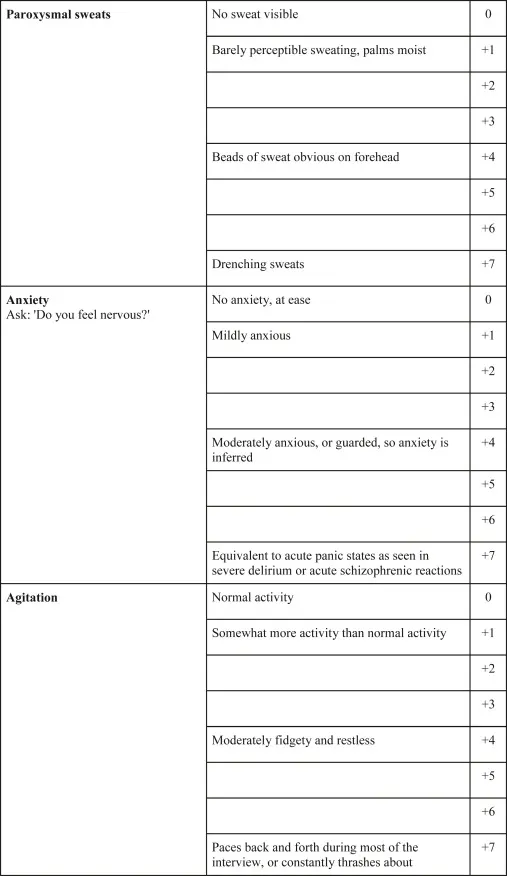

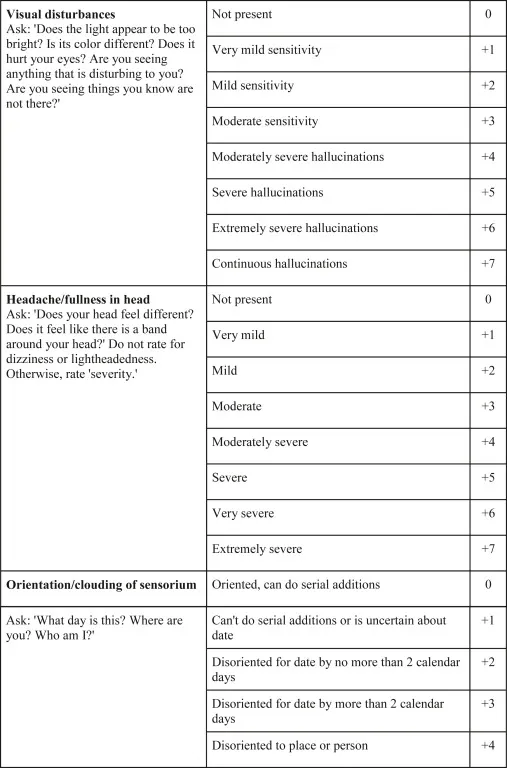
Figure 2. CIWA-Ar. A score ≤8 indicates absent or minimal withdrawal. A score of 9 to 19 indicates mild to moderate withdrawal. A score ≥20 indicates severe withdrawal.
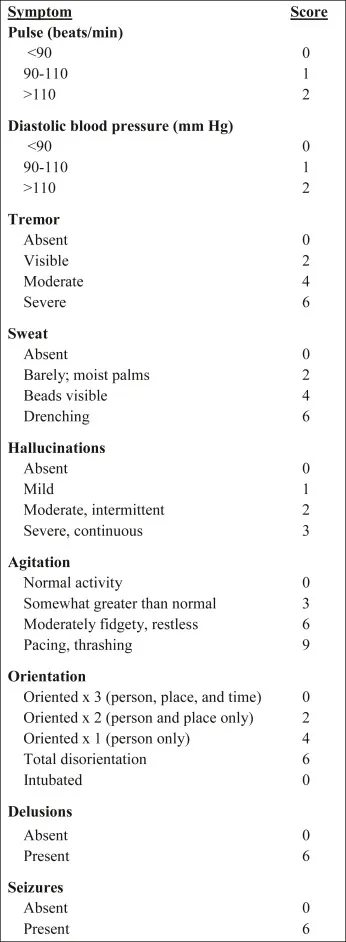
Figure 3. MINDS. MINDS assessment scores range from 0 to 46. For a MINDS score of 7 to 13, give 20 mg diazepam. For a MINDS score of 14 to 20, give 40 mg diazepam. For MINDS score >20, give 80 mg diazepam.
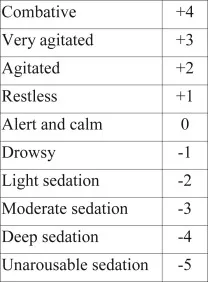
Figure 4. RASS.
Management
Once alcohol withdrawal syndrome is identified, it is critical to begin early initiation of evidence-supported treatments (Figure 5).

Figure 5. Algorithm for the management of alcohol withdrawal syndrome. AUD, Alcohol use disorder; AWS, alcohol withdrawal syndrome; CIWA, Clinical Institute Withdrawal Assessment; INR, international normalized ratio; PO, per os (by mouth); TID, ter in die (3 times a day).
Benzodiazepines
Benzodiazepines are the first-line drug class for treating alcohol withdrawal syndrome.25 They work by activating the γ-aminobutyric acid type A (GABA-A) receptor increasing the frequency of channel opening to potentiate γ-aminobutyric acid (GABA) activity, thereby directly targeting the underlying pathophysiology of alcohol withdrawal syndrome (deficiency of and insensitivity to GABA). Benzodiazepines reduce withdrawal severity, withdrawal duration, and incidence of delirium tremens and seizures.26 Long-acting benzodiazepines (eg, diazepam) are favored over shorter-acting benzodiazepines (eg, midazolam and lorazepam) as their longer duration of action leads to fewer rebound symptoms, less frequent dosing requirements, and provides self-tapering effects with a smoother withdrawal course.27 The intravenous route is generally preferred as the faster onset and more predictable bioavailability lead to more accurate titrations, less risk of oversedation, and more rapid symptom control.27 Although diazepam is generally preferred, it should be used cautiously in patients of older age or with liver disease due to decreased hepatic oxidation and the risk of respiratory depression and excessive sedation. In these patients, lorazepam may be preferable.28 Intravenous benzodiazepines can be safely titrated every 5 to 10 minutes using initial doses of diazepam ranging from 10 to 20 mg or lorazepam ranging from 2 to 4 mg.29,30 In some cases of severe withdrawal, higher doses of diazepam and lorazepam (typically, 2 to 3 times the initial recommended dose) may be required if alcohol withdrawal syndrome is not rapidly improving. It is important to ensure that patients receive sufficient doses to treat their alcohol withdrawal syndrome, as we have found underdosing of benzodiazepines to be common.
Barbiturates
Some patients with chronic heavy alcohol use may not respond well to benzodiazepines as conformational changes to their GABA receptor subunit over time can increase tolerance to alcohol and cross-tolerance to benzodiazepines.31 Consequently, there has been increasing interest in phenobarbital as an alternate first-line treatment for alcohol withdrawal syndrome or as an adjunct to benzodiazepines.32 Phenobarbital is unique in that its half-life is longer than benzodiazepines, and it works by activating the GABA-A receptor in a different manner than benzodiazepines, increasing the duration of opening while depressing glutamate transmission through α-amino-3-hydroxy-5-methylisoxazole-4-propionate signaling.24 These pharmacologic advantages make phenobarbital a highly effective treatment for moderate-to-severe alcohol withdrawal syndrome, particularly for patients requiring high doses of or demonstrating tolerance to benzodiazepines.32 Some literature has suggested phenobarbital alone or as an adjunct to benzodiazepines may result in decreased use of benzodiazepines, reduction in ICU admissions, decreased hospital length of stay, decreased use of physical restraints, decreased rates of intubation, and reduced need for mechanical ventilation.33, 34, 35, 36, 37, 38 However, a separate meta-analysis found no difference between benzodiazepines and phenobarbital on outcomes.39 Front-loading strategies should be implemented, and weight-based dosing for phenobarbital (5 to 10 mg/kg intravenous over 30 minutes) has been shown to be safe and clinically efficacious in the management of alcohol withdrawal syndrome.33,40 Additional doses up to a maximum of 15 mg/kg can be required in some patients. If phenobarbital is being added onto benzodiazepines or if there is a delay in obtaining initial loading doses, incremental doses of 130 to 260 mg intravenous push every 15 to 30 minutes can be used.
Alpha-2 Agonists
Alpha-2 agonists (eg, dexmedetomidine and clonidine) reduce norepinephrine release, lowering the sympathetic symptoms associated with alcohol withdrawal syndrome, including tremors, agitation, tachycardia, and hypertension.41 One randomized trial comparing flunitrazepam with haloperidol versus clonidine among patients with alcohol withdrawal syndrome reported fewer cases of pneumonia and reduced days on mechanical ventilation but greater cardiac complications with clonidine.42 Several studies have evaluated dexmedetomidine as an adjunctive agent for alcohol withdrawal syndrome. Data suggest dexmedetomidine can reduce benzodiazepine requirements, improve sedation and patient communication, lower haloperidol requirements, and reduce total hospital length of stay.43, 44, 45, 46, 47 However, similar to clonidine, dexmedetomidine has an increased risk of cardiovascular complications (eg, bradycardia and hypotension).43, 44, 45 Based on these data, we recommend consideration of dexmedetomidine in patients with alcohol withdrawal syndrome requiring high doses of benzodiazepines or barbiturates with persistent sympathetic symptoms.
Sedative and Dissociative Agents
Among patients with more severe or refractory alcohol withdrawal syndrome, a sedative agent, such as propofol or ketamine, may be needed.48 Propofol has 2 main mechanisms of action. The primary mechanism is decreasing the rate of GABA dissociation from its receptor.41 However, propofol may also antagonize the amino acids, such as glutamate, that are upregulated during delirium tremens.41 Propofol may reduce the need for benzodiazepines and be helpful in refractory cases; however, it increases the risk of hypotension and may require the patient to be mechanically ventilated.49 Ketamine is an N-methyl-D-aspartate receptor antagonist that has also been proposed as an adjunctive treatment for benzodiazepine-refractory alcohol withdrawal syndrome. Limited data suggest ketamine infusion may reduce the total benzodiazepine requirement as well as potentially reduce intubation rates and shorten ICU length of stay.50, 51, 52 Based on these data, ketamine infusion may be reasonable for benzodiazepine-refractory alcohol withdrawal syndrome, whereas either propofol or ketamine is reasonable in patients with severe alcohol withdrawal syndrome requiring intubation.
Antiseizure Medications
Antiseizure medications are believed to work by decreasing neuronal responsiveness to reduce the kindling effect (ie, greater susceptibility or severity of alcohol withdrawal syndrome in future events).53,54 One study suggested valproate (500 mg 3 times daily) may reduce the overall benzodiazepine requirement and withdrawal severity.54 Another compared valproate (300 mg given 3 to 4 times daily) versus carbamazepine (200 mg 3 times daily) and reported longer hospital length of stay and greater requirement for ICU admission with carbamazepine.55 Limited data suggest a potential benefit for gabapentin (particularly for tapering), although this is primarily based on retrospective data with a high risk of bias.56,57 Although data are limited, we recommend adding gabapentin (300 to 900 mg 3 times daily) to current alcohol withdrawal syndrome management as an adjunctive agent for acute alcohol withdrawal syndrome after benzodiazepines or phenobarbital has been given.
Disposition
Table 3 outlines key factors to consider when determining disposition for ED patients with alcohol withdrawal syndrome. A select subset of patients may be discharged, including those who are not intoxicated, have no other concurrent medical or psychiatric conditions necessitating admission, have no risks of deterioration, are able to tolerate oral intake, have established follow-up, and are not in active withdrawal (based on clinical assessment or 2 sequential CIWA-Ar scores greater than 8 measured 2 hours apart).9,13,14,58, 59, 60 Importantly, prior to discharge, the patient must be adequately treated, as patients who are undertreated can experience progression to more severe alcohol withdrawal syndrome postdischarge. Tremors and other symptoms should be minimal or completely resolved prior to discharge. Clinicians should offer outpatient detoxification resources to the patient, including any local treatment programs, and ensure that there is a caregiver to monitor the patient and bring the patient back to the ED if they worsen. If these factors are not met, consider inpatient admission.9,58, 59, 60 If the patient is deemed appropriate for discharge, we recommend prescribing gabapentin 300 to 900 mg taken 3 times daily for the treatment of alcohol use disorder to reduce days of heavy drinking, improve rates of abstinence, and help prevent rebound alcohol withdrawal syndrome.61,62 The prescription duration should be until scheduled follow-up with an addiction medicine specialist or clinician who can manage alcohol use disorder.61,62 If additional bridging therapy is needed, a short course of long-acting benzodiazepines may be reasonable. We recommend diazepam 10 mg taken every 4 to 6 hours as needed for a duration of 2 to 3 days if an appropriately trained caregiver can monitor the patient and administer these doses for symptoms or signs of alcohol withdrawal syndrome.
Discharge to outpatient substance use treatment | • -Patient not currently intoxicated (alcohol or other drugs)
• -Minimal active withdrawal symptoms (eg, minimal/no tremor, 2 consecutive CIWA-Ar Score <8 that are 2 hours apart)
• -No history of complicated AWS (eg, seizures, hallucinosis, and DT)
• -No significant medical or psychiatric concurrent conditions or comorbidities
• -Patient ability to comply with outpatient follow-up and therapy |
Inpatient detoxification or medical unit | • -Clear sensorium at baseline mental status
• -Normalization or near-normalization of vitals within ED
• -Responsive to 10-20 mg diazepam or initial phenobarbital dose
• -Tolerates 2-4 hours between medication doses
• -No underlying medical or surgical condition requiring ICU-level care
• -Presence of medical or psychiatric condition requiring inpatient admission |
ICU | • -Hemodynamic instability
• -Respiratory distress
• -Persistent hyperthermia (temperature >39 °C [103 °F])
• -Severe cardiac disease (eg, heart failure, arrhythmia, angina, myocardial ischemia, and recent myocardial infarction)
• -Severe electrolyte abnormalities (eg, hypokalemia, hypophosphatemia, hypomagnesemia, and hypocalcemia)
• -Need for frequent or high doses of sedatives of an intravenous infusion to control symptoms
• -Pronounced AWS despite an elevated ethanol concentration |
CIWA-Ar, Clinical Institute Withdrawal Assessment Alcohol Scale Revised; COPD, chronic obstructive pulmonary disease; DT, delirium tremens.
