A. Etiology
A1. Neonates
(1) group B streptococci
(2) G(-) eneteric bacteria (Klebsiella, E.coli, L. monocytogenes)
(3) S. aureus
(4) S. pneumoniae
(5) S. pyogenes
A2. Infants and children (30days~2yrs)
(1) 대부분 viral (RSV, influenza, parainfluenza, human metapneumovirus, adenovirus)
(2) S. pneumoniae
(3) H. influenzae type b (HIb)
A3. Children (2~5yrs)
(1) 대부분 Viral
(2) S. pneumoniae
(3) H. influenzae type b
(4) Mycoplasma
(5) Chlamydophila pneumoniae
A4. 5~13 yrs
(1) Mycoplasma pneumoniae가 가장 흔함
(2) C. pneumoniae
(3) S. pneumoniae
(4) S. aureus
(5) Legionella
(6) M. tuberculosis
A5. Adolescents : 성인에서와 비슷한 양상을 보임.
•
대부분 경우에 causative agent는 모르는 경우가 많고, definite microbiologic diagnosis는 BAL이나 pleural effusion에서 culture 등에서나 가능하고 이것은 응급실에서 불가.
•
Cystic fibrosis 환자 : S.aureus (1살 미만), Pseudomonas (이후)
•
Sickle cell disease 환자 : Encapsulated bacteria (e.g. Pneumococcus, Salmonella, Klebsiella)
•
HIV, malignancy, congenital immunodefiencies 환자
: Pneumocystis jirovecii,cytomegalovirus,fungi
B. Pathogen-specific patterns of disease
1.
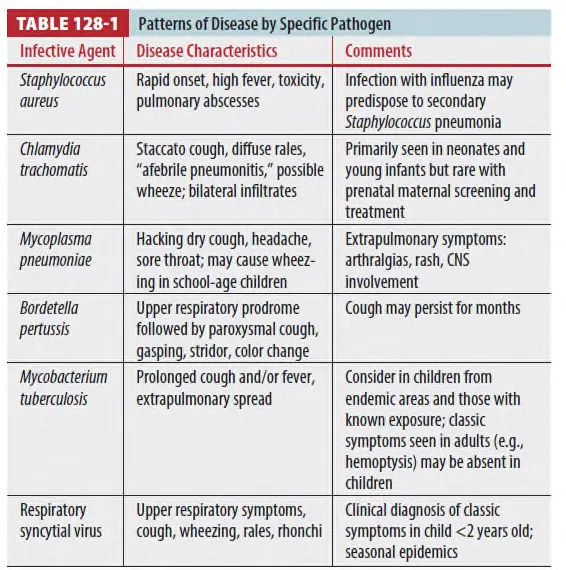
Typical pneumonia
(1) 고열, 오한, 흉막성 흉통, 가래를 동반한 기침으로 나타난다.
(2) S. pneumoniae와 같은 세균성 폐렴을 시사한다.
2.
Atypical pneumonia
(1) 수일에서 수주에 걸친 증상 발현을 보이며, 마른기침, 미열, malaise와 같은 증상을 보인다.
(2) Mycoplasma나 C. pneumoniae 감염 시에 보일 수 있다.
3.
Staphylococcal pneumonia
(1) Influenza 감염이 선행할 수 있고, 급속한 진행을 보이며 고열, 독성, 폐농양 등의 소견을 보인다.
4.
C. trachomatis 감염을 보이는 영아
(1) Staccato cough, diffuse rale이 관찰되나 발열은 없어 afebrile pneumonitis로 불리기도 한다.
(2) Older children에서는 sore throat 또는 dysphagia를 보이기도 한다.
5.
Mycoplasma 감염
(1) Hacking, dry cough를 보이고, 관절통, 피부발진, CNS 증상과 같은 폐외 증상이 나타날 수 있다.
(2) (Rosen 8th) 드물지만 bullous myringitis가 관찰될 수 있고, 이는 mycoplasma 감염에 특징적인
소견이다.
6.
B. pertussis 감염 : Whooping cough가 특징적이다.
7.
위험인자에 노출된 지역에서 지속된 기침과 x-ray 상 특이적인 소견이 있다면, tuberculosis를 의심해야
한다.
8.
Unique and high risk group
(1) TB (endemic area: Alaska, 아프리카, 아시아, 동유럽)
(2) Cystic fibrosis (S. aureus<1yo, psudomomans>1yo)
(3) Sickle cell anemia (encapsulated bacteria: pneumococus, klebsiella, salmonella)
(4) HIV
(5) Congenical immunodeficiency (Opportunistic infection : P.jiroveci, CMV, fungus)
C. Diagnosis
1.
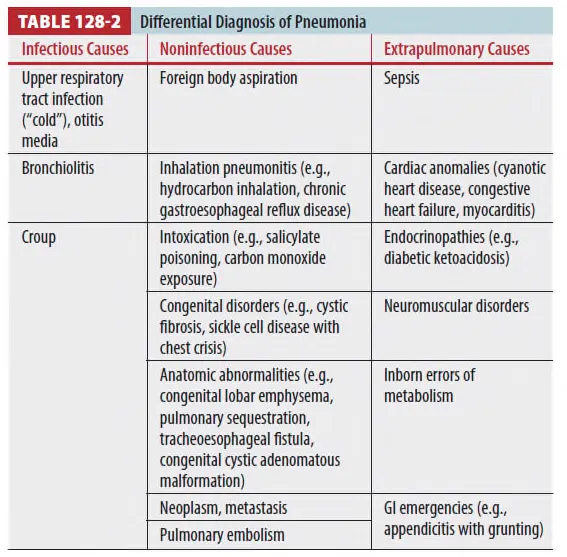
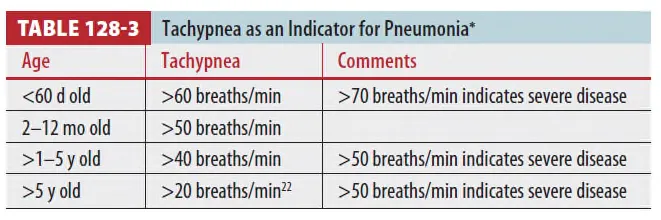
빠른 호흡은 폐렴을 진단하는 데 있어 가장 간단하고 표준화된 스크리닝 도구이다
(Rapid respiratory rate is a simple, standardized, and sensitive screening tool for pneumonia).
2.
Infant 에서 간헐적인 무호흡 그렁거림, 잘 먹지 못하는 등의 소견은 dyspnea를 시사
3.
가래를 동반한 기침은 late childhood 이전에는 드물게 나타난다.
4.
Room air에서 hypoxia가 관찰되는 경우 이는 radiographic pneumonia의 가장 강력한 예측인자이며, oral amoxicillin 치료 실패의 가능성이 높아진다.
D. Imaging
1.
증상이 심하지 않고, 합병증이 동반되지 않은 하기도 감염 환아에서 반드시 imaging study를 시행할 필요는 없다.
2.
Potential indications for chest radiography
(1) Toxic appearance and respiratory finding을 보이는 환아
(2) 0~3개월 환아에서 발열을 동반할 경우 패혈증에 대한 검사의 하나로 진행
(3) 5세 미만의 환아 BT>39℃ (l02.2℉), WBC >20,000/mm3, no clear infection source
(4) 합병증이 의심될 경우 (흉수 또는 기흉 등)
(5) 치료에 반응이 없는 폐렴
(6) Biphasic illness를 보일 경우 (상기도 감염이 선행한 하기도 증상과 고열)
(7) 이물질의 흡인이 의심될 경우
(8) 선천적 폐 기형이 의심될 경우
(9) “Round pneumonia" 시 종양성 병변을 배제하기 위하여
E. Treatment (★)
1.
Supplemental Oxygen : Target O2 Sat. >92%
2.
Children은 mucus 제거에 cough 의존적이기 때문에, 기침 억제제 보통 사용하지 않는다.
3.
Narcotic-based 기침 억제제 older children에게 사용, Codein 특히 호흡 억제 때문에 비추천
4.
Noninfectious pneumonitis (e.g.chemical inhalation, aspiration), Likely viral pneumonia (e.g.
3mo~5yrs, audible wheezing, RSV or influenza+)의 경우 보존적 조치.
5.
Antibiotics는 viral pneumonia에서 indication 되지 않는다.
6.
Empiric antibiotic Treatment
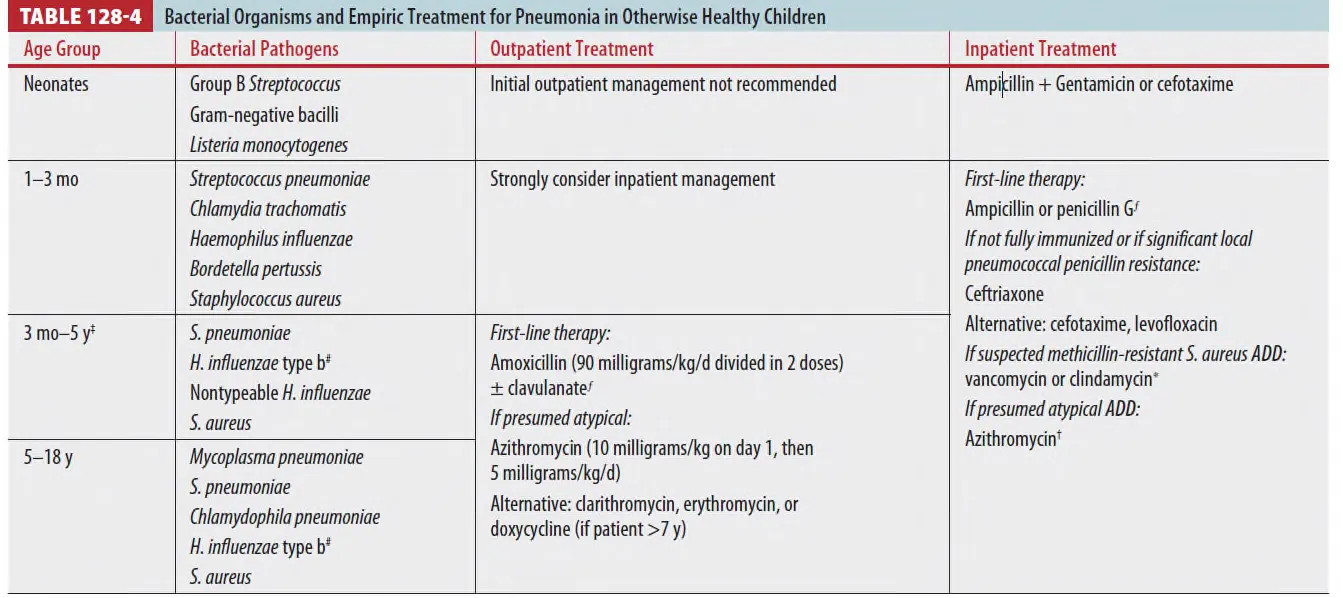

(1) Neonates
Ampicillin (for ① Listeria, group B streptococcus)
•
aminoglycoside (gentamicin) or 3rd cephalosporin (cefotaxime)
② Ceftriaxone은 neonate에서 bilirubinemia를 초래할 수 있어 금기
(2) 1~3 mo
① Erythromycin or clarithromycin (for atypical bacteria)
② Azithromycin 은 FDA 승인을 받지 못해 사용하지 않음.
(3) >3 mo
: High dose amoxicillin (80~100 mg/kg/d) or another β-lactam (for S. pneumoniae).
(4) >5 yrs
① Macrolides
② Multiple pathogen 이 의심될 경우, β-lactam or cephalosporins + macrolide.
(5) Macrolide 에 대한 pneumococcal resistance 는 증가하는 추세
(6) 소아에서 fluoroquinolone 의 안전성은 확립되지 않았고, arthropathy 의 위험이 있다.
(7) Doxycycline 의 경우, 영구적인 치아 착색을 유발할 수 있다.
F. Complications
1.
Apnea : 아주 어린 infant에서 RSV, chlamydia, B. pertussis 감염 시 발생 가능.
2.
Pleural effusion, empyema, pneumothorax, pneumatocele과 같은 합병증은 H. influenzae type
b에서 좀 더 발생한다.
3.
S.aureus는 empyema, abscess, pneumatocele을 다른 병원균에 비해 좀 더 잘일으킨다.
4.
Mycoplasma는 arthritis, meningitis를 일으킬 수 있다.