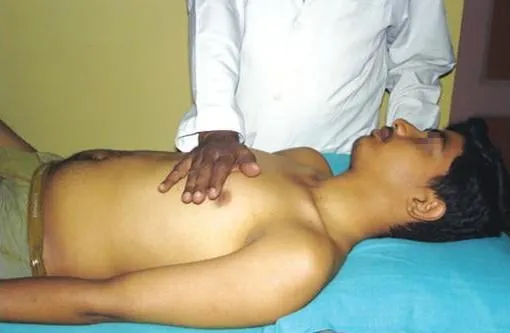
Parasternal heave(RV heave)와 PMI displacement에 대해 공부해보았습니다.
① Parasternal Heave (RV heave)
Parasternal heave란, RVH 또는 드물게 severe left atrial enlargement 환자에서 확인할 수 있는 precordial impulse(눈에 띄거나 만져지는 chest wall의 pulsation)입니다. Parasternal heave를 촉진하기 위해서는, 손가락은 든 상태로 손바닥의 heel만을 Lt. parasternal region에 얹고 palpation을 합니다(사진 1). 이 때 정상 케이스에서는 impulse가 느껴지지 않거나, slight inward impulse만이 느껴집니다. RVH 환자의 경우에는 dilated RV로 인해 systole와 함께 chest wall의 anterior movement가 일어나면서 손바닥이 밀리는 것을 느낄 수 있고, 이것을 parasternal heave, 또는 RV heave라고 합니다. Volume overload로 인한 RVH인 경우에는 fast, ill-sustained impulse, pressure overload로 인한 RVH인 경우에는 slow, sustained impulse가 특징적입니다.
Parasternal heave의 정도를 평가할 때에는 AIIMS grading이 사용됩니다:
Grade I: visible but not palpable
Grade II: visible and palpable but obliterable
Grade III: visible and palpable but not obliterable
② PMI(Point of Maximal Impulse) Displacement
정상 PMI(또는 apical impulse)는 5th ICS, midclavicular line에 존재합니다(사진 2). 우선 inspection을 통해 impulse가 보이는지 확인할 수 있는데, 실제로 눈에 띄는 경우는 드뭅니다. Apex region을 손가락으로 palpation하여 더 정확하게 확인 가능합니다(사진 3). Lt. lateral decubitus position이나 forced expiration 상태에서 진찰하는 것이 가장 정확합니다. PMI area의 diameter는 평균 2-3cm이며, 정상적으로는 nonsustained입니다. LVH 환자처럼 Systolic function이 감소된 환자에서는 PMI가 laterally displaced되거나, diffuse하거나, sustained된 소견들이 나타날 수 있습니다.
PMI를 통해 RVH 이외에도 다양한 것들을 확인할 수 있습니다. Epigastric area에 존재하는 경우, RVH 이외에도 pericardial effusion(Auenbrugger's sign)을 의심해볼 수도 있습니다. Rt. lower sternal border에서 촉진되는 경우 dextrocardia나 situs inversus를 의심할 수 있습니다. Rt. upper sternal border에 pulsation이 있는 경우 ascending aortic aneurysm을 생각해볼 수 있습니다. Mediastinal displacement가 있는 경우에도 PMI displacement가 있을 수 있으므로, trachea가 midline에 존재하는지 확인하는 과정도 필요합니다.
References:
Alagappan, R. (2018). Manual of practical medicine. New Delhi: Jaypee Brothers Medical Publishers (P)Ltd.
K., H. I., & Mattummal, S. (2017). Clinical pearls in cardiology. New Delhi: Jaypee, the Health Sciences Publishers.
Nonauscultatory Cardiac Exam: Assessing the Elderly Person. (2011, July 8). Retrieved from https://www.medscape.com/viewarticle/745871_2
Sharpe, B. A. (2002). Point of maximal impulse and heart failure. The American Journal of Medicine, 113(9), 768. doi: 10.1016/s0002-9343(02)01385-2