A. Depressive disorder


A1. M/C type : major depressive disorder
•
모호한 증상 호소와 반복적 응급실 방문
•
특히 비특이적 복통 환자의 경우에 우울증에 대해 추가적 질문이 필요하다
•
우울증 평가에서 가장 중요한 부분은 자살위험 평가이다
A2. 치료
•
항우울치료는 일반적으로 응급실에서 시행되지 않는다
•
항우울제는 효과발현까지 약 2~3주의 시간이 걸리며 처음에는 자살 위험을 증가시킬 수 있다
•
응급 시 항우울제 처방은 주치의와 상의해야 하며 일주일 이내 정기방문을 예약해야 한다
•
주요 항우울제로는 SSRI, SNRI, 비정형 항우울제 등이 있다
◦
SSRI, SNRI : 현 항우울제 치료의 주요 약제
: Intrasymaptic Serononin과 norepinephrine의 양을 증가시킨다
: High therapeutic index와 적은 side effect도 중요한 이점이다
: SSRI
: Serotonin syndrome
SSRI와 함께 다른 serotonergica acitivity를 갖는 약제들을 복용할 경우 유발 가능
치료는 유발약제를 끊고 BDZ 투여 및 보존적 치료
◦
비정형 항우울제 : Bupropion, Mirtazapine, Trazodone 등이 있다
◦
Heterocyclic antideoressants : Amitriptyline이 주로 만성, 신경성통증에 사용
◦
Monoamine oxidase inhibitor
: 치명적 약물 및 음식과 상호작용으로 1차 약제로 사용하지 않는다
: 치명적인 hypertensive crisis 유발 가능.
B. Bipolar disorder (manic-depressive diorder)
B1. Treatment
(1) 복잡하며 대개 하나 이상의 약제가 필요.
(2) Acute agiatation의 조절 및 최근 끊었던 Lithium의 재사용 외 응급실 의사가 시작하지 말자
(3) Acute manic 환자에서 lithium, valproic acid, carbamazepine등의 mood stabilizer를 사용하거나 antipsychotics나 BDZ과 함께 사용해볼 수 있다
(4) Lithium은 narrow therapeutic index를 가지므로 자주 monitoring이 필요하다.
C. Anxiety disorders
(1) Generalized anxiery disorder
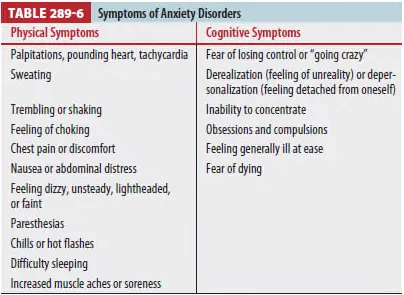
(2) Panic disorder : 다양한 신체 증상 수반 10분 이내 최고치에 도달하나 1시간까지 지속 가능
(3) Posttraumatic stress disorder
(4) Acute stress disorder
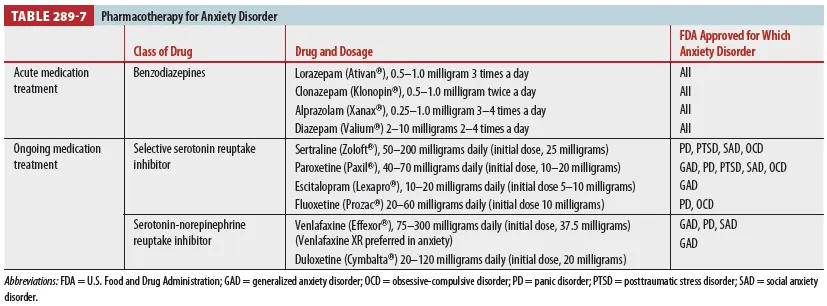
(5) 치료
Ativan 0.5~1.0 mg TP
Clonazepam 0.5~1.0 mg BP
Alprazolam 0.25~1.0 mg Q
Diazepam 2~10 mg BP, TP, Q