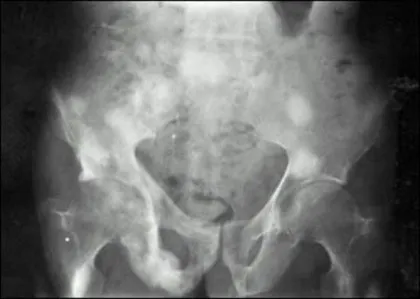
A. Pathophysiology and anatomy
1. Hip joint : Ball-and-socket joint, 섬유연골성 관절막, 관절낭, 인대, 근육에 의해 지탱됨.
2. Knee : Largest synovial joint
B. Nerves of the upper leg and referred pain
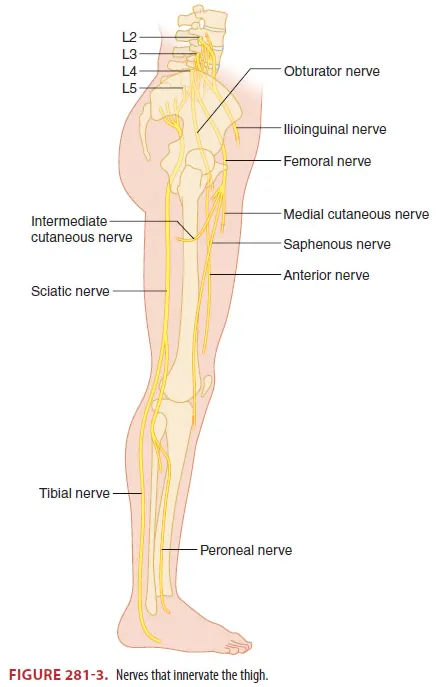
1. Sciatic n. (Post.을 따라 주행하는 가장 긴 신경) and Femoral n. (Lumbar plexus의 가장 큰 분지)
→ 이 둘이 주요 신경
2. 무릎 통증은 대개 국소 병리로 인한 것.
3. 엉덩이 통증은 일반적으로 엉덩이, 허벅지 또는 사타구니에서 느껴짐.
4. 단순히 국소적인 문제가 아닌 다른 이상에 의한 통증의 가능성도 고려해야 한다,
ex) 복강 내 또는 골반 종양, Diverticular, Epidural, psoas abscess
AAA 확장 혹은 파열 (과거 관절 기왕력이 없으면서 신체진찰 상 설명되지 않는 고관절 통증)
Zoster 등
C. Diagnosis of knee and hip disease and syndromes
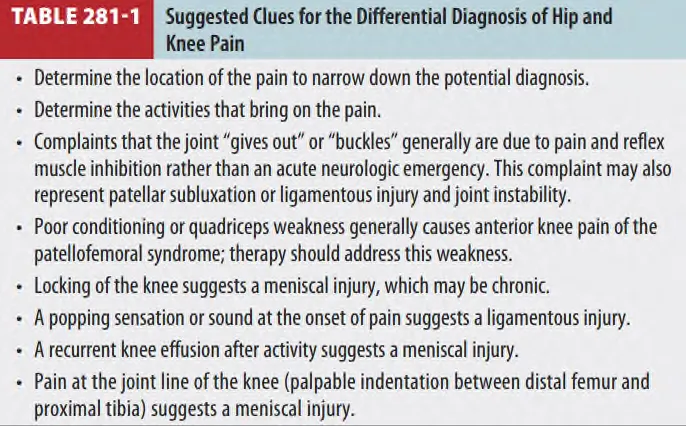
C1. Imaging
(1) Simple radiology
•
Soft tissue injury나 overuse syndrome의 대부분은 유용하지 않음
•
심한 관절염의 변화 및 spurring, calcification derangements, inflammatory processes 평가에
도움이 된다.
(2) US
•
Intra-articular, bursal effusions, soft tissue swelling, muscle 혹은 tendon injury 확인 가능
•
Popliteal cyst, DVT 등 감별에 유용.
(3) CT
•
골 구조를 자세히 볼 수 있음
•
Identify intra-articular loose bodies, visualizes early changes of osteonecrosis, labrum과
joint capsule 이상도 관찰 가능
(4) MRI
•
연조직 및 골질 이상에 대해 자세히 볼 수 있음. 대개 외래 환자
•
AVN이나 Inflammation, infection 등을 평가하는데 유용
D. Specific syndromes and disease by location
D1. Psoas abscess
•
S. aureus : m/c 80%
•
M. tuberculosis
: Common pathogen in immune-compromised hosts and in non-Western countries
•
엉덩이, 복통, 옆구리 통증, 발열 등등
•
CT로 확진
•
Anti Bx. & Surgical consultation for percutaneous or open drainage
D2. Regional nerve entrapment syndromes
(Anteolateral thigh, abdominal wall, groin/inner thigh)
(1) Meralgia Paresthetica (Anterolateral Thigh pain)
•
Lower extremity nerve entrapment syndromes (lateral femoral cutaneous nerve)
•
Hp, thigh, groin area(proximal anterior lateral aspect of the leg)를 따라 발생하는 pain.
•
치료 : NSAIDs, local injections, weight loss
(2) Obturator Nerve Entrapment (Medial Thigh/Groin pain)
•
Trauma and pelvic fracture 후에 잘 발생하며, surgery가 필요할 수 있음
(3) Ilioinguinal nerve entrapment (Groin pain)
(4) Piriformis Syndrome (Buttock/Posterior Thigh pain)
•
Sciatic nerve, distal extremity의 pain
•
치료 : Conservative
D3. Bursal syndromes of the hip area and knee
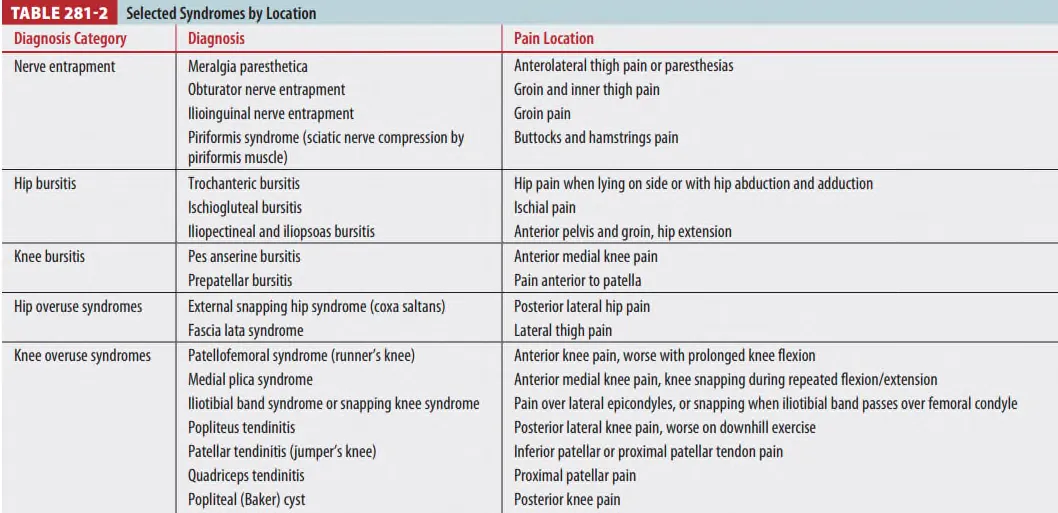
* 통증 위치 및 진단은 위의 표 참조
(1) Trochanteric Brusitis (Posterolateral Hip pain)
•
Gluteus medius tear이 trochanteric bursitis로 오진될 수 있으며 Gluteus medius tear는
rotator cuff injury of the hip으로 불린다.
(2) Treatment of bursitis
•
원인 치료
•
염증성 질환
: Conservative management (NSAID, 휴식, heat 및 시간)
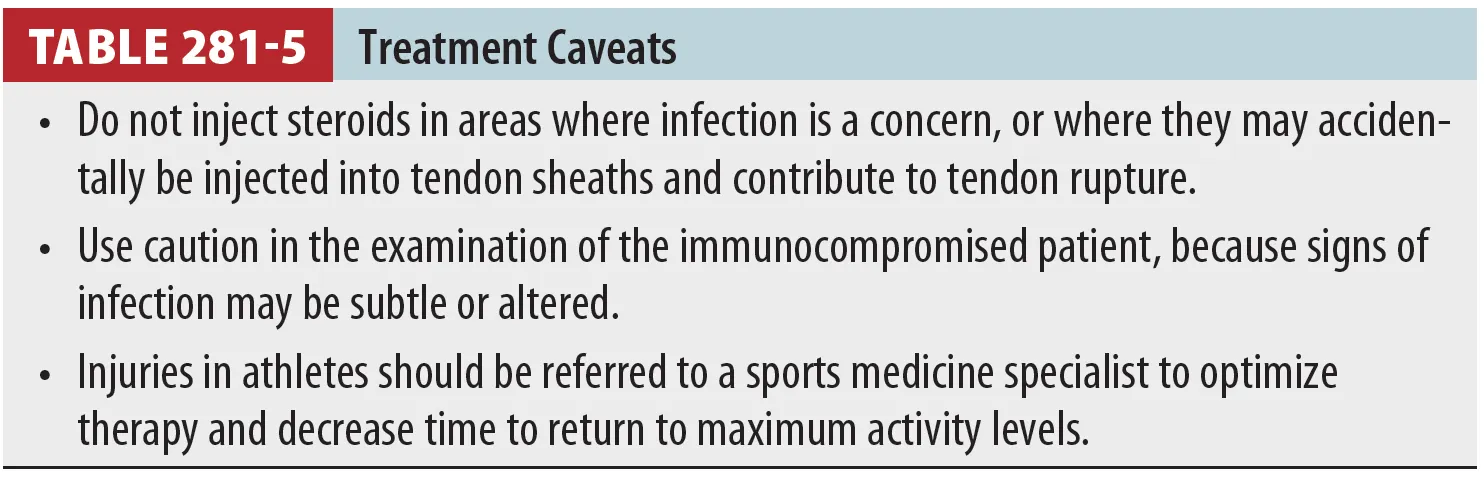
: Steroid 필요할 수 있음, Inj.은 감염이 배제된 경우만 유용
: 단, steroid inj.은 Tendon에 금지 – 파열 가능
•
원인 불명 : 염증(rest, NSAID)과 감염(Anti Bx.) 병행 치료 및 배양결과 확인
•
배액 등에 대해서는 Chap 284 참조
•
만성적인 환자는 반복적 흡인, 수술적 배액 혹은 제거를 고려할 수 있다.
•
면역 억제 환자 : 감염의심 혹은 toxicity를 보이면 IV anti Bx. 와 OS 협진
D4. Bone / Articular derangements (Diffuse/Varied joint pain)
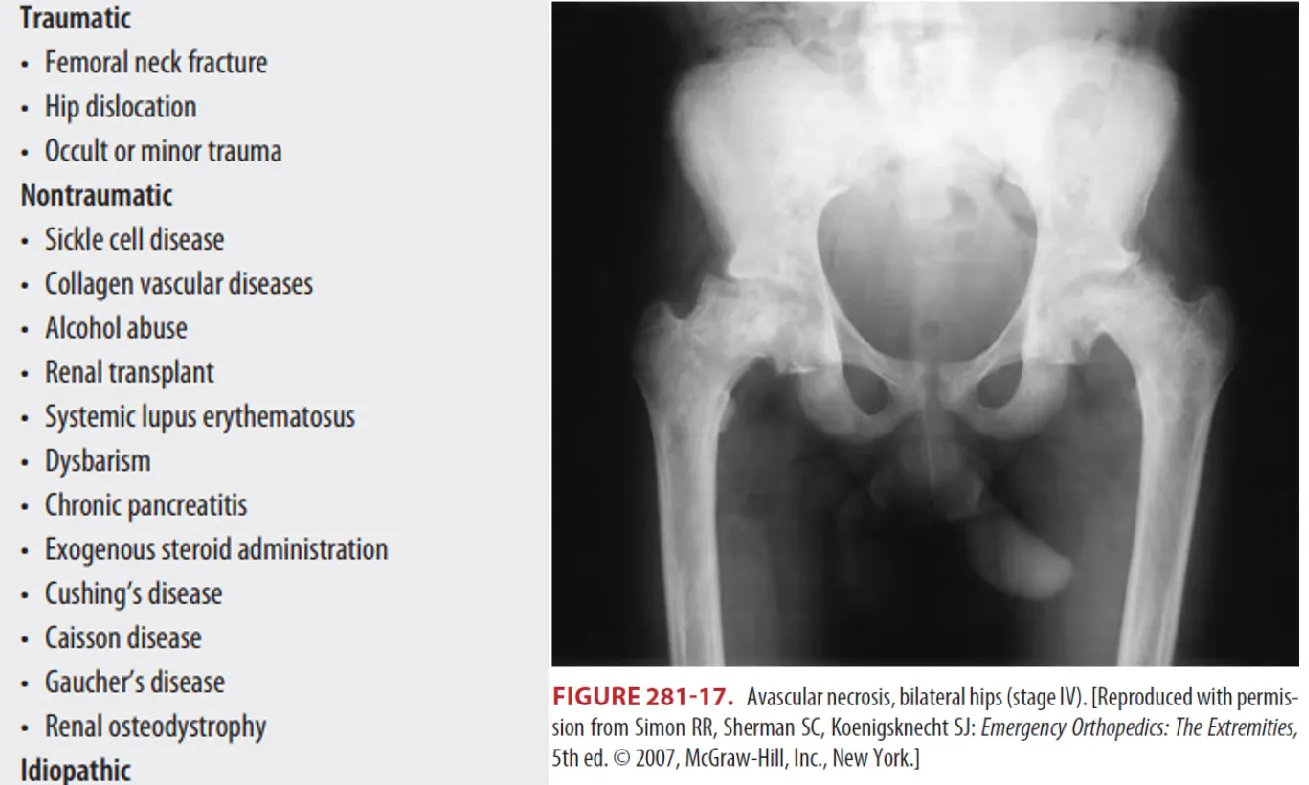
(1) 무혈성괴사 Osteonecrosis (aseptic necrosis, ischemic necrosis, and avascular necrosis)
•
혈류가 없어 발생하는 bone infarction
•
Plain radiographs mottled density and lucencies, 병의 초기의 경우 CT/MRI가 유용
•
치료는 수술적 관절 치환술

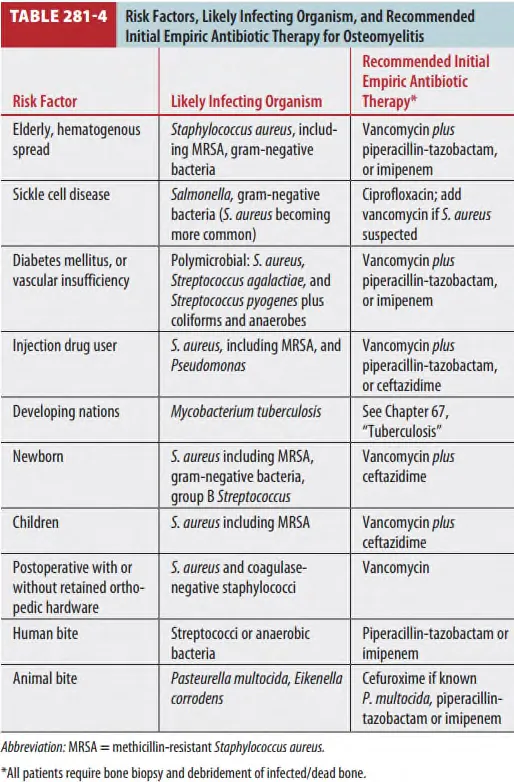
(2) 골수염 (Osteomyelitis)
•
Bone의 bacteria나 fungus에 의한 infection으로 bony changes and destruction을 일으킴
•
Contiguous structures (80%), hematogenous spread (20%)
Child : Long bone, Adult : spine에서 좀더 호발
5. Core treatment
: NSAIDs, rest, heat, conservative treatment
(3) Bone tumor
•
Bone meta : 고령의 환자에서 악성의심 골 종양이 보일 경우 가방 먼저 의심해야 함.
원발부위 찾기 위해 bone scan, PET, Chest/Abdomen CT, Biopsy 등이 필요함.
•
Primary bone sarcoma
•
Hematologic malignancy
(4) Paget's disease
•
증상: 뼈 통증, 뼈 변형, 관절염, 신경 압박(청력/시력 문제, 마비 등)이 발생할 수 있으며, 증상이 없을 수도 있다.
•
특징: 뼈의 파괴와 생성이 비정상적으로 증가하여 정상보다 두껍고 약한 뼈가 만들어진다.파제트 골질환에 걸리면 골조직이 파괴되고 재생되는 과정이 특정 뼈에서 비정상적으로 이루어진다. 몸의 어느 뼈에서도 발생하지만 골반, 쇄골, 척추골, 두개골과 하지뼈에서 흔하다. 병에 걸리면 뼈가 비정상적으로 커지고 구조가 변하며 점차 약화되고 골절이 쉽게 발생한다.
•
파제트 골질환은 일반적으로 50세 이후에 발생하는데 80세 이상의 사람들에게서도 10명 중 1명꼴로 발생된다. 이 질환은 때로 가족력이 있고 남성이 여성보다 많이 걸린다. 파제트 골질환은 유럽, 북아메리카와 호주에서 가장 흔하고, 아시아와 아프리카에서는 드물다.
•
진단: X-레이로 뼈 이상을 확인할 수 있다.