



Ⅰ. Pathophysiology
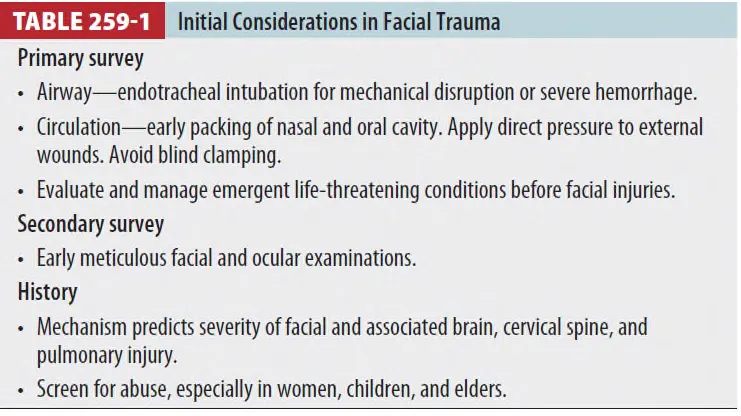
1. Principal focus should be on protecting the patient’s airway during primary survey
2. Up to 44% require endotracheal intubation d/t mechanical disruption & bleeding into
airway
3. In 6% develop vision loss, perform eye examination esp in high energy, orbit Fx., head
injury and abnormal pupil
Ⅱ. Clinical features
1. Eye
(1) Loss of vision은 optic nerve나 안구의 손상을 의미한다.
(2) Binocular double vision은 extraocular muscle의 entrapment를 의미하고 monocular double
vision은 lens dislocation 가능성이 있다.
(3) Telecanthus는 naso-orbito-ethmoid injury에서 발생한다.
(4) Foreign body sensation과 photophobia는 corneal abrasions을 생각할 수 있다.
(5) Hyphema를 check하기 위해 환자를 몇 분간 sit upright 자세를 취하게 한다.
2. Nose
(1) Septal hematoma는 nasal septum에서 blue, boggy and tender area 관찰할 수 있다.
치료는 incision and evacuation으로 cartilage의 destruction을 예방하기 위해 시행함.
(2) Classic test
① The double ring or halo sign
: Nasal discharge와 cerebrospinal fluid를 구분하기에는 정확하지 않다.
② Glucose test
: Nasal discharge에는 없고 cerebrospinal fluid는 존재하나 blood로 인해 false positive가 나올 수
있어 reliable하지 않다.
③ Tongue blade test : Mandibular fx를 진단하는데 96%의 sensitivity를 가진다.
(3) Bimanual nasal palpitation test
: medial canthus 위에서 tenderness가 느껴질 때 medial orbital wall의 fx 검사로 시행한다.
3. Ear
(1) Auricular hematoma
: Incision and drainage 시행 → Cartilage의 destruction 및 cauliflower defomity를 예방

Ⅲ. Diagnosis
1. Imaging of facial trauma ★

2. Imaging modality의 choice는 noncontrast CT이다.
(1) Taumatic brain이 의심되는 경우, supraorbital Fx가 의심되는 경우 CT가 권유된다.
(2) CT를 시행할 수 없는 경우나 low suspicion group일 경우 골절을 배제하기 위해 midface의 경우
Water's veiw, mandible의 경우에는 panorex가 choice 일수 있다.
(3) Head CT를 시행한 환자이며 임상적으로 안면골 골절이 강하게 의심되지 않을 경우에는 추가적인
water’s view 촬영은 불필요하다.
Ⅳ. Treatment
1. Airway management
(1) Facial trauma 환자 survey 중 hemorrhage와 mechanical obstruction으로부터 airway를
공격적으로 보호해야 한다.
(2) Cervical spine clearance 후에 jaw thrust, chin lift, head tilt 등으로 airway를 reposition한다.
(3) Avulsed teeth와 foreign body를 제거한다.
(4) Nasal trumpets는 injury를 더욱 악화시키거나 severe midfaical injuries 환자에서는
intracranial placement가 일어날 수 있으므로 매우 주의 깊게 사용한다.
(5) Rapid endotracheal intubation이 trauma 환자에서 가장 선호되는 airway management
(6) Facial trauma 환자의 경우, bagging 을 효과적으로 하거나 alternative airway device 혹은 plan
없는 경우 paralytics 사용하지 말라고 되어있습니다. (do not administer)
(7) Difficult trauma airway의 가장 좋은 접근방법은 endotracheal intubation이며 intubation이 실패
할 경우를 대비하여 cricothyrotomy 준비 (neck preparation & kit 준비)도 해야 한다.
(8) Etomidate and ketamine은 respiratory drive를 감소시키지 않는다.
2. Hemorrhage
(1) Posterior nasal epistaxis의 초기 처치는 nasal tampon, dual balloon device, gauze packing과
foley catheter placement가 있다.
(2) Severe mid facial Fx가 동반되어 있는 경우 nasal packing으로 인한 intracranial placement
피해야 하며 intubation 후 oral packing이 필요함.
(3) 출혈 지속 시 ligation 혹은 reduction of Fx 같은 operative intervention이나 arterial
embolization을 고려해야 함.
Ⅴ. Special fractures
1. Orbital fracture
(1) 크게 pure, blow out fracture와 unpure, orbital fracture로 나뉜다.
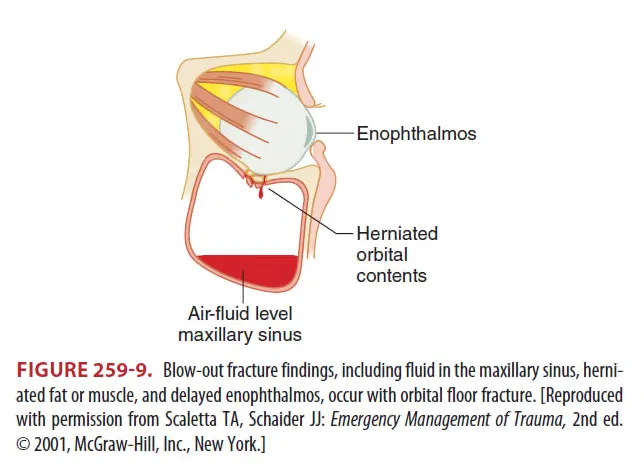
(2) Blow out fracture는 inferior & medial wall을 주로 포함하며 orbital wall에만 손상이 있으며
orbtal content의 herniation, enophthalmos, air-fluid level maxillary sinus 동반됨.
(3) Orbital fracture는 강한 충격으로 인해 naso-orbito-ethmoid Fx가 일어나며 lacrimal duct injury,
dural tears, traumatic brain injury 가 동반될 수 있다.
(4) Radiologic finding
① Water’s view에서는 tear drop sign, air-fluid level 관찰된다.
② Facial CT가 가장 좋은 진단 tool이다.
(5) 치료 : Orbital Fx만 있는 경우 oral amoxicillin-clavulanate(antibiotics), nose blowing 자제교육
(6) Retrobulbar hematome 혹은 malignant orbital empysema 는 ocular compartment Syn을
발생시켜 acute ischemic optic neuropathy가 나타날 수 있다.
(exophthalmos, visual activity 감소, intraocular pressure 증가)
2. Zygoma fractures
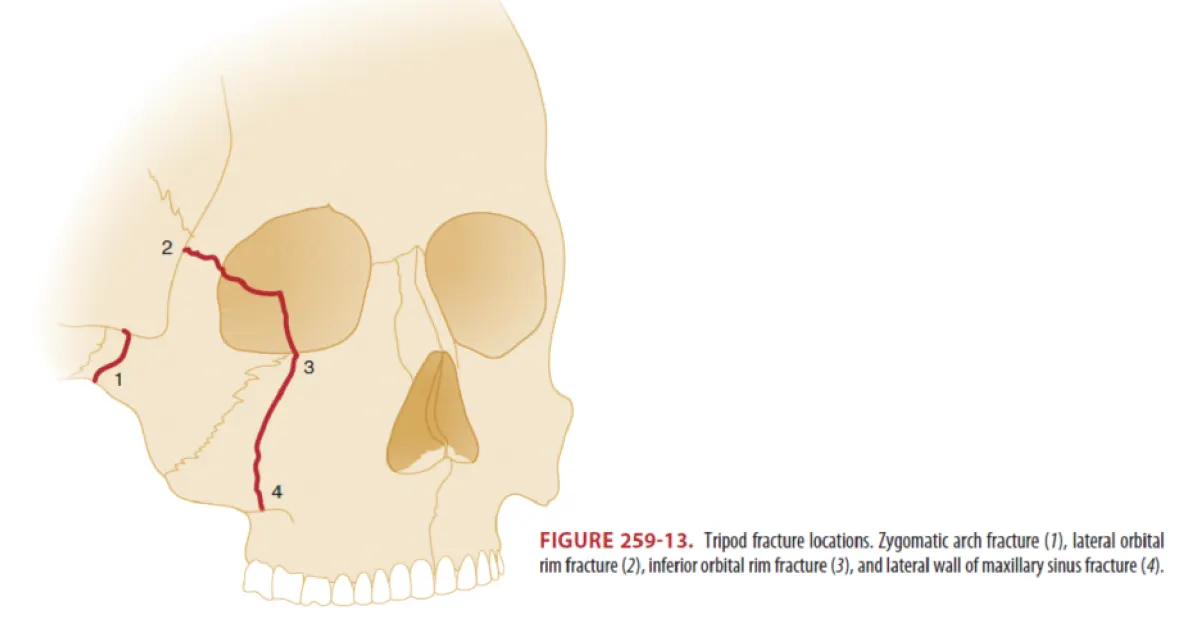
(1) Zygomaticomaxillary (tripod) Fx는 high-energy deceleration injury로 zygomatico-frontal
suture, zygomaticotemporal junction, infraorbital rim의 disruption에 의해 발생한다.
5. Midfacial fractures
(1) Le Fort Ⅰ fracture (Alveolar)
① Maxilla body가 pterygoid plate & nasal septum와 분리되는 transverse fracture
② Hard palate와 teeth만 움직일 수 있다.
(2) Le Fort Ⅱ fracture (Zygomatic maxillary complex)
① Central maxilla와 hard palate가 포함되는 pyramidal shape으로 발생한 fracture
② Hard palate와 nose가 같이 움직이며 안구는 같이 움직이지 않는다.
(3) Le Fort Ⅲ fracture
① Mid face 전체가 skull로부터 분리되어 craniofacial dysjunction가 발생
② Frontozygomatic suture line으로부터 orbit, base of the nose & ethmoids까지 분리되어
얼굴 전체가 움직이게 됩니다.
(4) Le Fort Ⅳ fracture
① Le Fort Ⅲ fracture에 frontal bone까지 involve된 경우

6. Mandible fractures
(1) Intraoral examination은 open fracture에서 mucosa의 small breaks, sublingual hematoma,
ecchymosis, dental or alveolar ridge fractures, missing teeth 등을 배제하기 위해 중요하다.
(2) Chest radiograph
: 의식이 없는 환자에서 missing teeth를 확인하기 위해 검사가 필요하다.
7. Pediactric considerations
소아에서의 안면골 골절은 보통 낙상, 자전거, 보행자, 동승자 사고에 의함.
cricothyrotomy는 8세 미만에서는 금기이며 9-12세 사이에서는 가능한 한 피해야 한다.
Endotracheal intubation이 불가한 경우에 LMA 또는 needle crycothyrotomy를 시행.
Maxillary sinus 는 6세 이후부터 발달하므로 성인에 비해 midfacial Fx. 는 드물다.
소아에서 orbital floor 는 잘 휘고 깨지므로 trapdoor를 형성하여 tissue ischemia를
유발할 수 있다.
소아의 안면골은 callus 형성이 1주 이내에 이루어지므로 reduction 이 어려울 수 있다.
하악골 골절의 경우 2일 이내에 pediatric facial surgeon 에게 refer 하여야 한다.
