



CHAPTER 4 Avalanches

작성자: 인천성모병원 이준영
In the United States, approximately 100,000 avalanches occur annually, of which about 100 cause injuries, death, or destruction of property.
1.
Properties of snow
2.
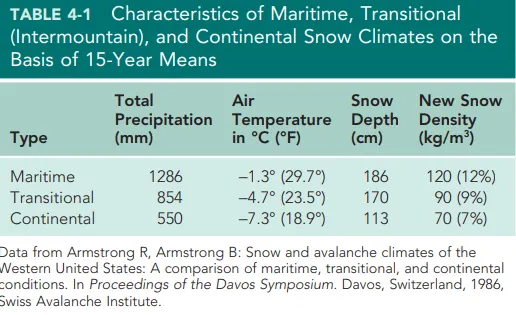
Maritime snow climate : 폭설과 상대적으로 온화환 기후, 미국에서 시에라, cascade mountains, british columbia의 해안 지역에 해당
3.
Continental snow: 낮은 강설량, 추운 기후, 더 높은 고도가 특징, Canadian Rocky mountains, southern Rocky mountains, Brooks range에 해당
4.
Transional snow climate: “intermountain” snow climate
•
Strength or hardness: avalanche formation 에 큰 요소
•
Density of snow: crystal shape에 따라 달라질 수 있다. - needle crystal이 압축된 눈이 stellar crystal로 압축된 눈보다 density 가 3-4배 더 높다.
•
Wind: 새 눈 결정을 변하게 하는 요소, 눈의 결정을 더 작게 나눠서 wind slab을 매우 가깝게 뭉치게 한다.
Metamorphism: 눈 결정의 모양과 질감의 변화
•
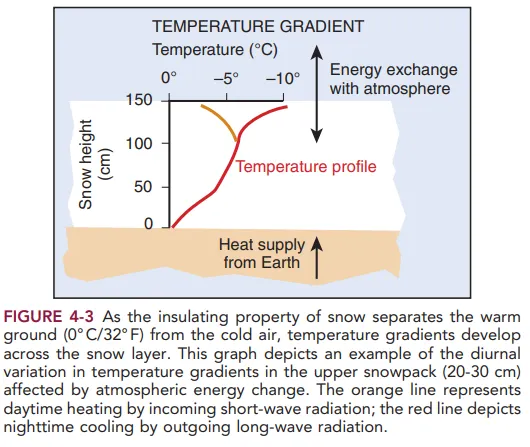
Temperature-gradient metamorphism or Kinetic metamorphism :
Depth hoar (sugar snow)와 faceted crystals은 grain 접촉에 결합이 거의 없거나 약하기 때문에 avalanche 형성에 특히 중요하다.
10cm당 >1’C 이상의 강한 temperature gradient의 환경에서 가능.
•
EQUILIBRIUM METAMORPHISM: snow pack 의 온도 차이가 크지 않은 경우, snow texture는 완전히 다르게 발달된다. 온도차가 10cm당 약 1’C 이하인 경우, 수증기압 차이가 존재한다. 이른바 sintering 으로 불리는 bond growth는 cohesive texture를 생산한다.
AVALANCHE TYPES
1.
Point release avalanches or a loose snow avalanches
•
inverted V shape, cohesionless snow와 연관
•
눈 표면 근처의 오직 작은 양의 눈과 연관

1.
Slab avalnches (판 눈사태)
•
더 약한 눈 레이어 위에 더 강한 눈의 cohesive layer가 있는 경우
•
Loose snow avalanche와 달리 매우 큰 눈의 양과 관련 있다.
•
Dry slab avalanches - 미국의 치명적인 사고의 95%에 해당되어 연구가 많이 진행

Slab avalanche(판형 눈사태) formation
•
Loose snow avalanches may still occur in this situation on steep slopes.
•
The combination of a basal layer of depth hoar with a cohesive layer above provides the ingredients for slab avalanche danger
MECHANICAL PROPERTIES: HOW SNOW DEFORMS ON A SLOPE
•
역학적 변형은 판형 눈사태 시작 전 적설 내에서 발생한다.
•
적설이 지면과 평행하게 쌓인 경우, 밀도 증가하고 강도가 세짐
•
적설이 경사면에 쌓인 경우는 간단하지 않다. 중력은 두 요소로 나눌 수 있다.
•
적설의 아래 경사의 움직임은 완만한 경사일지라도 내내 일어난다.
•
움직임의 속도는 하루 몇 밀리미터로 천천히 움직이나, 가파른 경사 또는 따뜻한 기후에서는 시간 당 수 밀리미터까지 움직일 수 있다.
•
눈은 고도로 다양한 방법으로 변화하고 viscoelastic material로 기술된다.
•
Viscous : liquid, elastic: solid
•
Viscous formation : warm temperature 와 slow application of force
•
Very cold temperature or force가 급격히 적용되면, 눈은 elastic material 처럼 작용한다. 충분한 힘이 적용된다면 fracutre로 나타난다.
Avalanche dynamics
•
역학적 관점에서 3가지 구분되는 부분이 눈사태 경료에 있다.
•
Starting zone : 가장 가파른
•
Track : 눈사태가 starting zone에서 track으로 진행한다. 그 track은 눈사태가 진행할 때, 눈이 추가되거나 거의 없이 필수적으로 일정하게 남는다.
•
Run out zone: 대량의 눈사태가 track을 통해 내려가면서 runout zone으로 진행되고, 거기서 눈사태의 움직임이 끝난다.
•
Slope angle : starting zone – 30-45도, track – 20-30도, runout zone - <20도
FACTORS THAT CONTRIBUTE TO AVALANCHE FORMATION
: 눈사태 배출에 기여하는 요소는 terrain(지형), weather(기후), 그리고 snowpack(눈덩이) 이다. 여기서 지형 요소는 고정되어 있으나 날씨와 snowpack은 매일 또는 매 시간 변화한다.
1.
Snowfall (강설량)
•
눈사태의 80%이상은 폭풍 동안 또는 폭풍 후 지전에 일어난다.
•
Snows of 15 to 30 cm (6 to 12 inches) usually produce a few small slides, and some of these harm skiers who release them.
•
Snows of 30 to 60 cm (1 to 2 feet) produce avalanches of larger size that present considerable threats to skiers and pose closure problems for highways and railways.
•
Snows of 60 to 120 cm (2 to 4 feet) are much more dangerous.
•
snowfalls of more than 120 cm (4 feet) produce major avalanches that are capable of large-scale destruction.
•
These predictions are guidelines that are based on data and experience and must be considered with other factors to arrive at the true hazard. For example, a snowfall of 25 cm (10 inches) whipped by strong winds may be serious; a fall of 60 cm (2 feet) of featherlight snow in the absence of wind may produce no avalanches.
1.
Snowfall intensity
•
눈이 내리는 속도가 눈이 쌓이는 양만큼 중요.
•
A snowfall rate of 2.5 cm (1 inch) or more per hour that is sustained for 10 hours or more is generally a red flag with regard to avalanche danger. The danger worsens if the snowfall is accompanied by wind.
1.
Rain
2.
New snow density and crystal type
•
Snow density : percentage of the volume occupied by ice
•
New snow density : 7% to 12%, high elevation of Colorado – 7%; maritime climates of the Sierras and the Cascades – 12%
•
Avalanche danger increases when heavier, denser snow falls on lighter, less dense snow
1.
Wind speed and direction
•
A speed of 7 m/s (15 mph) is sufficient to pick up freshly fallen snow
•
Speeds of 9 to 22 m/s (20 to 50 mph) are the most efficient for transporting snow into avalanche starting zones
1.
Temperature
•
increased temperature clearly produces increased avalanche potential
1.
Depth of snow cover
2.
Weak layers
•
Persistent weak layer : most troubling layers로 larger faceted snow, depth hoar, surface hoar를 포함한다.
•
일반적인 약한 층은 새로운 눈에 대해 약하게 결합하는 오래된 눈 표면이다.
•
또다른 약한 층은 hoar frost or surface hoar 서리
•
많은 눈사태는 surface hoar 의 깊은 층으로부터의 방출로 알려져 있는데, 1달 이상 이 층이 존재하고 표면으로부터 6 피드(180 츠) 이상 의 깊이로 기인한다고 알려져 있다.
SAFE TRAVEL IN AVALANCHE TERRAIN
Identifying avalanche terrain
•
대부분의 눈사태는 30-45도의 경사에서 시작.
•
Inclinometer 경사계 ; 경사각을 측정하기 위해 사용, 콤파스나 스키 막대로도 이용 가능 (눈으로 측정)
Route finding
•
융기 능선의 바람이 불어오는 반대쪽으로 여행하는 것이 가장 안전
•
눈은 얕게 덮히고 가득찬 바람이 바위에 붙어서 불어오는 곳은 스키 타기에 좋지 않으나 그곳은 안전하다.
Crossing avalanche slopes
•
Most avalanches occur during and just after storms.
•
Waiting a full day after a storm has ended can allow the snowpack to react to the new snow load and gain strength
•
잠재적인 눈사태 위험 경사면을 지날때는 항상 가능한 높게 또는 낮게 건너는 것이 더 낫다. 중간은 위험하다.
STABILITY EVALUATION TESTS
•
눈으로 덮힌 경사로를 여행하는 사람들은 눈의 가도와 불안정성을 확인하는 핸즈온 테스트를 시행하여야 한다.
•
상당히 약한 층을 찾는 빠르고 간단한 시험법: to push a ski pole into the snow; 얇고 약한 층(buried surface hoar 또는 두 층 사이의 약한 결합)은 발견하기 어려움
•
To dig a hasty snow pit : snowpack layers를 직접 관찰하고 시험해볼 수 있는 더 좋은 방법 ; 120 to 150 cm 깊이, 90cm 너비로 구덩이를 판다.
•
The shovel shear test (ST) : simple and quick test used to locate weak layers (especially very thin layers)
•
A five-point scale is used to rate the shear:
•
(1) “very easy” (STV) if it breaks as the column is being cut or as the shovel is being inserted
•
(2) “easy” (STE) if a gentle pull on the shovel does the job
•
(3) “moderate” (STM) if a slightly stronger pry with the shovel is required
•
(4) “hard” (STH) if a solid tug is required
•
(5) “no shear” (STN) if no shear failure is observed
•
1,2 : weak, 4,5: strong
•
Compression test (CT) : 1m 정도의 표면 근처의 약층을 발견하기 위해 효과적
•
Rutschblock test (RB) : 스키어의 몸무게와 스키어의 눈에 미치는 스트레스를 계산하는 방법
•
Extended Column test (ECT) : 2000 년대 후반에 개발된 더 실용적인 방법
•
All tests are prone to misleading results ; CT and RB test 의 false stable rate 가 10-20%
AVALANCHE RESCUE EQUIPMENT
Shovel : 눈사태 지형으로 들어가는 개인이 갖춰야할 첫번째 안전장비, 손이나 스키로 눈을 파거나 치우는 것은 매우 어렵다.
Probe
Avalanche Rescue Transceiver (beacons) : 눈사태에 묻힌 동료를 찾을 수 있는 최고의 개인 구조 장비, 구조 신호는 대략 30에서 50미터를 유지.
경험적으로, 무선 송신기를 갖춘 완전히 묻힌 희생자의 생존율은 27%에서 45%이다.
최소한의 구조 장비는 무선 송신기, 압축 탐침 또는 pole, shovel 3가지이다.
Avalanche Airbag : 완전한 매립을 예방 목적,
•
1985년에 독일인 발명가 Peter Aschauer가 백팩에 붙인 avalanche airbag system (ABS)으로 개발
•
avalanche airbags reduced mortality from 18.9% without an airbag to 2.9% with an airbag
•
The airbag works as a result of granular convection “Brazil nut effect” F. 4-20
AvaLung : 1996년에 특허 by Dr. Thomas Crowley, 2000년도에 상용화 original external vest format
•
날숨과 들숨의 공기를 분리; expired air를 다시 흡입하는 것을 방지, 눈사태 매장시 주요 질식의 원인을 방지
•
헬리콥터 스키어가 120cm 깊이에서 산사태 매립되었을때 35에서 45분간 avalung으로 숨을 쉬어 생존한 케이스
AVALANCHE RESCUE
INDIVIDUAL RESCUE (SELF-RESCUE)
•
Escaping to the side 옆으로 피하기;
◦
나무 옆에서 눈사태가 났다면 근처의 나무 붙잡기 – 눈사태에 휩쓸릴 수 있음.
◦
“눈사태”라고 크게 외치고, 입을 닫고, 코로 숨을 쉬어 눈이 입으로 들어오는 것을 방지
◦
Avalung등을 착용했다면, 재빨리 마우스피스를 입에 댄다.
◦
ABS를 입은 사람은 ripcord를 당겨서 에어백을 작동시킨다.
SMALL-TEAM RESCUE (COMPANION RESCUE)
•
Calling for help; 30분 이상 연락이 안되면 현장 탐색, 구조 실시
•
Marking the Last-Seen Area; 사고 직후 몇분의 구조 활동이 희생자의 생사의 차이를 만듦, 희생자의 최종 목격 장소는 고정되고, 마킹을 해야한다. (옷, 나무 가지 등으로)
Initiate search and scan for clues
Rescue transceivers
송신기 사용을 잘하면, 수분 내에 매립된 곳을 찾고 탐침으로 위치를 확인해야한다.
Probing after transceiver search
•
2-3m깊이로 박고, 희생자가 탐색되지 않으면 안에서 밖으로 25cm 간격으로 원형으로 탐색(F.4-25)
Shoveling techniques
•
strategic shoveling;
◦
눈을 파는 효율을 높임(digging efficiency)
◦
매립 깊이의 1.5배 거리에서 옆으로 눈을 판다.
•
V-shaped conveyor belt (F.4-27);
◦
수시간 또는 수일이 경과되었을때 효과적인 방법, 프로페셔널하고 조직화된 구조자들에게 알맞다.
PROFESSIONAL RESCUE
Incident Command System;
•
2003년에 미국 국토 안보부는 모든 응급상황시 ICS로 관리하도록 제정(PHSD-5)
•
모든 눈사태 수색과 구조 활동에는 4가지 핵심 기능 요소
◦
1. 수색 search, 2. 응급처치 emergency care, 3. 이송 transportation, 4. 지원 support
Organized Probing Search Techniques
•
Organized probing법은 단순하다 느린 구조 탐색법
•
40년 이상, 12명의 구조자를 일렬로 세우고 3-3.5m 길이의 probe pole을 가지고 수색.
•
이 방법으로 수색 확률은 70%로 알려짐
•
최적의 probe-grid spacing은 50 cm by 50cm 로 계산됨 (F. 4-28)
•
Sialom probing technique F.4-29
◦
장점: 구조자 앞에서 수색이 가능하여 옆에서 탐색하는 것보다 더 강하고 더 효율적
◦
단점: 훈련하는 것이 어려움
Avalanche Rescue Dogs
RECCO
•
이 electronic rescue system (F. 4-30)은 조직화된 구조팀이 reflector를 장비한 희생자를 찾는것을 가능하게 함.
•
2개의 파트로 구성: rescuer 는 detector, recreationist는 reflector로 작용
•
THE AVALANCHE VICTIM
STATISTICS OF AVALANCHE BURIALS
•
눈사태 매립시 생존은 – grade and duration of burial, asphyxia, trauma, hypothermia에 의해 결정
•
Grade : critical Vs. non – critical ; full, partial,
•
두가지 방식으로 사망
◦
첫째: traumatic injury – 나무, 바위, 절벽, 눈이 blunt or penetrating trauma, 1/4 사망이 얼굴, 목의 외상
◦
둘째: snow burial asphyxia , 3/4 사망
◦
Hypothermia는 very small percentage
◦
Burial depth/time
▪
Depth: 3m 이상일때 생존자는 미국에서 없고, 유럽에서는 2명의 생존자가 6-7m 깊이에서 구조된 케이스
▪
Time: 30분이 넘어가면 사망자> 구조자
Rescue statics (T.4-2, 4-3)
AVALANCHE VICTIM PHYSIOLOGY AND MEDICAL TREATMENT AFTER RESCUE
MORBIDITY AND MORTALITY
•
Asphyxiation – m/c cause of death during avalanche burial
•
15-18분 경과시 생존확률 90%; 약 35분 후에는 생존활률이 30-34%로 덜어짐
•
30분이 넘는 경우 생존률은 에어포켓이 필요.
•
T. 4-4 Injuries among Survivors of avalanche accident (partial and total burials)
•
T. 4-5 pattern of injury avalanche victims
RESPIRATORY PHYSIOLOGY OF AVALANCHE BURIAL
•
Inspired air contains 21% O2 and less than 0.03% CO2;
expired air contains about 16% O2 and 5% CO2
•
Avalung은 실제 눈사태 매립시 생존에 영향 (F. 4-37)
◦
avalung으로 호흡시 hypoxia/hypercapnia를 확연히 지연시킴 (avalung 호흡시 평균 매립 시간 58분 Vs. 500cc airpocket시 10분)
MEDICAL TREATMENT AND RESUSCITATION OF AVALANCHE BURIAL VICTIMS
•
•
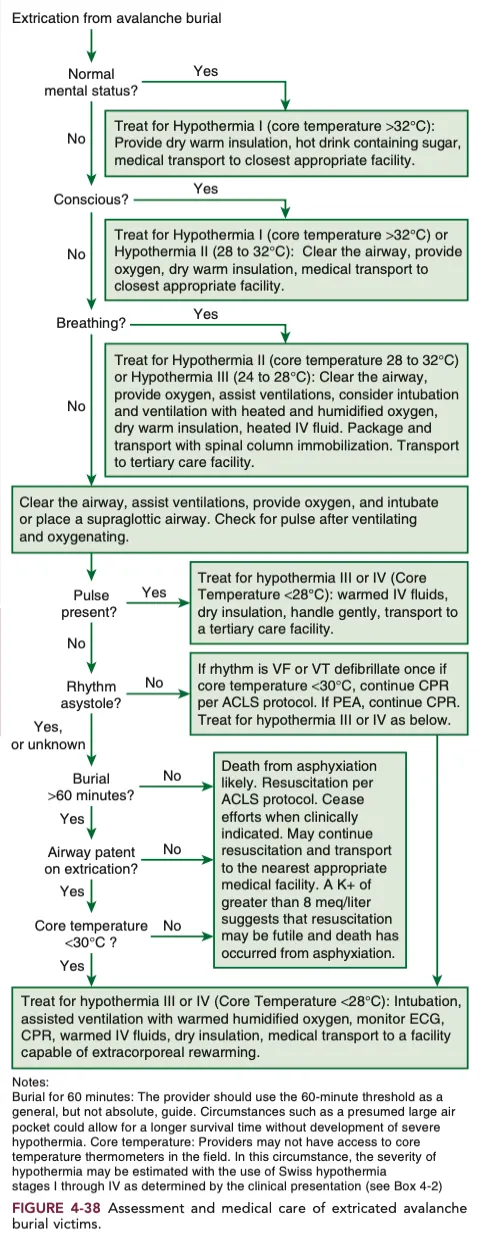
매장 시간이 60분 이하인 심정지 환자인 경우 소생이 잘 되지 않는 경향이 있다. 그 이유는 심정지가 질식의 결과.
•
cardiac arrest was the result of asphyxiation rather than hypothermia
•
60분 이상이 경과된 상태에서 매립에서 꺼내진 희생자의 경우 기도가 열려 있고, moderate or severe hypothermia ( core termperature <30’C)인 경우는 어레스트에서도 소생술을 계속하거나 또는 extracorporeal rewarming이 가능한 시설로 이송을 고려해야한다. (F. 4-38)
•
HYPOTHERMIA IN THE AVALANCHE BURIAL VICTIM
•
생존 구조된 눈사태 매립 생존자는 hypothermia가 major medical problem
•
F. 4-39에 따르면 눈사태 매립시의 중심 체온은 약 1시간 까지는 mild hypothermia까지만 떨어지며 구출 후부터 더 심각하게 체온이 떨어지기 때문에 구출하자마자 재가온을 해야함.
•
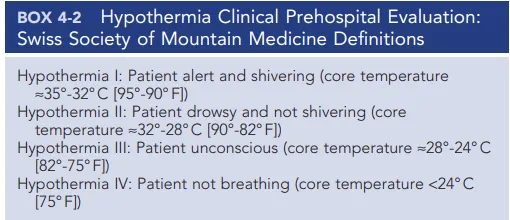
현장에서 중심체온 측정이 어려울때 b.4-2에 의해 임상적으로 구분
Summary
•
Asphyxiation is the major cause of death during avalanche burial and is time dependent.
•
extricated within 15 minutes have a greater than 90% chance of survival.
•
Survival beyond 30 minutes of burial depends on the presence of an air pocket for breathing
•
Avalanche burial victims who are not shivering have progressed to moderate or severe hypothermia and require medical transport to a hospital for definitive rewarming
•
Avalanche victims extricated with a perfusing rhythm who subsequently have a witnessed cardiac arrest from severe hypothermia have a good chance of resuscitation to a perfusing rhythm, and resuscitation efforts should be continued while they are transported to a medical facility capable of extracorporeal rewarming
