Chapter 2. High-Altitude Medicine and Pathophysiology
1.
High-Altitude syndrome
•
Hypobaric hypoxia에 의해 발생하며, hypoxia에 대한 노출의 rapidity가 중요하다.
1.
Acute Cerebral Hypoxia
a.
너무 빠른 고도상승이나 hypoxia가 갑자기 악화될 때, CO poisoning, pulmonary edema, sudden overexertion, sleep apnea, and failed oxygen delivery device 등의 이유로 acute hypoxemia 가 발생한다.
b.
SaO2가 40~60%, PaO2가 30mmHg이하, mixed venous PO2가 15mmHg에 다다르면, unacclimatized person은 의식소실이 발생한다.
c.
Insufficient oxygen으로 인해, Fatigue, vertigo, sleepiness, hallucination, dizziness, prickling 등 여러가지 증상이 발생하지만, 고도가 낮아져 산소공급이 원활해지면, 또 원인을 교정한다면 (Oxygen delivery device를 고치거나, apnea를 교정하는 등) 증상이 호전된다.
2.
High-Altitude Headache (HAH)
a.
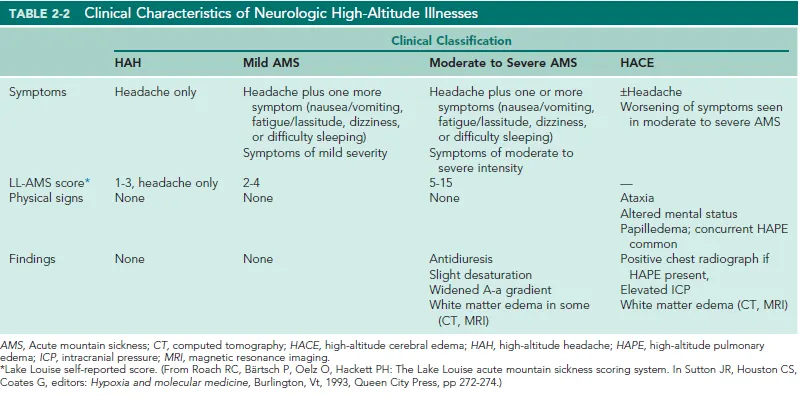
Headache without other symptoms is called HAH, and if associated with other typical symptoms, it is called AMS.
b.
다양한 양상 (bilateral, dull, pulsatile, frontal, frontotemporal…) 을 나타내나, 보통 new altitude에 도달한 24시간 내 밤에 나타나고, 다음 24시간 내에 사라진다.
c.
Pathophysiology
•
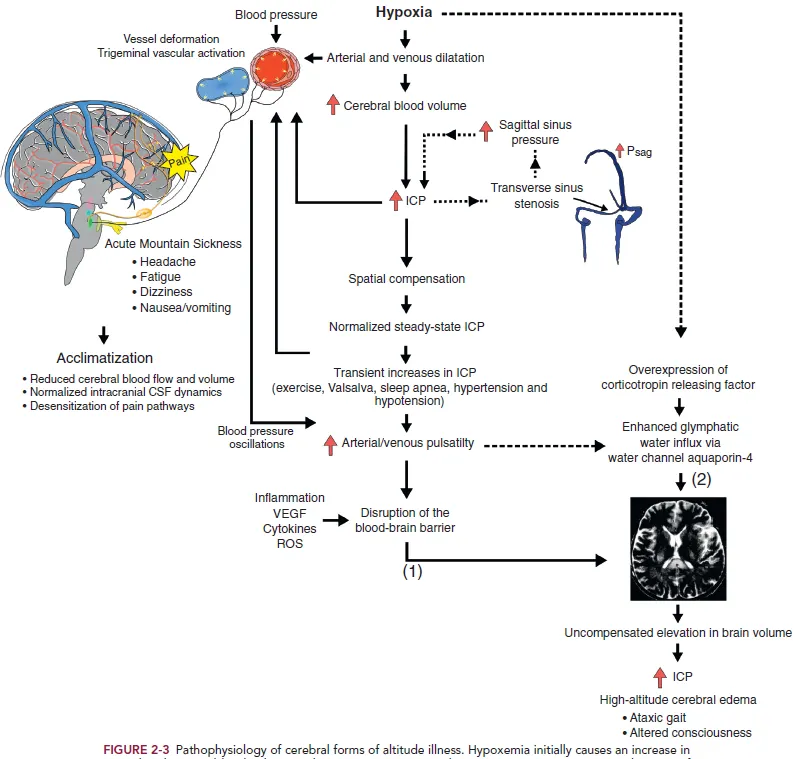
Trigeminovascular system is activated at altitude by both mechanical and chemical stimuli, and that eh threshold for pain is likely altered at high altitude. (Figure 2-1)
d.
Prevention and Treatment
•
NSAIDs, AAP
•
Acetazolamide, Dexamethasone : AMS prophylaxis medications
•
Sumatriptan : 일부 연구에서 도움이 된다고 밝혀짐.
3.
Acute Mountain Sickness (AMS)

a.
Epidemiology and Risk Factors
•
Incidence and severity of AMS depend on rate of ascent and altitude attained, duration of altitude exposure, level of exertion, recent altitude exposure and inherent physiologic susceptibility.

•
Acclimatization : high altitude에서 최근 overnight를 한 경우 AMS에 protective effect를 가지며, 이는 다시 저지대로 내려와서도 효과가 유지된다. (2주 이상 acclimatization 하면 수개월 이상 효과가 남기도)
•
AMS에 영향을 주는 가장 중요한 인자로는 genetic predisposition, altitude of residence, altitude reached, rate of ascent, and prior recent altitude exposure 등이 있다.
b.
Diagnosis : Setting, symptom, exclusion of other illnesses
•
Setting : unacclimatized된 사람이 1000m 이하에서 2500m이상으로 rapid ascent 한 경우. 또는 acclimatized 한 사람은 abrupt ascent나 overexertion, 호흡억제 약물의 사용, infectious illness 등에 의해서도 발생 가능.
•
Symptom : Headache, fatigue, dizziness, anorexia, insomnia, lassitude
•
Exclusion of other illness
•
Cough, DoE는 흔하지만, AMS의 feature라고 할 수 없다. Dyspnea at rest, worsening respiratory symptom 등은 HAPE 등을 고려해야 한다.
•
Altered mental status, ataxia 역시 AMS의 feature 가 아니며, HACE 를 고려해야 한다.
1.
Differential Diagnosis
•
기본적으로 nonspecific 한 symptom 때문에, viral flulike illness, hangover, exhaustion, dehydration 등 misdiagnosed 되는 경우가 많다.
•
Migraine : Oxygen supply나 descent로 호전되는지 여부
•
Hyponatremia : lab을 할 수 없는 경우가 많아서 seizure를 하기 전에 AMS나 HACE와 감별이 어렵다.
2.
Pathophysiology : AMS 는 hypoxia에 대한 인체의 반응으로 여겨진다. SpO2가 정상이어도 고지대에서는 AMS가 나타날 수 있다.
•
Mechanisms of Acute Mountain Sickness : 고도 상승 🡪 transient brain volume 상승 🡪 ICP 상승 🡪 AMS
•
The Tight-Fit Hypothesis : brain volume이 커지면 CSF dynamics 에 의해 ICP가 상승하지 않도록 하는데, 이 capacity가 크면 AMS가 잘 발생하지 않는다.
•
Intracranial Pressure : AMS가 발생한 사람들의 ICP가 높으며, 이들은 작은 활동에도 ICP의 상승폭이 크다.
3.
Treatment : 빠른 진단으로 빠른 치료를 시작하면 효과가 좋다.
•
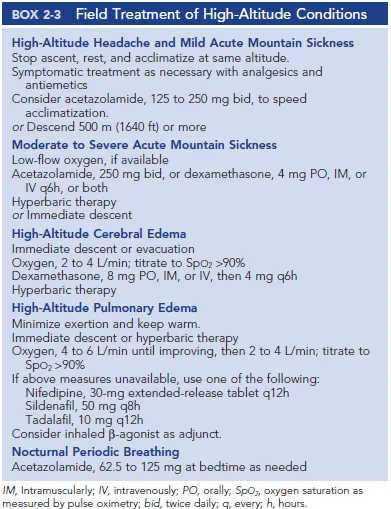
Acclimatization : 고도 상승을 멈추고, acclimatization이 되기를 기다린다. (12시간 ~ 4일) Acetazolamide가 도움이 될 수 있다.
•
Symptomatic therapy : Aspirin, AAP, NSAIDs for headache, Ondansetron for nausea.
•
Oxygen delivery : 0.5~1L/min via nasal cannula or mask, 특히 밤에 잘 때. Hyperbaric chamber는 severe AMS나 HACE, HAPE에 도움이 된다.
•
Betamethasone : AMS의 early stage에 증상 호전에 도움이 된다.
4.
Prevention
•
한번에 높은 고도로 등반하지 않는다.
•
2500~3000m에서 2박을 하고, 수면고도는 500m 이상 올리지 않으며, 계속 올라갈 경우 1000m마다 적응을 위해 추가 밤을 보내야 한다.
•
Acetazolamide prophylaxis (DoC) : 250mg, 2~3 times a day. Paresthesia, polyuria등의 side effects가 있다.
•
Dexamethasone prophylaxis
•
Ginkgo Biloba prophylaxis
5.
High-Altitude Cerebral Edema
a.
Uncommon but deadly condition.
b.
Clinical presentation
•
주요 증상 : Ataxic gait, Severe lassitude, altered mental status
•
Hallucination, cranial nerve palsy, hemiparesis, seizure 등도 보고됨.
•
Focal neurologic deficit만 있는 경우 stroke과 감별이 필요할 수 있다.
c.
Pathophysiology : AMS의 advanced form
•
Vasogenic and cytotoxic edema. CT와 MR 등 영상검사로도 확인 가능
d.
Treatment and Prevention
•
Early recognition이 중요하다.
•
증상이 발생하면 즉시 descent를 시작
•
Dexamethasone 4~8mg IV, IM, PO, followed 4mg every 6 hours
•
Oxygen : 2~4L/min nasal cannula or mask
•
의식 수준이 많이 떨어지면 airway management가 필요할 수 있다.
•
Prevention은 AMS와 동일
6.
Focal Neurologic Conditions without AMS or HACE : TIA와 같은 증상을 보이며, 불충분한 regional circulation or oxygenation에 의해 발생한다. 산소투여, steroid, 하강 등으로 치료가 가능하다.
7.
Cerebrovascular Accident (Stroke) : HACE와 비슷한 증상을 보이고, 환경적 요인에 의해 진단이 challenging하다.
8.
Cognitive Changes at High Altitude : High altitude illness가 없는 사람들에게서 보일 수 있다. 이는 Oxygen sensitive한 neurotransmitter synthesis mechanism과 관련이 있다.
9.
High-Altitude Pulmonary Edema (HAPE)
a.
Most common cause of death related to high altitude. 그러나 recognition이 빠르고 치료를 잘하면 쉽게 회복된다.
b.
Individual susceptibility, rate of ascent, altitude reached, degree of cold, physical exertion, underlying medical condition 가 HAPE에 영향을 미친다.
c.
Clinical Presentation
•
처음 2~4일 째에 많이 발생한다. 특히 2일째 밤
•
Dyspnea on exertion, weakness, fatigue 로 시작
•
점차 dyspnea at rest, tachycardia, tachypnea 등으로 진행하며, 밤에 악화된다.
•
Hypoxia를 악화시켜 HACE가 병발할 위험이 높다.
d.
Hemodynamics
•
High pulmonary artery pressure, increased pulmonary vascular resistance, TR, normal left ventricular systolic function
e.
Laboratory Studies
•
NT-proBNP : potential useful HAPE biomarker.
•
ABGA : marked hypoxemia and respiratory alkalosis
f.
Radiological Findings
•
X-ray : lung infiltration, unilateral or bilateral. 치료를 시작하면 쉽게 호전된다.
•
US : Cardiogenic pulmonary edema 처럼 comet-tail appearance
g.
Pathologic Findings
•
Autopsy에서는 right atrium, main pulmonary artery 가 extended 되어 있으며, lung 전반의 edema가 관찰된다. Brain edema를 같이 보이는 경우도 많았다.
h.
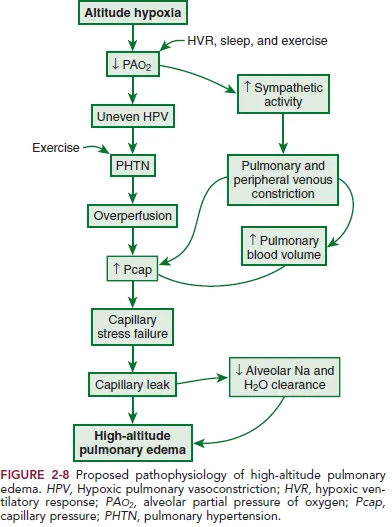
Mechanisms of HAPE : Hypoxia 🡪 Pulmonary hypertension 🡪 Overperfusion 🡪 Capillary leak 🡪 HAPE
1.
Treatment
•
Early recognition 이 outcome에 중요하다.
•
Oxygen supply 🡨 hypoxia를 해결하여 pulmonary hypertension의 호전
•
Descent
•
Drugs are limited necessity in HAPE because oxygen and descent are so effective.
•
Nifedipine, sildenafil, tadalafil (Oxygen을 줄 수 없거나, descent 할 수 없을 때)
2.
Prevention : AMS의 그것과 같다.
3.
Problems of Lifelong or Long-Term Residents of High Altitude
•
Reentry pulmonary edema : 고지대에 살던 사람들이 저지대로 너무 빠르게 이동한 경우
•
Chronic mountain sickness : 고지대 거주민이 만성적인 AMS-like symptom을 보이는 경우. 저지대로 이동하면 쉽게 치료된다.
•
Symptomatic high-altitude pulmonary hypertension (SHAPH) : 주로 고지대에 사는 소아에게서 보이며, pulmonary hypertension 🡪 right ventricular hypertrophy 🡪 right sided heart failure. 저지대로 이동하면 쉽게 치료된다.
4.
Children at High Altitude
a.
신생아기에 합병증 발생률이 높아진다.
b.
성장과 발달이 더디기도 한다.
c.
저지대에서 고지대로 이동할 경우 HAPE 발생에 취약하다.
5.
Other Medical Concerns at High Altitude
a.
CO poisoning : 환기가 잘 안되는 텐트나 shelter에서 요리하다가 주로 발생. CO 발생 source로부터 떨어뜨리고, portable hyperbaric therapy가 도움이 될 수 있다.
b.
High-Altitude deterioration
c.
High-Altitude syncope
d.
Alcohol at high altitude : ventilatory acclimatization에 나쁜 영향을 줘서 AMS 발생 가능성이 높아질 수 있으니 주의하는 것이 좋다.
e.
Thrombosis: Coagulation and Platelet Changes : 명확한 연관성을 밝히기에는 연구가 더 필요하다.
f.
Peripheral edema : 얼굴, 손, 발목 등의 부종이 흔히 나타난다. 이뇨제로 쉽게 해결된다.
g.
Immunosuppression : 고지대에서는 T lymphocyte function과 연관되어, 세균감염에 취약해진다. 저지대로 이동하면 쉽게 해결된다.
h.
Sleep at High Altitude : 여러가지 이유로 수면장애가 흔히 확인된다.
i.
Periodic breathing : Early and light sleep의 가장 흔한 원인이며, CNS respiratory center의 abnormal feedback control에 의해 발생하고, 야간의 hypoxemia에 연관을 보인다.
1.
Pharmaceutical Aids for Sleep
•
Acetazolamide
•
Diphenhydramine, short acting BZD (triazolam) 등 : respiratory suppression이 있어 low dose로 사용하는 것을 권장한다.
•
Zolpidem이 도움이 된다는 보고도 있다.
2.
High-Altitude Pharyngitis, Bronchitis, and Cough