



A. Introduction and pathophysiology
•
응급실에서 보는 가장 흔한 증상 : 유방통, 유방 종괴, 유두 분비물, 감염, 수술 후 합병증
•
성인 breast : 20%는 glandular tissue, 나머지는 fat and connective tissue (breast의 질감과 모양을 만들어줌)
•
Nipple은 fourth intercostal space 를 찾는 중요한 landmark 이다
•
Cyclic variance : Estrogens, Progesterone, FSH, LH
B. Clinical features
B1. History taking
•
생리주기에 따라 증상이 변화하는 것은 양성 가능성 있음
•
악성에서는 종종 무증상일 수 있음
•
악성이 의심될 때 통증이 몸 어디든 방사되는지 확인하는 것이 중요함
•
증상이 대칭적으로 있다면 양성일 가능성을 더 시사함
•
Nipple discharge의 color와 consistency 에 대하여 물어볼 것
•
환자의 자가촉진 결과를 생리주기에 관련시켜 생각해 볼 것
•
가족력이나 위험인자 (30세 이후 출산 , atypical hyperplasia biopsy 결과 , chest irradiation) 등 을 확인 그러나 ‘여성’과 ‘나이’가 가장 큰 risk factor 임
B2. Physical examination
•
시진과 촉진을 다해야 함
•
Breast asymmetry나 skin dimpling을 확인하고 axilla, mammary tail, lymph nodes를 확인
•
Upper outer quadrant에 breast carcinoma의 50% 정도가 origin하기 때문에 가장 집중해서 신체진찰해야 함.
•
Nipple-areola 를 통해 subareolar mass, discharge 를 확인
•
보형물 있는 경우 진찰이 어려우나 tissue change나 보형물의 deviation 등 확인
C. Disorders of the lactating breast
C1. Abnormal lactation
1.
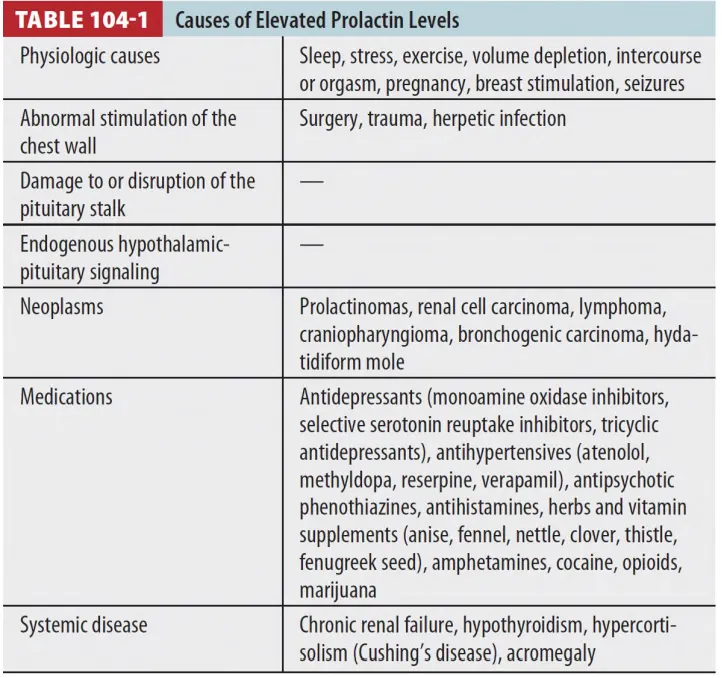
Galactorrhea : milky 유방에서 부적절하게 한 분비물이 나오는 것
2.
Cause of galactorrhea → Hyperprolactinemia (Prolactin 의 부적절한 분비 장애, Prolactin 의 부적절한 생산)
3.
Prolactinoma : Benign anterior pituitary neoplasm
① Galactorrhea ② Amenorrhea ③ Hirsutism
④ Acne ⑤ Visual field deficits ⑥ Headache
4.
Galactorrhea가 있다면 월경이상, 여드름, 다모증, 불임 등의 병력과 intracranial pressure 나 visual field 에 대한 검사, growth hormone, cortisol, thyroid hormone 에 대한 평가가 동시에 이루어 져야 함.
C2. Complication of lactation
(1) Breast engorgement
•
분만 후 3~5 일에 아프고, 딱딱하고, 커진 유방, 구역질 및 미열 동반함
•
유방에서 모유의 removal이 부적절하기 때문에 발생
•
대부분 infant separation, sore nipple, improper breast feeding techniques 때문 → 샤워나 마사지해주면 좋음
(2) Nipple irritation
•
Poor positioning, latch-on techniques, trauma, plugged ducts, candidiasis, inflammatory skin disorder 때문
•
Lanolin cream, analgesics, breast shields 가 도움이 되며, Reynaud 환자에서 유두 통증이 발생할 수 있고 topical nifedipine 이 도움이 된다.
(3) Puerperal mastitis
•
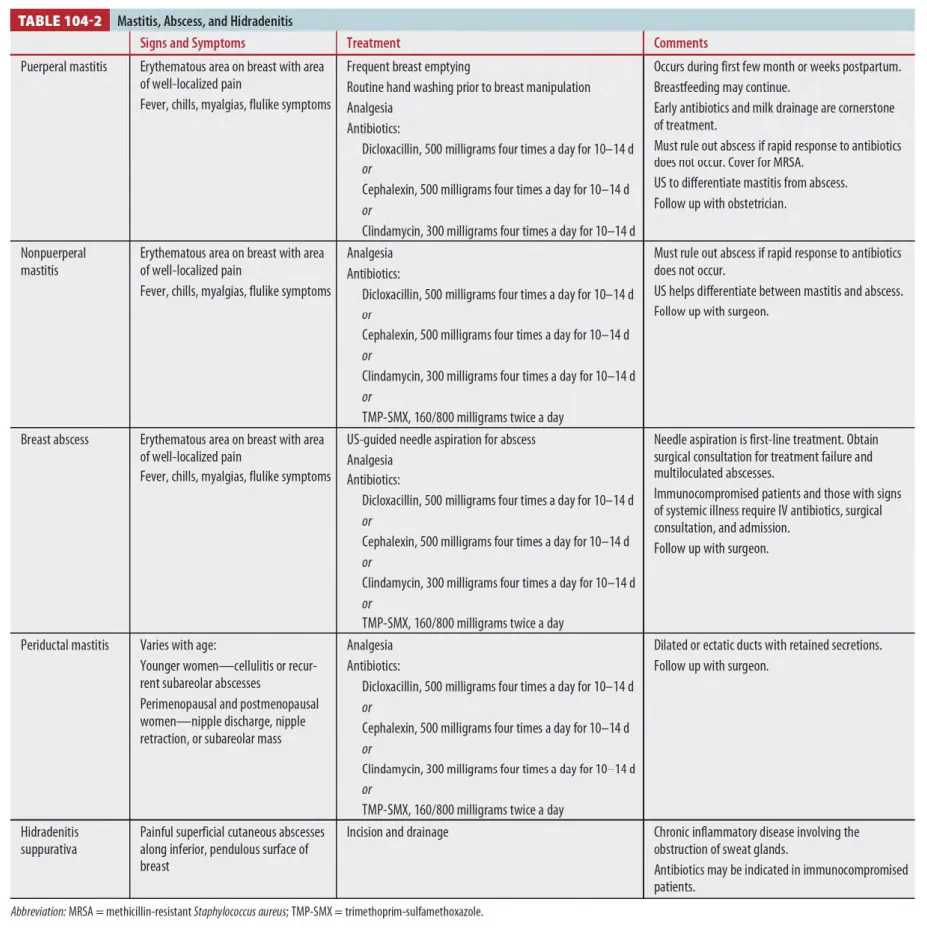
극심한 통증, 압통, 부종, 발적, 발열, 오한, 근육통
•
분만 후 2주 째에 가장 흔하며 milk stasis와 retrograde infection 이 원인임 (S. aureus 40%)
•
차이점은 뚜렷한 유방 출혈, 유관 막힘, inflammatory carcinoma(드뭄)이다.
•
US에서 hypoechoic fluid surrounding subcutaneous fat lobules without a discrete fluid collection 소견 보임
(Abscess의 경우는 hypoechoic(dark) fluid collection 이 보이며 vascualr signal이 보이지 않는다)
•
모유 수유 중단할 필요 없음
•
Sulfamethoxazole-trimethoprim 은 2개월 이하의 아이를 가진 엄마한테 줘선 안됨
(4) Breast abscess
•
Complication of mastitis (3%)
•
US에서 subcutaneous fluid collection이 확인되면, US-guided drainage가 1st treatment, 항생제가 아이에게 금기가 아니라면, . 모유수유는 중단되어서는 안 된다.
•
항생제는 PO로 cephalosporin이나 clindamycin을 주면 되고 septic 환자에게는 IV vancomycin 을 쓸 수 있다.
•
Recurrent infection이 발생한다면 , inflammatory carcinoma 등을 rule out 하기 위해 excisional biopsy가 필요할 수 있다.
D. Inflammatory breast conditions
•
Infectious mastitis, Breast abscess, Periductal mastitis, Ruptured breast cyst,
•
Inflammatory neoplasm, metastatic cancer, TB, Paget’s disease . 등을 감별해야함
•
항생제로 치료에 실패한다면, inflammatory cancer를 배제하기 위해 biopsy . 가 필요함
D1. Cellulitis, Acute mastitis, Breast abscess in non-lactating women
(1) Cellulitis
•
US 로 광범위하게 두꺼워지고 고에코성의 skin과 subcutaneous tissue를 확인할 수 있다.
•
치료 : Sicloxacillin, amoxicillin-clavulanic acid, 1 세대 cephalosporin
•
Breast cellulitis는 드물며, breast surgeon의 진료가 필요하다 (imaging, biopsy 등)
(2) Acute mastitis and abscess
•
당뇨, 비만, 흡연자인 nonlactating women 에서 종종 보임
•
30 세 이상이라면 f/u mammography가 추천되며, 급성기가 지나면 반드시 해봐야 한다
•
Initial 항생제는 3세대 cephalosporin, clindamycin, vancomycin, Fluoroquinolones, linezolid 등이며 deeper abscess가 있다면 metronidazole을 추가할 것을 고려한다
•
MRSA 감염은 점점 증가하고 있으며 현재 20% 이상을 차지한다
•
Breast surgeon의 진료가 필요하다 (imaging, biopsy 등)
D2. Hidradenitis suppurativa
(1) Recurrent multiple cutaneous abscesses, sinus tracts, scarring of the breast folds, axillae, groin, and perineum.
(2) 환자는 보통 breast 아래쪽의 painful한 superficial cutaneous abscess가 나타나며, 통증 완화를 위해 surgical drainage가 필요하다
(3) 면역력이 있는 환자에서 항생제 사용은 드물지만 빈도나 심각성을 감소시키기 위해 rifampin이나 clindamycin을 사용해 볼 수 있다
(4) 치료는 되지 않으며 종종 apocrine tissue의 광범위한 의 수술적 절제를 필요로 한다.
D3. inflammatory breast cancer
(1) Breast malignancy 중에서 가장 mortality가 높고 최종진단까지 오래 걸린다
(2) 환자는 breast enlargement, warmth, tenderness, edema, erythema, discoloration을 호소한다.
(3) 종종 임상적으로 infection과 inflammatory breast cancer가 구분할 수 없다
(4) 마찬가지로, 만약 breast cellulitis나 abscess의 초기치료도 호전이 없다면 반드시 inflammatory breast cancer 를 의심해야 한다.
E. Non-inflammatory painful breast disorders
E1. Mastodynia
(1) 유방통을 mastodynia나 mastalgia 라고 한다
(2) T3~T5 intercostal nerve irritation으로 breast나 nipple pain을 유발할 수 있다
(3) 통증은 bilateral하며 upper outer quadrant에 가장 심하며, axilla나 scapula로 방사되기도 한다.
(4) 유방통은 Breast cancer의 uncommon symptom일 수도 있다
(5) Cyclic mastodynia는 premenstrual phase에 제일 악화되고 이후 완화된다.
F. Skin and nipple abnormalities
F1. Nipple discharge
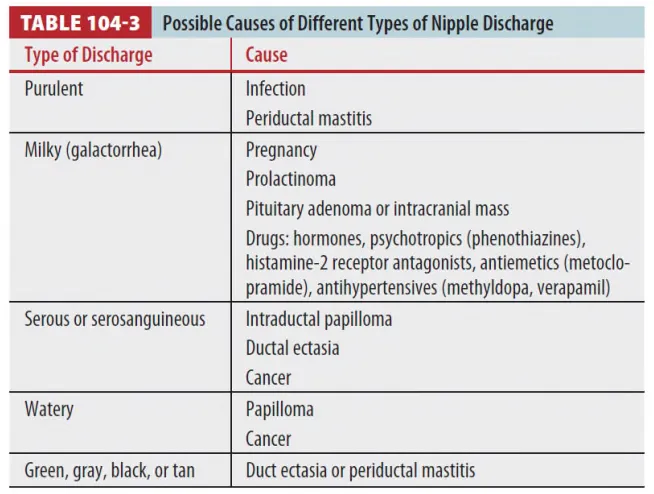
(1) 양측성이며, 촉진 시에 발생하고 여러 duct에서 나온다면 cancer 가능성은 드물다.
(2) 일측성이며 single duct에서 나오며, clear, pink, bloody, serosanguineous 하다면 carcinoma Risk가 있다.
(3) Bleeding은 intraductal papilloma나 tissue vascularity가 증가할 경우 발생한다.
(4) 다른 원인으로는 Ductal ectasia와 breast cancer 등이 있다.
F2. Mondor’s disease
(1) Benign, self-limited superficial thrombophlebitis이며 가임기 초반에 발생함.
(2) 주로 lower quadrant의 painful palpable cord나 mass로 나타나며, skin discoloration, erythema, nipple retraction 등이 동반된다.
(3) 초음파를 통해 superficial thrombophlebitis를 진단할 수 있으며 치료는 NSAIDs 이다.
F3. Nipple irritation
(1) Atopic dermatitis, erosive adenomatosis, Paget’s disease 등과 관련.
G. Fibrocystic disease and the evaluation of a breast mass
1.
호르몬 사이클에 의해 반응한 결과로 나타나는 breast nodularity and Td.
2.
Fibrocystic change do not include skin thickening, edema, discoloration, nipple retraction or discharge
3.
긴급한 수술적 치료가 필요한 Physcial exam : A palpable mass with or without the following
Lymphadenopathy / Skin ulceration / Mass fixation to the chest wall
Fixed axillary nodes / Presence of ipsilateral arm edema
H. Perioperative and postoperative complications
1.
Breast hematoma
2.
Wound infection
3.
Breast implants
