



A. Epidemiology
•
500 case/year(USA), 20~50death/year (지난 10년간)
•
날씨와 연관된 사망의 3%, 고온이나 한랭에 의한 사망이 더 많음.
•
어부에서 흔하고, 골프나, 캠핑 등의 activity를 하는 사람에게 흔함.
•
70~90%는 생존하나, 3/4는 영구적인 장애를 갖게 됨.
•
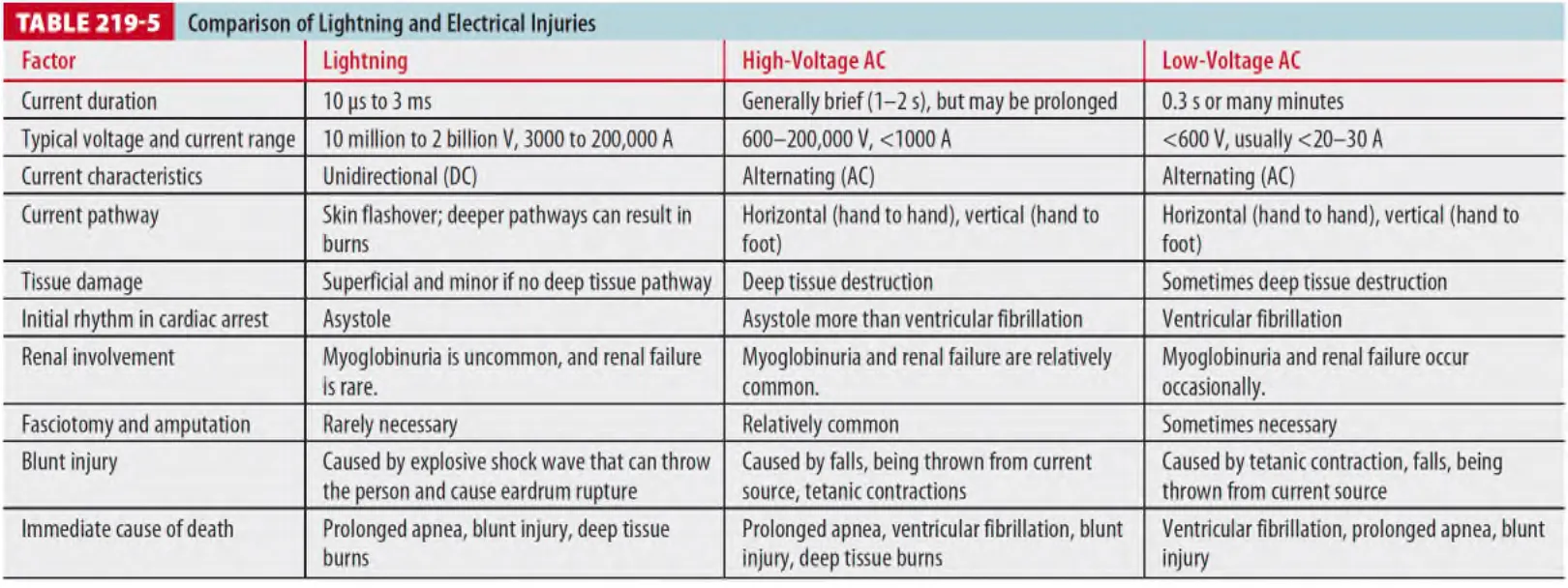
번개도 전기에너지이나, 사람이 생성한 전기의 high-voltage electrical injuries와는 다른 양상 보임
B. Pathophysiology
•
번개는 주로 flashover라는 현상에 의하여 체표면을 타고 지나침.
•
젖은 피부는 번개가 체표면으로만 통과할 가능성을 높여 internal injury의 가능성이 낮게 됨.
•
큰 용량의 번개는 magnetic filed를 폭발시키며, 이에 옆에 있는 사람에게 파괴적인 효과를 입히게 되는데, 열과 공기의 급속 팽창으로 인하여 TM perforation 및 internal organ contusion 일으킴.
•
번개는 희생자 피부의 수분을 증기로 바꾸고, 그 증기가 피해자의 금속물질 등을 녹임으로써 thermal injury를 입히게 됨.
◦
Stunning (Keraunoparalysis)
: Neurologic and muscular ‘stunning’ - 다양한 neurologic sign and symptoms를 야기함.
: Lower limb weakness (greater than upper limb), abnormal sensory, pallor, coolness,
diminished and absent pulses due to excessive autonomous nervous system stimulation
C. Types of lightning strikes
•
Direct strike : lightning discharge에 직접 맞는 경우.
•
Side flash : 근처 물체가 번개를 맞은 후, 공기를 통해 전달되는 경우.
•
Contact strike : 만지고 있던 물체가 번개를 맞은 후, 사람을 통과해 땅으로 전달되는 경우.
•
Ground current : 번개가 땅에 직접적으로 맞은 후, 땅을 통해 전달되는 경우.
◦
Immediate cardiac arrest
: Depolarization of the myocardium & sustained asystole
◦
Immediate respiratory arrest
: Depolarization and paralysis of the medullary respiratory center
→ 위의 두 경우 전부 다 external injury 없어도 발생할 수 있음!
D. Care at the scene
•
물리적 외상에 에의 심정지 환자보다, lightening injury에 의해 죽은 것 같이 보이는 환자 (Respiratory arrest ± cardiac arrest)를 가장 먼저 치료해야 함!
: 신체적 손상이 적을 수 있고, 성공적 소생기회가 있을 수 있기 때문임.
•
Prolonged CPR이 성공적인 경우도 있다!
•
Storm : Power line이 땅으로 떨어져 사람들에게 stride potential이 전달되어 손상을 받을 수 있음
→ 번개에 맞은 것으로 착각할 수 있으니, 사고 현장에 대한 정보를 잘 해석해야 함.
E. ED Diagnosis and treatment
•
ACLS/ATLS를 적용하여 평가 및 ABC를 안정화 하도록.
•
Lightning으로 인한 cardiac arrest
: 다른 원인의 cardiac arrest보다 better prognosis를 가지고 있으므로, 보다 더 적극적인 소생술을
시행해야 함.
•
Hypotension
: Lightning injury로 인한 것이 아닐 가능성이 있으므로, hemorrhagic blood loss에 대한 조사 필요
•
Cutaneous burns
: May help identify the current path and suggest potential organ injury
E1. Cardiac effects
•
Hypertension, tachycardia가 가장 흔함
: Sympathetic stimulation에 의함 / 특별한 치료 필요치 않음.
•
Cardiac injury
: Global depression of myocardial contractility, coronary artery spasm, pericardial effusion, cardiac dysrhythmias
•
EKG finding : ST elevation, QT prolongation, T-wave inversion 가능하나, MI는 흔하지 않음.
E2. Neurologic injury
•
Unconsciousness, temporary lower extremity paralysis (common)
•
Seizure : 전류가 머리를 통과하여 발생하거나 mechanical brain injury, hypoxia에 의해 발생가능
•
EDH, SDH, ICH : Heat-induced coagulation of the cerebral cortex (most lethal)
•
Autonomic dysfunction
: Brain injury와 관계 없는 pupillary dilatation, anisocoria → No prognostic significance
•
Transient effects (Typically resolve in 24 hours)
: Loss of consciousness, confusion, amnesia, and extremity paralysis
•
Delayed and often progressive disorders
: Seizures, muscular atrophy and amyotrophic lateral sclerosis, parkinsonian syndromes, progressive cerebellar ataxia, myelopathy with paraplegia or quadriplegia, and chronic pain syndromes
•
번개가 머리를 관통하여 직접적인 intracranial injury 가능 : 의식변화나 두통 시 CT scan 필요.
E3. Vascular effects
(1) Vasomotor spasm
•
Sympathetic nervous stimulation, local arterial spasm, ischemia of peripheral nerves
→ Skin color changes from white to blue to red, with pallor and cyanosis followed by hyperemia (혈관의 수축과 확장의 주기에 의한 것으로 짐작)
(2) Severe vasoconstriction
•
Loss of pulses, coldness of extremities, loss of sensation, paralysis d/t ischemia of
peripheral nerves → Resolve spontaneously
(3) Skeletal muscle injury, compartment SD (rare)
(4) Ocular injury
•
Cataract : 가장 흔히 관찰되는 sequelae로, 주로 양안에서 발생. radiant energy 의한 lens 손상으로
인한 것으로 보이며, 수주 혹은 수년 후에도 발생할 수 있음.
(5) Auditory injury
•
Tympanic membrane rupture : blast effect 때문에 발생. relatively common
•
Lightning strike via a conventional corded telephone
: Higher risk for persistent tinnitus, sensorineural deafness, ataxia, vertigo, and nystagmus
(6) Musculoskeletal injury
•
Shoulder dislocations : Intense myotonic contraction의 결과로 발생 가능.
•
Spinal fractures : by tetanic muscle contraction / falling / other secondary trauma
→ Spinal immobilization 중요.
→ 여러 level injury 가능하여 한 level에서 fracture 발견 시 entire veterbral column image 필요.
•
Rhabomyolysis : Lightning strike 이후에는 unusual
(7) Cutaneous injury
•
Lichtenberg figures = Pathognomic for lightning strike, not true thermal injury, 24시간 내 사라짐. (Fig 219-2)
•
Punctate burns : Cigarette burn과 유사. 1cm 미만. full-thickness burn (Fig 219-3)
•
Flash burns, contact burns, superficial erythema and blistering burns, linear burns 등 있음
→ Cutaneous wounds are treated with customary wound or burn care including tetanus
prophylaxis, irrigation, debridement, and dressing

F. Disposition and follow-up
(1) ECG and other monitoring is indicated as for any electric shock
(2) Admission should be considered
•
Patients with persistent muscle pain
•
Persistent neurologic, cardiac rhythm, or vascular abnormalities
(3) 저명한 손상 없어도 f/u 권유.
G. Special populations
(1) Pregnancy
•
Abruptio plancetae 발생 가능
•
Lightening strike 후 최소 4시간 이상 maternal uterine activity, fetal heart rate monitoring 하도록 함.
H. Injury due to electronic control devices
•
Cattle prod, stun gun, taser
H1. Clinical features
: 대부분 superficial punctures, minor laceration, cutaneous burn만 발생함.
H2. Treatment and dispositions
(1) Electronic control device로 인한 손상
: Cardiac monitoring을 포함한 다른 testing은 필요하지 않음.
