1. Introduction

Ⅱ. Fever
1.
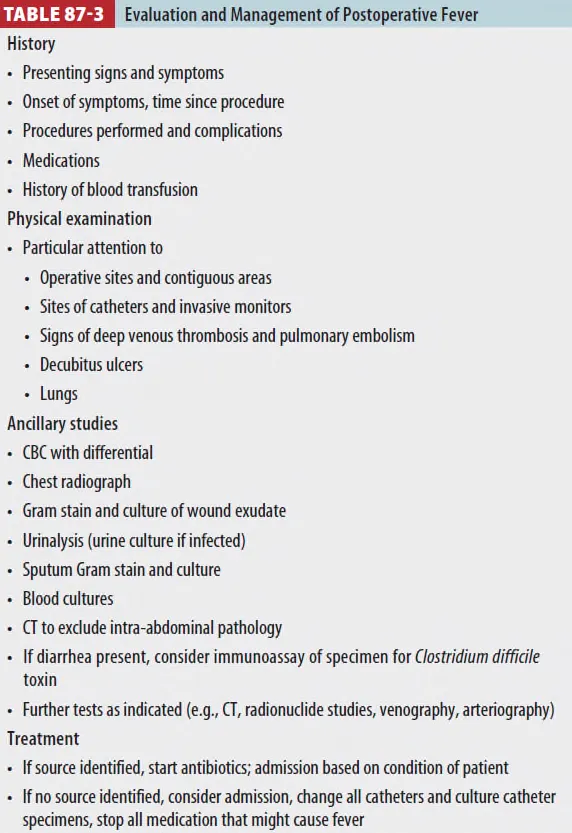
The “five Ws”
(1) Wind (atelectasis or pneumonia)
(2) Water (urinary tract infection)
(3) Wound
(4) Walking (Deep vein thrombosis)
(5) Wonder drugs (drug fever or pseudomembranous colitis).
2.
수술 후 첫 72시간 이내에는 atelectasis 와 같은 호흡기 합병증, phlebitis 와 같은 IV catheter와
관계된 문제가 많다.
3.
Necrotizing streptococca과 clostridial infection이 수술 후의 surgical wound에서 발생한다.
4.
Urinary tract infection은 1일에서 5일 사이 발생하며
5.
수술 후의 surgical wound는 7일~10일 사이에서 발생한다
6.
DVT는 수술 후 50일까지의 시간과 관계없이 발열의 원인이 될 수 있다.
7.
PMC는 수술 후 6주까지 발생 가능성이 있다.
Ⅲ. Repiratory complications
1.
Atelectasis
(1) 마취 이후의 부적절한 객담배출 로인해 생길 수 있는 매우 흔한 합병증
(2) Chest x-ray 정상인 경우도 있음.
(3) Linear plate like densitiy가 이기도 한다.
2.
Pneumonia
(1) 24~96시간 이내 발생할 수 있음.
(2) Polymicrobial이 가능성이 있음
(3) HAP에 준해 치료
3.
Pneumothorax : Chap 68 참조
(1) Thoracic wall surgery (2) Breast biopsy (3) Laparoscopic abdominal surgery
(4) Abdominal paracentesis (5) NG Tube insertion (6) Central venous catheter insertion
(7) Endoscopic procedures (8) Shoulder arthroscopy (9) Tracheostomy
4.
Pulmonary embolus :Chapter 56 참조
Ⅳ. GU Complications
1.
Urinary tract infection
(1) GU tract or bladder catheterization에서 빈도가 높음
(2) E.coli : ciprofloxacin, 500 mg PO twice daily, or levofloxacin 750mg PO once daily
(3) 고령이나 sepsis 가능성이 있는 환자에게는 입원하여 levofloxacin 750mg IV once daily 사용
2.
Urinary retension
(1) alpha-adrenergic resptors의 catecholamine stimulation에 의해 발생함
(2) 고령과 IV fluid를 많이 투여받았을 때, anorectal surgery시 2시간 이상의 시술을 받았을 때,
spidural 혹은 spinal 마취 시 유병률이 높아짐.
3.
Acute renal failure
(1) Volume depletion (2) Acute tubular necrosis
(3) Drug nephrotoxicity (4) Obstructive uropathy.
Ⅴ. Wound complication
1.
Inform the operative surgeon about all postoperative wound complications.
2.
Hematomas, Seromas, Infection
: GI 혹은 Biliary tract 혹은 Perineum과 관계된 wound가 아닌 경우엔 S.aureus나 streptococci가
제일 많다.
3.
Necrotizing fasciittis
(1) Group streptococci 나 S. aureus가 제일 많다.
(2) 당뇨, 고혈압, 비만, 알코올 등의 risk factor가 있으나, 정상인에서도 발생할 수 있다.
(3) 논란이 있으나 triple antibiotic therapy가 필요하다
(penicililin or a cephalosporin, an aminoglycoside, and clindamycin)
Ⅵ. Vascular complications
1.
Superficial thrombophlebitis
(1) Cellulitis 나 local lymphangitis의 증거가 없다면 고려
(2) 치료 : Local heat, Elevation, NSAIDs
2.
DVT
Ⅶ. Complications of drug therapy
1.
Most common drug
(1) Anticoagulants (2) DM medication (3) Antibiotics
(4) Opioids
2.
Antibiotic-associated diarrhea
(1) PMC는 기존의 사용하던 항생제를 중단하고 metronidazole로 cover한다.
(2) Severe할 경우 Vancomycin을 사용한다 (Chap 73 참조)
Ⅷ. Complications of breast surgery
•
Wound infection, Hematomas, Pneumothorax, Post mastectomy lymphedema 등 빈번하지 않음.
Ⅸ. Complications of GI Sugery
1.
Intestinal obstruction
(1) Small bowel tone은 통 술 후 24시간 안에 돌아온다.
(2) Colonic function은 3~5일 안에 돌아온다.
(3) Ileus는 non GI Procedure에서도 발생할 수 있으며, secondary anestehetic agents에 의해서도
발생할 수 있다
(4) Adynamic ileus는 통 증상이 약하며, NG suction에 반응이 있고 bowel rest와 IV Hydration을
해준다.
(5) Mechanical ileus는 CT Scan이 bowel strangulation으로 인한 ischemia와 obstruction을 찾는데
도움이 될 수 있다.
2.
Intra-abdominal abscess : Preoperative contamination ,
3.
Pancreatitis : Gastric resection, Biliary surgery, ERCP
4.
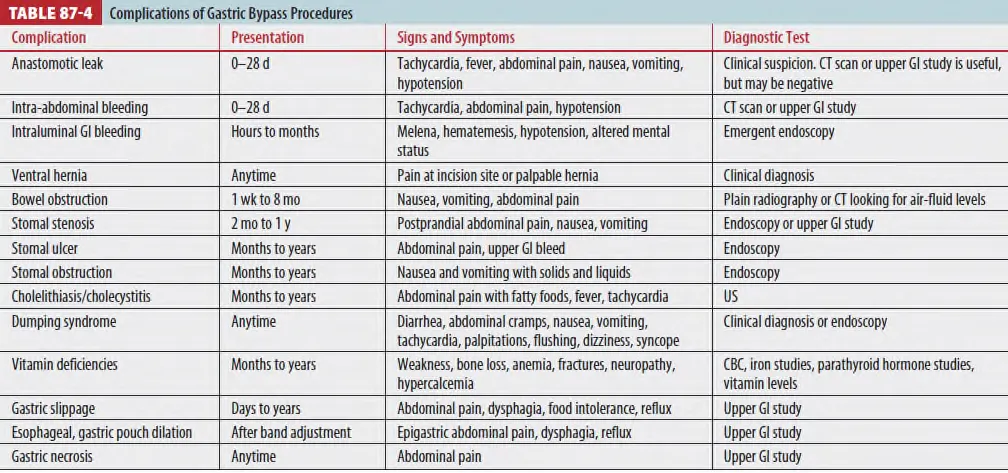
Cholecystitis, Fistulas, Ttetanus, Anastomotic leaks, Batriatric gastric surgery (Table 87-4)
5.
Nonbariatric gastric surgery
Ⅹ. Laparoscopic surgery
1.
Biliary tract surgery
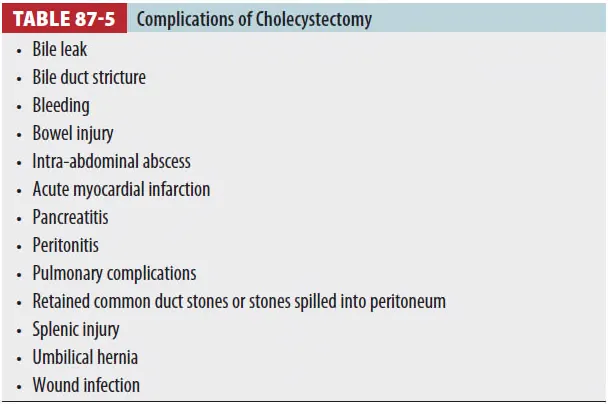
(1) Laparoscopic cholecystectomies (Table 87-5)
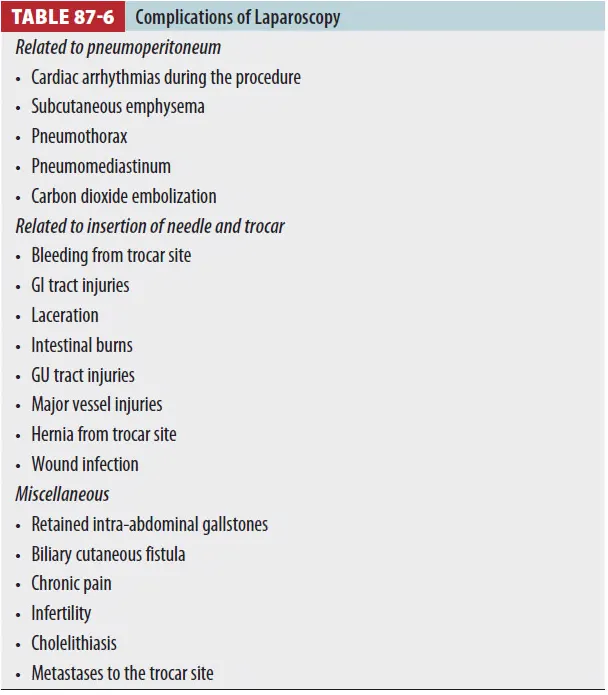
(2) Laparoscopic technique (Table 87-6)
XI. Stomas, Colonoscopy
Hemorrhage, Perforation, Retroperitoneal abscess, Pneumoscrotum, Pneumothorax, Volvulus,
Postcolonoscopy distention, Splenic rupture, Appendicitis, Bacteremia, and Infection.등
XII. Rectal surgery
1.
Postoperative urinary retension이 많다.
2.
Constipation, Rectal hemorrhage, Rectal prolapse